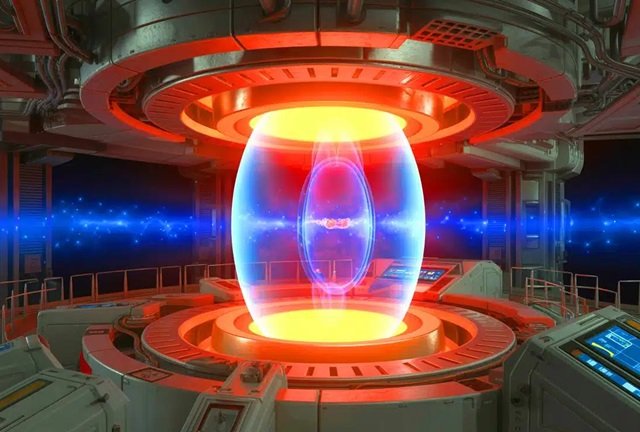
Fusion power has long been portrayed as the ultimate clean energy solution: a nearly limitless, zero-emissions source of electricity capable of transforming global energy systems. But new research highlighted by MIT Technology Review suggests that even if fusion technology becomes commercially viable, it may not deliver the rapid cost reductions seen in other clean energy breakthroughs, potentially making fusion electricity expensive for decades.
The study, published in Nature Energy, challenges a key assumption often made in energy forecasting—that new technologies inevitably become cheaper quickly as they scale. While technologies such as lithium-ion batteries and solar panels have experienced dramatic price declines over time, fusion may not follow the same trajectory, according to the analysis.
Researchers focused on a concept known as the “experience rate,” which measures how much a technology’s cost falls each time its global capacity doubles. The higher the experience rate, the faster a technology becomes cheaper as it scales. Historically, onshore wind energy has shown an experience rate of about 12%, lithium-ion batteries around 20%, and solar modules roughly 23%. By contrast, nuclear fission has exhibited a much slower decline of just 2%, reflecting limited cost improvements over time.
The new study attempts to estimate where fusion might fall on this spectrum, despite the fact that no commercial fusion power plants currently exist. Because fusion remains in experimental and pre-commercial stages, researchers relied on expert assessments rather than historical cost data. They evaluated two leading approaches—magnetic confinement and laser-based inertial confinement—both of which currently receive most global funding in fusion research.
Experts interviewed in the study assessed fusion technology based on three key factors that influence cost reduction over time: the physical size of systems, the complexity of design, and the degree of customization required for deployment. Larger, more complex systems that require tailored engineering solutions tend to experience slower cost declines, since they are harder to standardize and mass-produce.
According to Lingxi Tang, a PhD researcher in energy and technology policy at ETH Zurich and one of the study’s authors, there was near consensus among experts that fusion systems are exceptionally complex. Some even described them as being beyond the scale typically used to evaluate energy technologies. This complexity is a major factor limiting how quickly costs could fall as deployment increases.
The study suggests that fusion power plants will likely resemble large-scale industrial facilities such as coal or nuclear fission plants, which are expensive to build and difficult to replicate rapidly. While fusion systems may face fewer regulatory constraints than traditional nuclear reactors due to lower risks of catastrophic failure, they are still expected to require substantial engineering precision and infrastructure investment. Unlike solar panels, which can be mass-produced and installed modularly, fusion plants are likely to remain bespoke, capital-intensive projects.
Based on these characteristics, the researchers estimate fusion’s experience rate could fall between 2% and 8%. This range would place fusion closer to nuclear fission in terms of cost learning, rather than alongside rapidly scaling technologies like solar and batteries. In practical terms, this means fusion costs would decline only slowly even as deployment expands.
Such a slow learning curve could have major implications for the global energy transition. Even if fusion becomes technically viable, electricity generated from fusion plants could remain expensive for a prolonged period, limiting its competitiveness with other low-carbon sources. The findings also contrast sharply with assumptions used in many energy system models today, which often project fusion cost reductions of 8% to 20%—closer to the trajectories of solar and battery technologies.
The implications have sparked debate about investment priorities. Tang argues that if fusion’s cost declines are likely to be modest, policymakers should reconsider the scale of public funding directed toward the technology. The United States alone allocated more than $1 billion to fusion research in its 2024 fiscal year, while private investment reached approximately $2.2 billion between mid-2024 and mid-2025. Given limited resources for global decarbonization, the question becomes whether fusion represents the most efficient use of capital compared to more mature renewable technologies.
However, not all experts agree with the study’s implications. Egemen Kolemen, a professor at the Princeton Plasma Physics Laboratory, cautions that cost predictions for a technology that does not yet exist commercially are inherently uncertain. He argues that historical comparisons may fail to capture future breakthroughs or unexpected industrial scaling effects.
Kolemen points to the rapid and unexpected decline in solar energy costs as an example. In the early 2000s, many analysts assumed solar would remain expensive for the foreseeable future. Those forecasts proved inaccurate after large-scale manufacturing expansion, particularly in China, dramatically reduced prices. According to Kolemen, such shifts are difficult to anticipate and often depend on geopolitical, regulatory, and industrial decisions rather than purely technical factors.
He emphasizes that fusion costs could similarly change in unpredictable ways once commercial deployment begins, especially if major economies decide to invest heavily in scaling production or if breakthroughs reduce engineering complexity. Labor costs, supply chains, and global policy frameworks could all influence how quickly prices fall.
The debate highlights a broader tension in energy forecasting: whether future technologies should be evaluated based on historical patterns or whether they may break from them entirely. While MIT Technology Review’s analysis underscores the structural challenges facing fusion, it also acknowledges the inherent uncertainty in projecting the economics of a technology still under development.
The study does not question whether fusion energy could work, but whether it can become cheap enough, fast enough, to play a dominant role in global decarbonization. As governments and private companies continue to invest heavily in fusion research, the answer to that question may shape the future of the world’s energy system for decades to come.