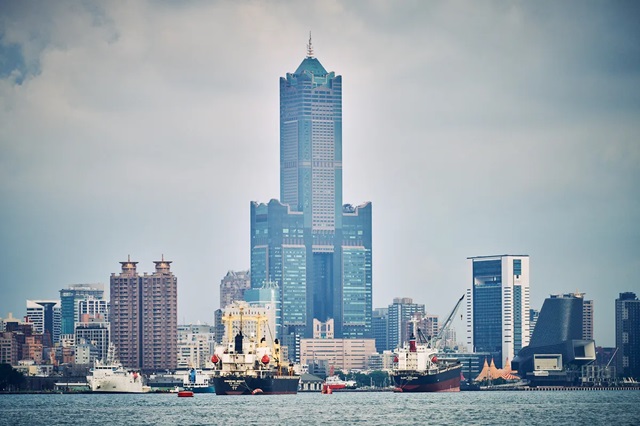
Global banks are scrambling to stake their claim in Taiwan’s rapidly expanding $8 trillion personal wealth market as the government eases regulatory restrictions to foster a domestic asset-management hub. According to Bloomberg, lenders including UBS Group AG, HSBC Holdings Plc, BNP Paribas SA, and Standard Chartered Plc are hiring aggressively and expanding operations in the new wealth management sandbox launched in July in the port city of Kaohsiung. UBS, for instance, plans to increase client-facing staff in Taiwan by 10% to 15% next year while scaling mid- and back-office operations in Kaohsiung to manage fund flows. Standard Chartered has tripled its Taiwan-based wealth specialists over the past three years and intends to hire more in the coming months, while BNP Paribas aims to add around 15 relationship managers across the island over the next two years.
The Kaohsiung sandbox is designed to give banks access to more flexible money-management tools for high-net-worth clients. It allows products and services not available elsewhere in Taiwan, including Lombard lending, higher leverage with loan-to-value ratios up to 80%, and the ability to use foreign-currency denominated assets or certain offshore assets as collateral. Bloomberg reports that these unprecedented relaxations aim to encourage wealthy Taiwanese to retain their fortunes domestically, countering an outflow of roughly 40% of personal wealth to offshore financial hubs like Hong Kong and Singapore.
Henry Su, head of UBS Taiwan, told Bloomberg, “There is a significant amount of wealth creation as local tech companies take advantage of the artificial intelligence uptrend, as well as Taiwanese who have invested in the stock market over the past couple of years. The Kaohsiung zone is the first step regulators are taking, and I think there’s going to be continuing relaxation coming down the pipeline.” The Swiss bank’s Taiwan unit has doubled its assets under management over the past two years, illustrating the market’s rapid growth and attractiveness to global players.
Taiwan’s wealth expansion is closely tied to its booming technology sector. The global surge in demand for semiconductors, which underpin artificial intelligence, has propelled the island to record wealth gains. According to Bloomberg, Taiwan’s average wealth per adult rose nearly 35% from 2020 to 2024, the third-fastest growth globally, surpassing Hong Kong in the number of millionaires and nearly doubling Singapore’s. UBS, HSBC, and other banks are keen to capitalize on this surge, particularly as domestic wealth revenue in major U.S.-based investment banks is expected to climb 30% in the coming year, outpacing broader Asia growth.
Despite the promising outlook, converting Taiwan’s manufacturing-driven economy into a global wealth hub faces challenges. Higher taxes compared with Hong Kong and Singapore, strict foreign-exchange controls, and the ongoing geopolitical risk posed by an assertive Beijing remain significant obstacles. Bloomberg notes that these factors have historically driven affluent Taiwanese to invest abroad, highlighting the difficulty of maintaining capital onshore. Yet many local business owners, like John Lin, a Kaohsiung-based cosmetics manufacturer, find the benefits of liquidity and operational convenience in the sandbox outweigh the risks. “I run a cash flow-heavy business so I need to be able to access liquidity flexibly, and keeping capital onshore makes this much easier,” Lin told Bloomberg.
The government plans to review the sandbox’s performance in a year to decide whether its privileges should be extended to other cities. Meanwhile, global banks are aggressively positioning themselves to capture Taiwan’s wealth boom. Vincent Chui, head of Asia Pacific wealth management at Morgan Stanley, told Bloomberg, “Global banks with strong Taiwan corporate relationships are best positioned to capture this wealth creation boom.” The race is intensifying, with financial institutions betting that the combination of AI-driven growth and regulatory liberalization could transform Taiwan into a major regional wealth hub.
For investors and bankers alike, Taiwan’s Kaohsiung wealth zone represents both opportunity and a test case in retaining domestic fortunes. Bloomberg reports that while the geopolitical risks and tax disadvantages remain, the immediate liquidity, asset flexibility, and onshore convenience offered to ultra-high-net-worth clients are reshaping the local wealth landscape, positioning Taiwan as one of Asia’s most attractive emerging markets for private banking and wealth management.