The failure of the latest Moscow Format consultations to produce a joint statement exposed a deeper regional divide over how terrorism in Afghanistan should be assessed.
The immediate disagreement was between Pakistan and the Taliban authorities. Russia’s special representative for Afghanistan, Zamir Kabulov, said the two delegations could not agree on language addressing Afghanistan in the context of terrorism. Kabul objected to what it considered an excessive association of Afghanistan with militant activity, while Pakistan insisted that terrorism remained the central unresolved security issue.
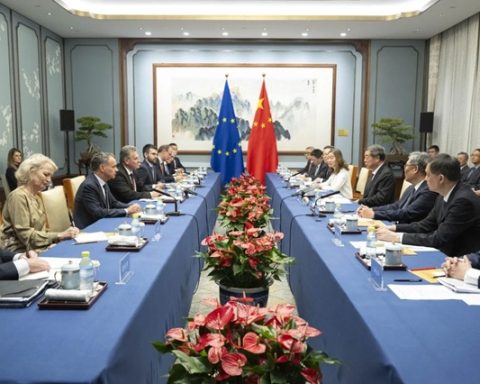
The significance lies not simply in another disagreement between Pakistan and the Taliban authorities, but also in the forum where it emerged. The Moscow Format was designed to coordinate regional positions on Afghanistan. This time, disagreements over terrorism itself prevented the participants from reaching a consensus.
Russian Foreign Minister Sergey Lavrov praised the Taliban authorities’ record since their return to power and welcomed their performance on security. Moscow has particular reason to value Taliban operations against Islamic State-Khorasan Province (ISKP), or ISIS-K, which has threatened Russia and raised serious concerns across Central Asia.
Pakistan, however, views the same security landscape from a very different perspective.
Islamabad argues that Tehrik-e-Taliban Pakistan (TTP) and other militant organisations continue to operate from Afghan territory. Pakistan’s special representative, Mohammad Sadiq, told the meeting that terrorism emanating from Afghanistan had caused thousands of Pakistani deaths in recent years.
The emerging disagreement is therefore not about whether terrorism exists in Afghanistan, but about which threats receive the greatest attention and are treated as the most urgent security concerns.
For Russia and several Central Asian states, ISIS-K remains one of the most immediate transnational militant threats. Taliban operations against the organisation therefore reinforce Moscow’s assessment that Kabul can function as a security partner. Russia’s position does not necessarily mean that Moscow considers every aspect of the Taliban’s counterterrorism record successful. Rather, it reflects a particular hierarchy of security threats.
Moscow assesses Kabul largely on the basis of whether it can suppress organisations capable of destabilising Central Asia or attacking Russian interests. Pakistan, by contrast, judges the same authorities primarily on whether they can restrain TTP and other groups that conduct or facilitate attacks across its western border. The disagreement in Moscow revealed what happens when these competing threat assessments no longer overlap.
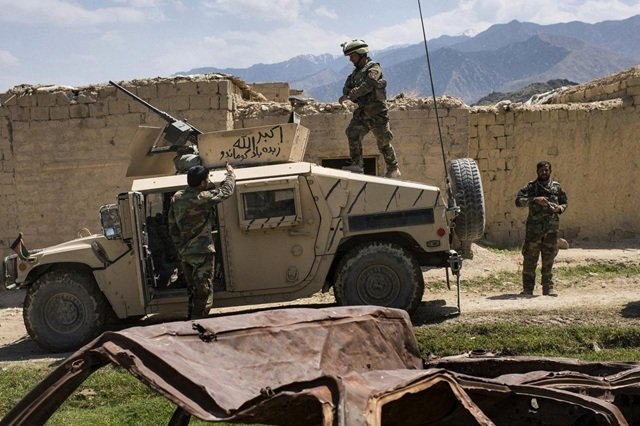
United Nations monitoring has continued to identify more than 20 regional and international militant organisations with a presence in Afghanistan, including TTP, al-Qaeda-linked networks, and Central Asian militant groups. The central question is whether regional governments are applying a consistent standard to all these organisations.
If ISIS-K activity threatening Russia and Central Asia is treated as a collective regional security problem, while TTP activity threatening Pakistan is increasingly framed as a bilateral dispute between Islamabad and Kabul, two different standards of counterterrorism begin to emerge. That distinction is strategically dangerous.
TTP and ISIS-K are distinct organisations and have often been rivals. Nevertheless, militant networks operating across Afghanistan and Pakistan cannot be neatly compartmentalised. Fighters defect, factions splinter, recruitment networks overlap, and alliances evolve. The lesson is not that TTP and ISIS-K are interchangeable; they are not. Rather, pressure on one militant organisation does not automatically neutralise the broader environment in which other armed groups continue to operate.
There are also significant political consequences. As Russia deepens its engagement with the Taliban authorities, a competing regional narrative is taking shape: Afghanistan is increasingly being portrayed as a stabilising success rather than as a continuing source of transnational militancy. This risks pushing Pakistan’s concerns about cross-border violence to the margins of regional diplomacy.
Pakistan should not respond by turning the issue into a confrontation with Moscow. Russia remains an important regional actor and has already offered to help reduce tensions between Pakistan and Afghanistan. Islamabad’s stronger argument is a broader one: a militant sanctuary should not become tolerable simply because its victims live in another country.
Pakistan now needs to internationalise this principle rather than relying primarily on repeated official accusations against Kabul. It should broaden the evidentiary basis of its case. Testimony from communities in Khyber Pakhtunkhwa and Balochistan affected by militant violence, supported by independent research into recruitment networks, financing, training infrastructure, and cross-border attacks, could give Pakistan’s position greater international credibility than official statements alone.
The objective should not be to mobilise an anti-Russian campaign, which would be diplomatically counterproductive. Instead, Pakistan should advance a broader regional argument: selective counterterrorism ultimately undermines everyone’s security.
Islamabad should also engage diplomatically with Russia, China, Iran, and the Central Asian republics to establish a common principle: Afghan territory should not provide operational space for armed groups targeting any neighbouring state. Such an approach would help Pakistan avoid being portrayed as the region’s lone dissenter on Afghanistan.
Iran has already offered to facilitate de-escalation between Pakistan and Afghanistan. Central Asian governments also remain concerned about militant organisations linked to their countries, even as their immediate attention continues to focus on ISIS-K. These shared concerns provide a potential basis for broader regional cooperation, despite differences over which threats deserve the greatest priority.
The failure to issue a joint statement in Moscow should therefore not be dismissed as another episode in the deteriorating relationship between Pakistan and the Taliban authorities. It reveals a larger problem: the regional consensus on Afghanistan is beginning to fracture because governments increasingly assess counterterrorism through the lens of the militant threats that affect them most directly.
Russia is entitled to welcome Taliban successes against ISIS-K. However, suppressing one militant threat while overlooking another does not provide the foundation for a durable regional security architecture. It produces selective security, and selective security rarely remains selective for long.