Maheshkhali has emerged as a strategic question that Bangladesh can no longer afford to treat as merely a local development issue. At stake is not simply a port, an industrial zone, or an energy infrastructure project. It is Bangladesh’s sovereign right to determine its own strategic destiny in an increasingly contested Indo-Pacific. Why does the United States seek to pressure Bangladesh so arrogantly into accepting its dictates? Bangladesh is an independent and sovereign country. Any suggestion of American pressure over Maheshkhali therefore demands careful scrutiny: is Washington pursuing legitimate strategic cooperation, or is it seeking to constrain China’s growing influence by drawing Bangladesh into a wider geopolitical contest? This question deserves an answer guided by Bangladesh’s national interests rather than the strategic ambitions of any foreign power.
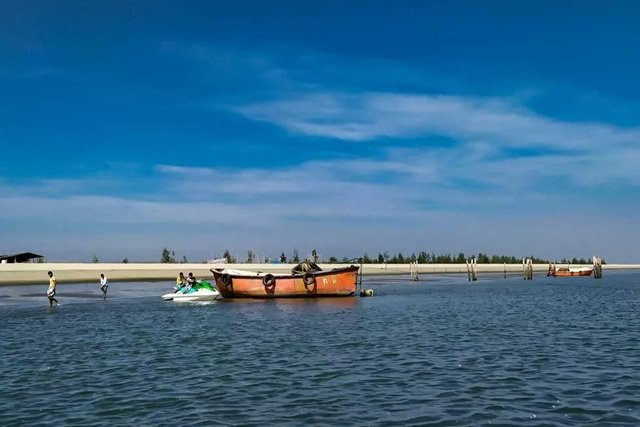
Situated along the Bay of Bengal, Maheshkhali occupies a strategically significant position in Bangladesh’s economic and maritime landscape. Its development potential encompasses energy infrastructure, deep-sea port ambitions, industrial expansion, and regional connectivity. These possibilities make the area not only economically valuable but also geopolitically consequential.
The Bay of Bengal is no longer a peripheral maritime space. It connects South Asia with Southeast Asia and the wider Indo-Pacific, carrying commercial traffic, energy supplies, and the strategic interests of major powers. China seeks reliable trade routes and stronger economic partnerships. The United States seeks to preserve its regional influence and advance its Indo-Pacific strategy. India, meanwhile, has compelling interests in maritime security and regional connectivity. Sadly, Bangladesh stands at the intersection of these competing ambitions.
The central danger is that an opportunity for national development could become an instrument of geopolitical containment. If pressure over Maheshkhali is intended to limit Chinese participation or discourage Bangladesh from pursuing commercially advantageous cooperation with Beijing, Dhaka must examine such demands with exceptional care.
Washington’s broader strategic competition with Beijing is well documented. Infrastructure, maritime access, supply chains, technology, and security partnerships have become instruments of influence in the Indo-Pacific. Against this backdrop, Bangladesh must ask whether foreign proposals genuinely serve its development priorities or primarily advance the strategic calculations of external powers. The distinction is fundamental.
If Maheshkhali becomes a bargaining chip in a campaign to restrict China’s influence, Bangladesh could face pressure to choose sides. Such a choice would be strategically shortsighted. China is an important economic partner, while the United States is a major global power. Bangladesh has legitimate reasons to maintain constructive relations with both. No sovereign nation should be expected to sacrifice its economic opportunities to accommodate another country’s rivalry. Nor should development assistance, investment, or security cooperation become a pretext for political alignment.
Bangladesh must reject the unjust proposition that partnership with one power necessarily requires hostility towards another. Its foreign policy should be determined in Dhaka, not Washington, Beijing, or any other foreign capital.
Bangladesh’s experience teaches an enduring lesson: national independence is meaningful only when a country retains the freedom to make its own decisions. The sacrifices of 1971 established the moral foundation of that independence. They cannot be reduced to historical memories invoked on ceremonial occasions; they must inform the country’s conduct in international affairs.
Accordingly, every proposal involving Maheshkhali should undergo rigorous scrutiny. Who finances the project? Who controls its operations? What concessions are required? Are there restrictions on participation by third countries? What are the implications for national security, environmental protection, public finances, and long-term economic sovereignty?
These are not anti-American questions. They are questions that every responsible government must ask of every foreign partner, including China, Japan, and the United States. Transparency is essential, as are parliamentary oversight, independent economic assessments, and public accountability. Strategic infrastructure must serve the people of Bangladesh rather than become a privileged instrument of external influence.
Bangladesh should neither submit to American pressure nor grant China unquestioned strategic privilege. Replacing one dependency with another would not constitute independence; it would merely change the identity of the power exercising influence.
A mature foreign policy must rest on diversification, reciprocity, and national interest. Bangladesh should welcome American investment when it offers genuine economic value, pursue Chinese cooperation when the terms are favourable, and deepen partnerships with Japan, India, Europe, and other willing partners.
Maheshkhali’s development must be assessed on its economic merits, financial sustainability, security implications, and contribution to national prosperity. No foreign government should receive preferential treatment merely because it possesses greater geopolitical leverage.
The historical experience of the region demonstrates how competing infrastructure proposals can become entangled in strategic rivalry. Analysis by the Lee Kuan Yew School of Public Policy has examined the intersection of port development, regional competition, and the wider US–China rivalry. Dhaka must therefore negotiate from a position of informed confidence, insisting that every agreement protects its sovereignty and preserves its freedom of action.
The most dangerous outcome would be for Maheshkhali to become a strategic outpost in a contest that Bangladesh’s current government neither initiated nor wishes to join. A nation with Bangladesh’s history and aspirations must not surrender its agency to the ambitions of larger powers.
The United States has legitimate interests in the Indo-Pacific, just as China has legitimate interests in trade and economic cooperation. Bangladesh, however, has the sovereign right to decide which partnerships best serve its people. That right must remain inviolable.
The Bay of Bengal should become a corridor of commerce, connectivity, energy security, and shared prosperity, not an arena for confrontation between rival superpowers. Maheshkhali must serve Bangladesh, not the geopolitical ambitions of Washington or Beijing.
Bangladesh’s national interest must come first, its sovereignty must remain paramount, and its foreign policy must be shaped in Dhaka, by Bangladeshis, for Bangladesh. Bangladesh must be a partner to the world, a friend to all, and a cat’s-paw to none.