


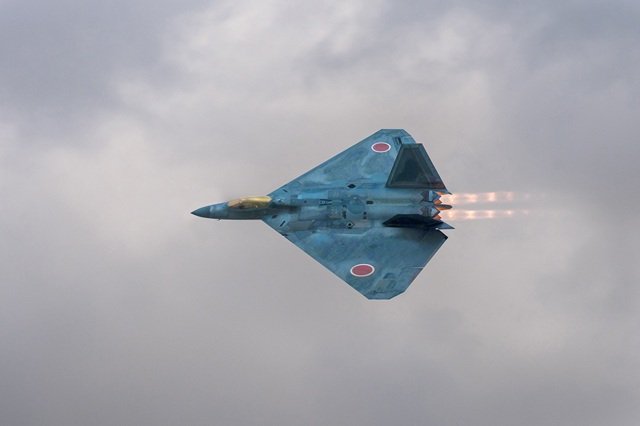
Japan’s ambitious plan to develop a next-generation fighter jet in partnership with Britain and Italy has taken a decisive step forward, as the Global Combat Air Program (GCAP) awarded its first joint international contract following months of uncertainty. The GCAP Agency confirmed that a £686 million ($857 million) deal has been granted to Edgewing, the trilateral joint venture tasked with leading the design and development of the advanced supersonic aircraft.
The contract marks a major milestone for the program, signaling the transition from nationally managed efforts to a fully integrated international initiative. The funding will support critical design and engineering work, enabling the three partner nations to build momentum and accelerate progress toward delivering a sixth-generation fighter jet by 2035. Officials emphasized that the agreement empowers Edgewing to take full control as the industrial lead, a first in the history of multinational combat aircraft development.
Edgewing, established last year, brings together Britain’s BAE Systems, Italy’s Leonardo, and the Japan Aircraft Industrial Enhancement Co., a consortium backed by Mitsubishi Heavy Industries and the Society of Japanese Aerospace Companies. Each partner holds an equal stake, reflecting a carefully balanced approach aimed at ensuring shared technological and industrial benefits. The company is headquartered in Reading, alongside the GCAP Agency, to facilitate close coordination and alignment.
The agreement also resolves delays that had raised concerns about the program’s timeline. Originally expected to be signed last year, the contract was held up largely due to the postponement of Britain’s Defence Investment Plan, which is required to unlock further funding. The current deal, set to run until the end of June, is seen as a temporary but necessary measure to keep the project on track until additional long-term funding arrangements are finalized.
GCAP Chief Executive Masami Oka described the contract as a pivotal moment, noting that activities previously carried out under separate national frameworks will now be unified under a single international structure. Analysts say the move is crucial for aligning design teams and ensuring seamless collaboration across borders, although further contracts are expected in the near future to sustain momentum.
The fighter jet program involves a vast and complex industrial network beyond Edgewing. Major defense firms across the three countries are collaborating on key subsystems, including propulsion, weapons, and advanced electronics. Companies such as Rolls-Royce, IHI, and Avio Aero will handle engine development, while MBDA and Mitsubishi Electric are tasked with weapons systems. Additional efforts will focus on integrated communications and advanced sensing capabilities to enhance battlefield awareness and survivability.
The twin-engine aircraft, intended to replace aging fleets in all three nations, also represents a historic shift for Japan, marking the first time it has pursued a major defense project with partners other than the United States. The program is designed to evenly distribute design, development, and manufacturing responsibilities, strengthening domestic defense industries across all partner countries.
Interest in the program is growing internationally, with Saudi Arabia among the countries reportedly considering joining. Other nations, including Australia, India, Sweden, Poland, and Canada, have also been linked to potential participation, either as partners or observers. Meanwhile, speculation is mounting that Germany could explore involvement as it faces ongoing challenges with its separate European fighter jet initiative.
Despite the momentum, expanding the partnership could introduce complications. Adding new full partner nations would likely require renegotiating governance structures and work-sharing agreements, potentially jeopardizing the program’s tight 2035 deployment target. For now, the focus remains on maintaining progress and ensuring that the first phase of this landmark defense collaboration delivers on its ambitious goals.









