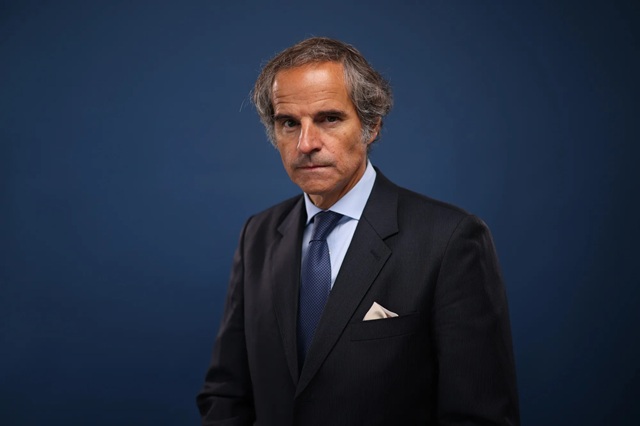
The head of the United Nations nuclear watchdog has warned that the ongoing standoff with Iran over its nuclear program cannot continue indefinitely, as questions remain unanswered about the fate of highly enriched uranium and access to key facilities bombed by the United States and Israel. Speaking on Tuesday, International Atomic Energy Agency Director General Rafael Grossi said prolonged uncertainty could force the agency to conclude that it no longer knows where sensitive nuclear material is located.
Grossi told Reuters in an interview at the World Economic Forum in Davos that while the IAEA has inspected all 13 of Iran’s declared nuclear facilities that were not damaged in the June strikes, it has been unable to access the three most critical sites that were hit: Natanz, Fordow, and Isfahan. These facilities are central to Iran’s enrichment program, and their status remains unclear months after the attacks.
At the heart of the dispute is Iran’s failure to submit a required special report detailing what happened to nuclear material at the bombed sites, including an estimated 440.9 kilograms of uranium enriched to up to 60 percent purity. That level is just short of weapons-grade, and according to IAEA standards, the stockpile would be sufficient, if further enriched, to produce roughly ten nuclear bombs. Without Iran’s accounting, inspectors cannot verify whether the material remains under safeguards.
“This cannot go on forever,” Grossi said, warning that at some point the agency may have to admit it no longer has confidence in the whereabouts of the material. Such a declaration would mean the IAEA could not guarantee that uranium had not been diverted or concealed. While Grossi stressed he has not reached that conclusion yet, he said Iran must urgently engage with the agency to prevent that outcome.
Iran maintains that it is fully cooperating with the IAEA, though it has not submitted the outstanding report. Iranian officials were not immediately available to respond to Grossi’s latest comments. Meanwhile, the watchdog has not verified Iran’s stock of highly enriched uranium for at least seven months, despite its own guidelines calling for monthly verification.
Grossi said he has so far exercised what he called “diplomatic prudence,” but emphasized that Iran, as a signatory to the Nuclear Non-Proliferation Treaty, must meet its obligations in full. He cautioned that NPT members do not have the option to selectively comply with certain rules while ignoring others, adding that prolonged delays could force him to formally declare Iran in non-compliance.
Asked whether the impasse could be resolved in the coming months, Grossi said spring would be a reasonable timeframe. However, he acknowledged that broader diplomatic efforts aimed at easing tensions between Iran and the United States complicate the situation. Those talks, led in part by U.S. special envoy Steve Witkoff, are a “real world” factor the IAEA cannot ignore, Grossi said, expressing hope they would reduce the risk of renewed military confrontation.
The IAEA reported in November that it had inspected most Iranian nuclear facilities that were not struck in the attacks, and Grossi said additional inspections continued through late December. Access was limited during periods of civil unrest in Iran, when widespread protests prompted a harsh government crackdown. Iranian authorities have since told the agency that conditions are calm again, Grossi said, raising the question of why inspections should not resume.
Grossi said he expects to meet Iranian Foreign Minister Abbas Araqchi in the coming days or weeks, a discussion that could prove pivotal in determining whether cooperation resumes or whether the nuclear watchdog is forced to escalate the issue on the international stage.