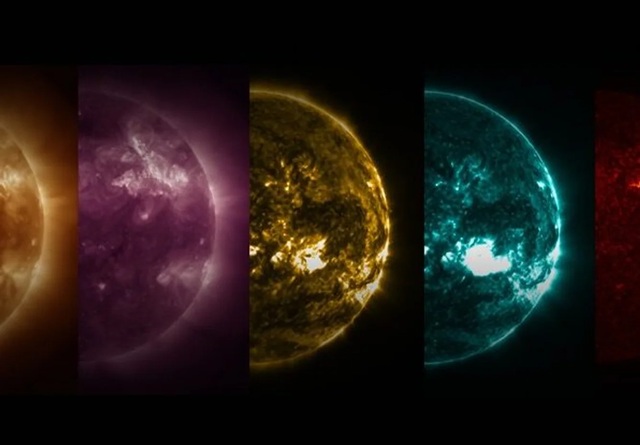
IBM and NASA have unveiled Surya, an open-source AI foundation model designed to dramatically improve the accuracy of solar storm and space weather forecasting. As reported by AI Magazine, the model marks a significant breakthrough in predicting solar activity, which can have severe implications for satellites, aviation, GPS navigation, and power grids.
Hosted on Hugging Face, Surya is trained on nine years of high-resolution data from NASA’s Solar Dynamics Observatory, creating a dataset 10 times larger than those typically used in solar forecasting models. Early results show Surya enhances solar flare classification accuracy by 16% and can provide visual predictions of flare activity up to two hours in advance — a leap forward in both precision and lead time.
A Critical Global Risk
The importance of space weather forecasting has grown alongside humanity’s dependence on interconnected technology. Solar flares and coronal mass ejections (CMEs) pose risks to everything from telecommunications networks to agriculture. According to risk models from Lloyd’s, a single severe solar storm could trigger global economic losses of up to US$2.4 trillion over five years, with a single major event costing an estimated US$17 billion.
“Think of this as a weather forecast for space,” said Juan Bernabe-Moreno, Director of IBM Research Europe for the UK and Ireland. “Surya provides unprecedented capability to anticipate what’s coming and represents a critical step toward protecting our technological civilisation from the star that sustains us.”
How Surya Works
By training on heliophysics data with exceptional spatial resolution, Surya enables researchers to forecast the emergence of active solar regions, predict solar wind speed, and analyse the sun’s extreme ultraviolet (EUV) spectra. These insights are vital in reducing the risks of disruption to global infrastructure.
“By developing a model trained on NASA’s heliophysics data, we’re making it simpler to analyse the sun’s complexities with unprecedented speed and precision,” said Kevin Murphy, Chief Science Data Officer at NASA. “This model enhances our understanding of how solar activity affects critical systems and technologies that we count on here on Earth.”
Democratising Space Weather Forecasting
A defining feature of Surya is its open-source availability. Released on Hugging Face, the project provides the largest curated heliophysics dataset to date, empowering scientists, policymakers, and technologists worldwide to contribute to research and create protective measures against space weather threats.
The launch of Surya also extends the Prithvi family of AI foundation models, developed jointly by IBM and NASA to tackle global-scale scientific challenges. Other models in the series support geospatial analysis and terrestrial weather forecasting.
As AI Magazine notes, the open release of Surya is not only a technological advance but also a step toward global resilience. By democratizing access to solar data, IBM and NASA aim to safeguard the increasingly interconnected systems that modern societies depend upon — from satellites in orbit to the power grids on the ground.