“Being a flight attendant is more than just serving drinks and providing pillows. It’s about making people feel at home even when they’re miles away from home.” — Dora Swanson.
31st May is International Flight Attendant Day.
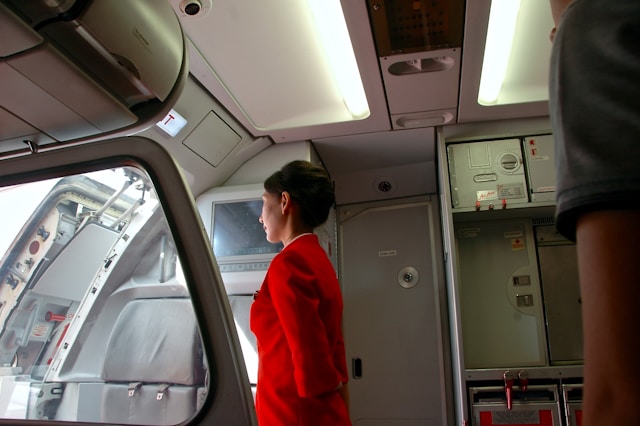
The function and role of a flight attendant, while often romanticized or trivialized by public perception, is, in truth, one that rests at the very intersection of safety, duty of care, and human fragility encountered in the most precarious environments: the aircraft cabin at 30,000 feet. It is a station of high trust, complex accountability, and a delicate balance between assertive authority and empathetic accommodation. The flight attendant has to rise early, retire late, and be ever alert to the needs of the passenger, at the same time, ensuring that the safety of the aircraft is not jeopardized in any way.
In the earlier, more romanticized days of commercial aviation, the flight attendant (then often cast in the role of hostess or steward) carried not merely the burden of passenger safety, but also the quasi-pastoral task of calming fears and explaining the mysteries of meteorology and aerodynamics. The aircraft, flying at lower altitudes and equipped with generously proportioned windows, offered views that reassured rather than intimidated. The cabin crew doubled as tour guides and caretakers, dispensing both information and comfort. Fear of flying was a curiosity, not a clinical issue.
But the contemporary aviation environment, compounded by post-pandemic trauma and the mechanization of passenger processing, is a vastly different reality. It no longer suffices to pacify a nervous traveler with scenic vistas or explanations of cloud strata. The fear of flying has now entered the realm of behavioral science and, in its extremity, criminology. While not every case of flight anxiety translates into air rage or unlawful conduct, the transformation of a normally docile and law-abiding citizen into an aggressor is not merely theoretical. It is a documented phenomenon, with its roots deep in evolutionary biology, sociocultural stress, and personal fragility.
This brings to bear the extent of liability devolving onto the shoulders of flight attendants for acts of alleged negligence while simultaneously providing a compelling defense of the considerable responsibilities they bear in handling anxious or unruly passengers. Such an exploration must be underpinned not only by the letter of the law but also by an understanding of the atmospheric and operational nuances that define the in-flight environment.
Passenger Anxiety
To many, the experience of air travel is not a casual or quotidian undertaking, but rather a venture fraught with psychological disquiet, where trepidation fuses with existential fear, culminating in a deeply destabilizing confrontation with the unknown. The very notion of being hurled across the sky in a pressurized tube, suspended by aerodynamics and human engineering, is a proposition that for some is anything but reassuring. Layered upon this natural unease, the engulfing climate of a pandemic, replete with its contagions of uncertainty and alarm, and we are left with an aggravated theatre of human vulnerability.
For the person already afflicted with an underlying fear of flying, it is no longer simply about flying. It becomes about containment: a fear of heights; a loathing of enclosed spaces; the psychological discomfort of proximity to strangers in pressurized confinement; the paralysis of passivity—sitting helplessly while an unseen pilot orchestrates your fate. There are inexplicable noises, sudden shifts in motion, unfamiliar vibrations, and the sterile voice of an intercom issuing cryptic announcements.
Passenger hostility, therefore, cannot be viewed in isolation as an act of willful belligerence. It is often the culmination of neuropsychological derangement driven by multiple stressors. The fear of losing control, the slow accretion of fatigue, and the unpredictable vagaries of environmental stimuli converge to induce a state of defensive posture in the traveler. This could manifest in demands for alcohol, entitlement to particular seats, insistence on smoking rights, or other self-protective gestures that defy policy and challenge the authority of the cabin crew. These behaviors, while inappropriate, may have less to do with delinquency and more to do with the neurobiology of self-preservation.
Fear-inducing stimuli are not confined to the aircraft alone. The entire arc of the travel experience—from packing a bag to navigating the airport terminal—can constitute a gauntlet of psychological hurdles. Terminology plays an insidious role: the words “terminal building,” “final call,” and “final destination,” while semantically benign, carry ominous weight for someone already wrestling with existential dread. The act of separating from loved ones, the requirement to enter sterile zones patrolled by uniformed officers, and the disorienting choreography of airport signage and announcements—each of these elements contributes incrementally to a crescendo of distress.
Indeed, the phenomenon of fear as it pertains to flying, far from being a mere inconvenience, is a vector of destabilization. It introduces uncertainty into an environment where predictability is paramount. While aircraft technology and regulatory systems have evolved to minimize risk, the human element remains the great variable. The latent volatility of passengers, born of fear and manifesting in erratic behavior, cannot be mitigated by engineering alone. It must be managed by human agency—by the very flight attendants whose own vulnerabilities are subordinated to the needs of others.
And what of the aircraft itself? Once the doors are shut, the fuselage becomes a hermetically sealed capsule, physically restrictive and symbolically imprisoning. For some, it is the final surrender of autonomy, the crossing of an evolutionary boundary from which there is no retreat until wheels once again touch the earth. Inside this environment, the cabin crew are not simply functionaries. They are custodians of a delicate and often fractious equilibrium. It is tragically ironic that they, too, are not immune to the fear of flying—an ailment that, according to some estimates, afflicts nearly 60% of the traveling public. Yet they are tasked with maintaining order among individuals who are medicated, stressed, sleep-deprived, emotionally volatile, or even potentially violent.
One must not forget that the typical aircraft cabin is a microcosm of humanity in all its complexity and contradictions. It is populated by the anxious, the belligerent, the grieving, the joyous, the drunk, the neurodivergent, and the desperate. Among them may be perverts, pickpockets, and bigots. One might encounter those with ingrained prejudices against women, members of the LGBTQ+ community, and ethnic minorities. There may be individuals with compromised hygiene, substance dependencies, or unresolved trauma. All are locked together in a metal container, propelled at 900 kilometers per hour through the atmosphere, tended to by a handful of professionals whose mandate is to maintain safety, enforce regulation, deliver service, and absorb abuse.
And yet, the flight attendant must proceed with decorum. They must convey the intricacies of aircraft security—how to operate a life jacket, where to locate the oxygen mask, and what to do in the event of a water landing—all while gauging the psychological state of their audience. That this task may in itself be anxiety-inducing for the crew member is an underappreciated truth. To stand before a diverse, potentially combustible mix of passengers and project calm, authority, and empathy is a feat that combines diplomacy with pedagogy, and vigilance with fortitude.
Liability Issues
The liability of the flight attendant is, in legal terms, not uniquely separate from that of the carrier; it is subsumed under the broader construct of vicarious liability in most jurisdictions. Under the Montreal Convention of 1999, which governs international carriage by air, Article 17 establishes that the carrier is liable for damage sustained in the event of death or bodily injury of a passenger, if the accident which caused the damage took place on board the aircraft. While this provision does not explicitly reference flight attendants, the jurisprudential understanding that the liability for acts or omissions of a flight attendant, if constituting an “accident” within the meaning of Article 17, may be imputed to the carrier.
That being said, the doctrine of personal liability does not entirely vanish. While a passenger may not typically sue a flight attendant personally in most circumstances involving commercial air travel, there remains scope – particularly under common law tort principles – for individual accountability where wilful misconduct, gross negligence, or acts ultra vires the scope of employment are alleged. In Olympic Airways v. Husain, 540 U.S. 644 (2004), the United States Supreme Court considered the inaction of a flight attendant in refusing to relocate a passenger who was severely allergic to second-hand smoke, leading to the passenger’s death. Although the carrier was held liable, the decision offers a sobering reflection on the role of the flight attendant: it is not merely ancillary but potentially determinative in the causal chain leading to passenger injury or death. The Court, while cautious not to cast aspersions on the individual per se, left open the possibility that egregious indifference to duty may rise to the level of actionable negligence.
Such determinations are, however, rare and must be tempered with an understanding of the contextual constraints under which cabin crew operate. The aircraft cabin is an artificial and pressurized environment. It is a space where anxiety is exacerbated, patience is shortened, and behavioral irregularities may emerge, often magnified by alcohol consumption, claustrophobia, or latent psychological distress. Within this crucible of heightened emotional energy, the flight attendant functions as a hybrid authority: caregiver, enforcer, mediator, and – at times – a last line of defense. It is within this multiplicity of roles that the debate on liability must be delicately situated.
One must ask: where a flight attendant takes decisions or fails to act in a manner that leads to injury – whether physical, emotional, or reputational – has that person breached a duty, or simply navigated a treacherous landscape in the best manner possible under constraint? The defence of the flight attendant lies not in denial of duty but in a recognition of the high threshold for actionable negligence in the in-flight context. In Wallace v. Korean Air, 214 F.3d 293 (2d Cir. 2000), the court recognized that even actions taken by cabin crew in the course of enforcing legitimate safety protocols – including physically restraining an unruly passenger – did not necessarily constitute an “accident” for which the carrier could be liable under Article 17, absent evidence of unusual or unexpected conduct.
This line of reasoning serves to reinforce a critical tenet: that flight attendants are not automatons acting in a vacuum. Their decisions are frequently conditioned by Standard Operating Procedures (SOPs), regulatory dictates, and the real-time judgment of the pilot-in-command, whose authority is paramount under Article 6 of the Tokyo Convention of 1963, which confers upon the pilot in command powers to apply reasonable measures to ensure safety on board. In light of this hierarchical structure, attributing personal liability to a flight attendant without consideration of procedural constraints or command directives would be legally imprudent and ethically flawed.
Moreover, courts have shown a healthy reluctance to second-guess inflight decisions made in good faith and under duress. In Olympic Airways v. Husain, the dissent warned against substituting judicial hindsight for operational judgment. Such warnings should be heeded in cases involving unruly or anxious passengers. Flight attendants, unlike police officers or psychiatrists, are not trained to diagnose mental illness or anticipate every variant of deviant behavior. Their interventions, including the use of restraint devices or decisions to disembark a passenger, must be seen through the prism of necessity, not malevolence.
To further illustrate, consider the case of Singh v. Caribbean Airlines Ltd., 798 F.3d 1355 (11th Cir. 2015), in which a passenger sued the airline under the Montreal Convention after suffering injuries from turbulence, alleging failure by the cabin crew to warn of impending motion. The court, however, recognized that the turbulence was neither predictable nor avoidable and that the flight attendants had followed all reasonable protocols. In this sense, the law does not demand clairvoyance; it demands reasonableness, diligence, and adherence to procedure.
This is not to say that all conduct by flight attendants is above reproach. There may arise instances of overt malice, gross indifference, or discriminatory behavior that justify individual scrutiny. But such cases are the exception, not the norm.
My Take
There is, additionally, an emerging body of scholarship that calls for more robust protections for cabin crew in the face of passenger aggression. In recent years, reports of verbal abuse, sexual harassment, and even physical assault against flight attendants have become distressingly common. The United States Federal Aviation Administration (FAA) recorded nearly 6,000 reports of unruly passenger incidents in 2021 alone. In such a climate, the invocation of negligence against the very persons striving to maintain order appears not only incongruous but dangerously counterproductive. The law must not become a cudgel wielded against those entrusted with the sanctity of inflight safety.
It is for this reason that the law must adopt a more textured understanding of airline operations. It must not view the flight attendant as a static, impassive executor of instructions but as a human mediator in a pressurized human environment. To assess their conduct without considering the psychological architecture of fear, the cultural anthropology of the traveling public, and the physiological constraints of the aircraft environment is to render a judgment in abstraction.
The defense of the flight attendant, then, is not merely a legal construct—it is a moral imperative. In assigning responsibility, we must be careful not to invert the hierarchy of burden, laying blame upon those who bear the greatest operational weight with the least systemic support. Fear, like turbulence, cannot always be anticipated, and like turbulence, it is rarely the fault of those whose job it is to respond to its effects.
In understanding the complex landscape of fear, anxiety, and inflight behavior, one arrives at a singular truth: that the flight attendant stands as a sentry at the edge of human behavior, holding the line between chaos and calm not with weapons or words, but with courage. And to place upon such a person the added burden of undue blame would be not only unjust—it would be unkind.
It is therefore imperative to articulate a jurisprudence of context – one that acknowledges the cognitive and emotional demands placed upon cabin crew, and the impossibility of perfection in high-stress situations. In tort law, the reasonable person standard has long governed determinations of negligence. When applied to flight attendants, this standard must be informed by the reasonable expectations of a person trained for aviation safety, operating in a confined space with limited resources and finite time. It would be absurd to expect a flight attendant to display omniscience or prescience in the face of volatile human behaviour.
The teleological imperative of international air law – to harmonize, to protect, to facilitate safe and efficient carriage – must also guide our interpretation of liability. To impose disproportionate burdens on flight attendants is to undermine not only morale and recruitment but also the cohesive trust structure upon which in-flight operations depend. If fear of litigation begins to dictate conduct in the cabin, the result will be hesitation, delay, and second-guessing – all of which compromise safety far more than they protect rights.
In closing, it must be observed that flight attendants are the quiet sentinels of the sky. Their duties encompass more than service; they embody safety, order, and reassurance amidst uncertainty. To litigate against them in negligence without understanding the crucible in which they function is to do violence to the very ethos of aviation. Law must temper accountability with empathy; it must understand before it judges. The liability of the flight attendant – if it arises – must be tethered not to perfectionism, but to standards that are just, proportionate, and infused with the humanity they are asked to safeguard at altitude.
Thus, in defending the flight attendant from indiscriminate blame, we are not shirking the call for justice; we are answering it in a higher key – one that resonates with the values of fairness, operational realism, and moral clarity. In a domain where even a breath may be borrowed from a pressurized cylinder, let us not be so quick to suffocate judgment in the rarified air of litigation. Let us instead ground it in the reality of flight.