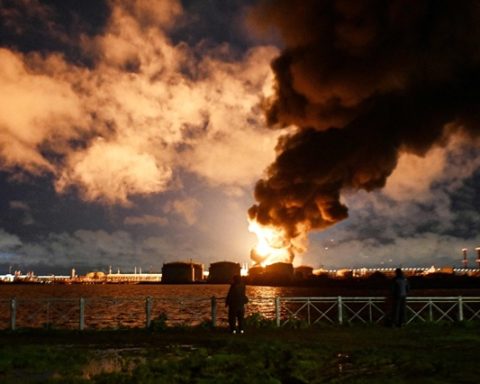
Tehran’s effective blockade of the Strait of Hormuz has left tens of thousands of mariners stranded on ships carrying millions of barrels of oil, navigating a war zone where drones, missiles, and electronic jamming make every voyage perilous. According to Bloomberg, crews on vessels in the Persian Gulf and Gulf of Oman are forced to rely on radar and traditional navigation methods after GPS interference renders automatic systems unreliable. Many ships have turned off their transponders to avoid detection, with fewer than 20% of vessels broadcasting their locations despite satellite monitoring.
Seafarers described life aboard the stranded ships as tense and exhausting. Some have been trapped for weeks, improvising recreation and rationing food and fresh water while explosions echo overhead. Onboard one tanker, a captain described playing basketball and watching movies to cope, while another reported navigating near the burning Fujairah terminal amid fighter jets, with GPS systems jammed and visibility limited. Bloomberg reports that roughly half of the estimated 40,000 sailors in the region are effectively trapped, facing threats from attacks and challenging working conditions.
The economic impact of the blockade is profound. Around a quarter of global seaborne oil trade passes through the strait, and disruptions have driven up energy prices, created fuel shortages in Asia and Africa, and pushed up fertilizer costs. The International Transport Workers’ Federation and the Joint Negotiating Group have designated the area a “Warlike Operations Zone,” granting extra pay and allowing seafarers the option to leave, though many are effectively unable to disembark due to disrupted air travel and lack of replacement crews.
Insurance costs have soared, and benchmark tanker earnings in the Middle East have increased by about $200,000 a day, reflecting the premium for operating in extreme danger. Incidents like the Thai-flagged Mayuree Naree, struck by a projectile with three crew members missing in the engine room, underscore the life-threatening risks. Some vessels are navigating routes dangerously close to the Iranian coast or through channels normally advised against, further raising the stakes.
Seafarers interviewed by Bloomberg described exhaustion, anxiety, and constant readiness for emergencies. Crew members are forced to sleep in shifts, ration supplies, and remain alert for nighttime attacks, with explosions and drone activity making rest nearly impossible. For many, the choice between safety and financial necessity is agonizing, and the uncertainty of how long they will remain trapped compounds the strain.
As Iran maintains the blockade and military activity intensifies, the humanitarian and logistical pressures on seafarers are mounting, highlighting the hidden costs of geopolitical conflict on global trade and the human lives sustaining it.