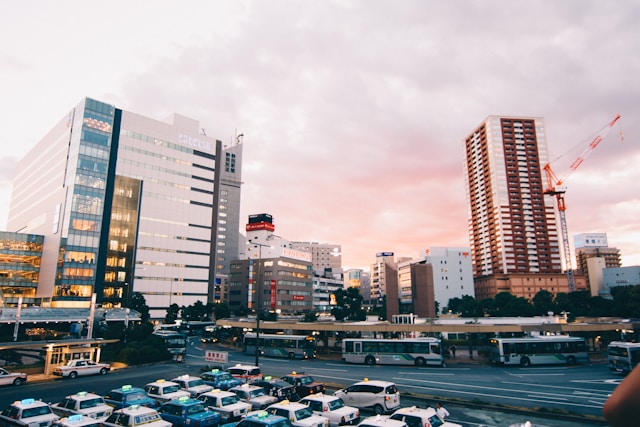
Hamamatsu, a city long regarded as one of Japan’s key industrial powerhouses, is turning to immigration in an effort to counteract a shrinking population and an exodus of young workers to Tokyo.
Mayor Yusuke Nakano has made it his top priority to ensure that the city, home to 770,000 residents and companies such as Honda, Suzuki, Yamaha, and Roland, does not run short of workers. Hamamatsu, located about 250 kilometers west of the capital, has been struggling with a declining workforce, raising concerns among businesses about their ability to remain competitive.
Speaking to the Financial Times, Nakano stressed the urgency of bringing in foreign residents. “The declining population is extremely damaging to the local economy. The key question will be how many people from abroad we can attract, and how gradually we can slow down this population decline,” he said. Based on current trends, he predicts Hamamatsu’s population could fall by 10 percent by 2040.
Hamamatsu is not new to migration. During Japan’s high-growth era of the 1970s and 80s, waves of Brazilian workers arrived to fill industrial jobs, leaving a legacy still visible in the city’s multilingual services. But this time, officials hope to attract a more diverse and skilled set of immigrants, with Indian engineers and software developers among the fastest-growing groups.
Suzuki, headquartered in the city, has already recruited hundreds of engineers from India, while also expanding direct hiring from Indian universities. “We only had mechanical engineers and no software engineers,” said Junya Kumataki, who oversees new mobility services at Suzuki. “Bringing in young engineers and more international talent is critical.”
The city is backing this effort with expanded services for immigrants, including Japanese-language classes, cultural programs, and plans for new international schools. However, many foreign workers remain hesitant about staying long term, citing challenges such as limited educational options for their children.
Nationally, immigration has risen steadily, with more than two million foreign workers reported in Japan last year. Still, foreign residents make up just 3 percent of the population — far lower than in most Western nations.
Experts believe Hamamatsu could become a test case for Japan. “If Hamamatsu actually tries to implement such a policy seriously, it is path-breaking,” said Shigeki Sato, professor of social sciences at Hosei University.
Yet challenges remain. Many young Japanese — especially women aged 18 to 22 — continue to leave Hamamatsu for better opportunities in Tokyo, where jobs, education, and nightlife are more appealing. Nakano concedes the difficulty of competing directly with the capital but envisions Hamamatsu as a place for young people to return to and build families.
“Young people go to Tokyo and learn various things, then come back and create new things from here,” he told the Financial Times. “We will develop this city by doing things that Tokyo cannot do.”