


In Shakespeare’s historical play Henry VI, Part 2, infamous Dick the Butcher uttered those words signifying the necessity of purging the legal fraternity before forming a tyranny. The legal profession, with all its concomitant worries, remains hallowed to fulfil justice, the very last virtue that mankind has been striving to attain throughout the annals of history. The legal profession in Sri Lanka is a direct offshoot of the island’s colonial history, closely tied to the British administration. From the moment the British introduced the Charter of Justice in 1801, which abolished the governor’s judicial power by paving the way for the formation of the Supreme Court, the legal profession began to soar its wings. It goes without saying that, after its initial domination under Europeans and crafty Burghers, the legal profession of this island gradually produced a calibre of lawyers, whose excellence has been deeply associated with the socio-political history of the island.
The decline of the legal profession in Sri Lanka’s post-colonial era has diminished the considerable respect once afforded to lawyers. In recent years, certain unethical actions by members of the profession have significantly damaged public perception, as evidenced by widespread criticism on various social media platforms.
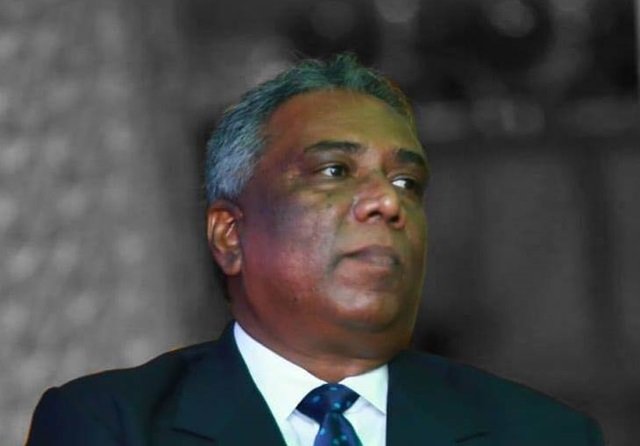
Amidst this period of reputational challenge for the legal profession, Mr Kalinga Indatissa PC marks forty years at the unofficial bar. His distinguished and unblemished career serves as an inspiration to aspiring Sri Lankan lawyers, exemplifying the values upheld by earlier generations of practitioners. Mr Indatissa is among the few who prioritise professional integrity over financial gain, a quality increasingly rare today. He received his education at Royal College Colombo, an institution renowned for producing leading legal professionals from the nineteenth century through the early years of independence, and completed his legal studies at Sri Lanka Law College. Lacking familial connections to the bar, his motivation to pursue law originated from a childhood admiration for Sir Henry Wijekoon, a character in W. A. de Silva’s novel Higana Kolla, depicted as a resolute Supreme Court judge. While Sir Henry embodied a strict, positivist approach to legal reasoning, Mr Indatissa’s own career has been characterized by a more humane and compassionate application of the law. His perspectives on legal education, social issues, and the practical implementation of law in Sri Lanka demonstrate his keen insight.
The conventional depiction of lawyers as individuals burdened with books and versed in obscure legal language unintelligible to the masses is not the path Mr Indatissa has chosen over the past four decades. On the contrary, he developed a remarkable ability to master the fundamental principles underlying any case, a skill perhaps cultivated through the mentorship he received from distinguished members of the Bar, including the late Mr Eardley Perera, PC, and Mr Thivanka Wickramasinghe, PC.
When Mr Indatissa entered the legal profession in 1986, fortune was not particularly favourable to him, as his arrival in Hulftsdorp was not supported by influential connections. Living on a modest salary of merely 2,500 rupees for several years as a State Counsel at the Official Bar, Mr Indatissa endured these hardships with characteristic fortitude. As the old adage goes, Audentes fortuna iuvat—fortune favours the brave—and, in the years that followed, his fortunes gradually began to improve.
It should be noted that Mr Kalinga Indatissa’s reputation is not confined solely to his acute legal acumen. Rather, it is complemented by a wide range of other passions, from cricket to theatre. Such a Renaissance-like persona distinguished him from the countless ordinary lawyers who merely quibble over words in the courtroom.
His dedication to public service manifested itself on several occasions, including his significant contribution to the Commission of Inquiry into the assassination of Gen. Denzil Kobbekaduwa. On one occasion, he boldly defended Sri Lankan cricketing legend Arjuna Ranatunga when the latter faced allegations of match-fixing. Mr Indatissa demanded that the ICC provide the charge sheet in writing, arguing that the accused party had the right to know the precise basis of the allegations. By invoking the fundamental principles of natural justice, which he frequently championed, he successfully challenged the legal establishment of the International Cricket Council.
His admiration for the lawyers in the yesteryears and the decorated practices in the bar unfold his zest for the lore of law as his love. He profoundly recalls how admonitions from those grand old lawyers in the bar nurtured him within the legal fraternity. For example, once famous Dr HW Jayewardene QC corrected his court language, which he humbly accepted and never made that error again. Although he carved his niche as a defence counsel, his interest in civil law, especially in the fundamental rights jurisprudence, remains undiminished. This was evident when Mr Indatissa recently appeared for a child whose admittance was denied to the Royal College. Yet again, opting for basic principles in law, Mr Indatissa was able to convince the three-judge bench in the Supreme Court to hold their view that there has been sufficient ground to proceed with the petition under Article 12 (1) of the Constitution.
Spending forty years in the unofficial bar in Sri Lanka with its tantrums is undoubtedly a herculean task that deserves our plaudits. Especially, his skills as an able counsel and erudition as a writer go hand in hand. The books authored by Mr Indatissa on various aspects in law are not only worthy of being displayed in a lawyers’ book shelf, but they are equally handy for any serious law student as rudimentary texts. In a time, the legal profession struggles for its survival from opprobrium, excelling in the unofficial bar for forty years is emblematic of Mr Indatissa’s passion for the profession, which can be taken as a guiding principle for many young lawyers!
Ad multos annos vivas!












Could you explain what you mean by ‘crafty burghers’?