Each year, as India marks 15 August with flag-hoisting ceremonies and official celebration, a starkly different observance takes place in Indian-administered Jammu and Kashmir and among Kashmiri diaspora communities abroad. For them, 15 August is not a day of national pride but a day of mourning, commemorated as “Black Day.” The contrast between these two observances captures a deeper and unresolved question at the heart of the Indian state: whether the union it claims to represent was ever built on universal consent, or whether it was, in significant part, imposed.
India projects itself internationally as a seamless, unified federation bound together by shared democratic values. Yet a closer examination of its post-1947 history complicates that self-image considerably. The unresolved Kashmir dispute is the most prominent example, but it is far from the only one. Naga nationalist groups commemorate their own declaration of independence on 14 August 1947, a full day before India’s founding. Sections of Manipuri society dispute the terms of their 1949 merger with the Indian union, observing it as an annexation rather than a voluntary accession. Assam’s ULFA movement, founded in 1979, has historically called for a sovereign Assamese state and boycotted India’s independence celebrations. Even Mizoram, now largely at peace following the 1986 Peace Accord, spent two decades pursuing its own independence after the Mizo National Front declared statehood in March 1966. Taken together, these movements suggest that India’s territorial and political consolidation after partition was neither uniform nor uncontested, whatever the official narrative in New Delhi may claim.
The Origins of the Kashmir Dispute
The roots of the Kashmir dispute trace back to the chaotic final months of British rule in South Asia. On 19 July 1947, representatives of Kashmiris gathered at a meeting of the All Jammu and Kashmir Muslim Conference and passed a resolution calling for the state’s accession to Pakistan, citing its religious, geographic, cultural and economic proximity to the newly formed country. Maharaja Hari Singh, the state’s ruler, did not act on these popular demands. As fears grew that he intended instead to accede to India, Pashtun tribesmen crossed into Kashmir in October 1947 in support of their co-religionists, ultimately securing control of what is now known as Azad Kashmir.
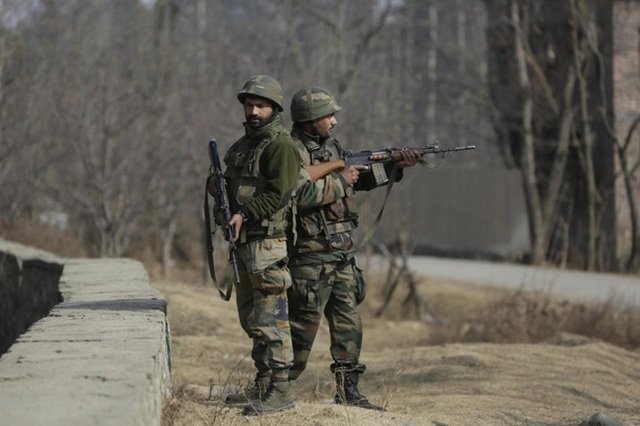
India’s response came on 27 October 1947, when its army landed in Srinagar on the basis of a disputed accession agreement, a date still commemorated as Black Day by many Kashmiris. Pakistan moved its own forces into Azad Jammu and Kashmir shortly afterward to counter what it regarded as an unlawful intervention, triggering the first India-Pakistan war. Seeking international intervention, Indian Prime Minister Jawaharlal Nehru brought the dispute to the United Nations Security Council in December 1947. The Council responded with resolutions in 1948 and 1949 calling for a ceasefire and a UN-supervised plebiscite that would allow the Kashmiri people to determine, through their own vote, whether the state would join India or Pakistan.
That plebiscite has never been held. From the perspective of Kashmiri nationalists and their supporters, India’s continued refusal to implement these resolutions, combined with its unwillingness to reduce its military footprint in the region, represents a decades-long denial of the right to self-determination promised to the Kashmiri people by the international community itself.
From Political Grievance to Armed Resistance
Successive decades of unresolved political status, contested elections and, in the view of many Kashmiris, heavy-handed security measures fed a growing sense of alienation. This culminated in the emergence of a local insurgency in 1989, as a younger generation of Kashmiris took up arms against what they regarded as occupation. This pattern of grievance escalating into organized resistance was not unique to Kashmir: Assam’s ULFA, Manipur’s UNLF, founded in 1964, and the Mizo insurgency of the 1960s all reflected similar dynamics elsewhere within India’s borders, even as their outcomes diverged sharply, with Mizoram eventually achieving a negotiated peace while Kashmir’s dispute remains unresolved.
A pivotal moment in the modern chapter of this dispute came on 5 August 2019, when India unilaterally revoked Articles 370 and 35(A) of its constitution, stripping Jammu and Kashmir of the special autonomous status it had held since independence. For many Kashmiris, this move was not administrative housekeeping but a fundamental breach of trust, one accompanied by changes to property and residency laws that have fueled widespread concern about long-term demographic change in India’s only Muslim-majority region. Critics of the move argue that altering the demographic composition of a disputed territory runs counter to established international humanitarian norms, a position that has found some echo in reports published by the UN Office of the High Commissioner for Human Rights in 2018 and 2019.
Independent monitoring organizations have continued to document restrictive measures in the region in the years since. Reporting bodies covering the 2025–2026 period have pointed to patterns of detention, the continued use of security legislation such as the Public Safety Act and the Unlawful Activities (Prevention) Act, internet and social media restrictions, and limits on published material. These findings are cited by critics as evidence that the situation in Indian-administered Kashmir remains one of heightened securitization, even as India maintains that such measures are necessary responses to security threats in the region.
For those who observe it, Black Day is intended as a statement to the world: that Kashmir’s political status remains unresolved, that its people have not yet exercised the right to self-determination promised to them by UN resolutions, and that annual celebrations of Indian independence obscure a far more contested history of state formation across the subcontinent. Seen this way, 15 August is not a shared national milestone but a reminder of unfinished business dating back to the partition of British India itself.
Any full account of this dispute should also acknowledge developments on the other side of the Line of Control. Human rights organizations, including Amnesty International, have documented serious concerns during unrest in Pakistan-administered Kashmir in 2026, including communications blackouts, arbitrary arrests and allegations of excessive force, with the UN High Commissioner for Human Rights calling for independent investigations and due process for detained individuals. A credible human rights narrative on Kashmir, in other words, cannot be selectively applied to one side of the dispute alone.
It is also worth noting that India rejects the characterization advanced by Kashmiri nationalist and Pakistani sources, maintaining that Jammu and Kashmir’s accession in 1947 was legally valid, that its security operations are a necessary response to cross-border militancy, and that it remains a functioning secular democracy accommodating significant religious and linguistic diversity. These competing narratives, each contested by the other side, continue to define one of the world’s longest-running and most sensitive territorial disputes, with no resolution yet in sight nearly eighty years after partition.