
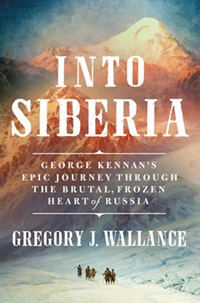
The following excerpts are adapted from the author’s book Into Siberia: George Kennan’s Epic Journey Through the Brutal, Frozen Heart of Russia, published by Macmillan Publishers.
George Kennan is a little-known American whose achievements have been overshadowed by a much younger, distant cousin, the diplomat George Frost Kennan, who was the chief architect of America’s Cold War containment strategy. The George Kennan of this story was an intrepid explorer, a leading American journalist, and after his Siberian exile investigation, a moral force whose writings and lectures about the inhumanity of the exile system compelled Russia to implement reforms.
Kennan went into Siberia twice. The first time was in 1865 when, as a member of a Western Union–backed venture called the Russian-American Telegraph Expedition, he explored a route for a telegraph line through the subzero wilderness of northeastern Siberia. It was a classic young man’s adventure filled with challenges and hardships and driven by Kennan’s quest to prove his courage. Twenty years later he returned to Siberia with George Frost to investigate the exile system and found himself on a moral journey. By then he had become one of America’s most prominent defenders of Russia and its centuries-old practice of banishing criminals and political dissidents to Siberia. Kennan, who spoke Russian fluently and was regarded as a leading expert on Russia, believed that a thorough, objective investigation would vindicate his contention that the exile system, while hardly without flaws, was more humane than penal systems in European countries. He also hoped that his articles about the Siberian exile system would make him rich and famous.
Kennan and Frost traveled eight thousand miles in Siberia in horse-drawn carriages, river steamers, and sleighs and on horseback. They suffocated in sandstorms in the summer and endured winter temperatures of minus forty-five degrees Fahrenheit. They inspected dozens of prisons, observed the marching parties of exiled convicts, spoke with Siberian officials, and met with more than a hundred exiled opponents of the tsarist regime. Both men were plagued by disease, vermin that infested their clothing and luggage, the jolting and pounding of carriages without springs or seats (they had to sit on their luggage), and by the stress of police surveillance. Worst of all was the nervous strain caused by their unrelenting exposure to human suffering because the exile system, as Kennan discovered, in fact was a brutal instrument of the Russian Empire’s exploitation of Siberia’s vast natural resources and a means of suppressing and punishing dissent.
Kennan’s investigation discredited his own defense of the exile system, as he was the first to admit, and changed him as a person. When he returned to the United States, his overarching goal was no longer wealth and fame but to end the suffering of the exiles and bring freedom to Russia. His concept of courage, his attitudes toward women, his views on the Russian government’s oppression of its Jews had all changed. “What I saw heard and learned in Siberia stirred me to the very depths of my soul—opened to me a new world of human experience, and raised, in some respects, all my moral standards.”
And Kennan’s investigation changed America. Today it is nearly impossible to conceive of the close diplomatic relations between Russia and the United States and the affection of Americans for Russia at the time of Kennan’s investigation. Many Americans held the benign perception of Russia as a “distant friend” of the United States, a colorful but mysterious land filled with tragically romantic characters. Kennan’s investigative reporting put an end to that. His articles for the Century magazine, a nearly one-thousand-page, two-volume book, Siberia and the Exile System, and a nine-year lecture tour about the exile system left Americans so appalled and angry at Russia’s mistreatment of its citizens that the relationship between the two countries was never the same.
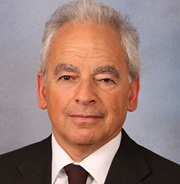
I was drawn to Kennan because of my own experience in the Soviet Union, which still used exile as a punishment, during the Cold War. I had gone there as a young lawyer to submit legal petitions to Soviet authorities on behalf of Jews who had been exiled to Siberia merely because they had publicly demanded the right to emigrate to Israel. I was fortunate to meet courageous dissidents, such as the physicist, human rights advocate, and Nobel Peace Prize–laureate Andrei D.
Sakharov and his wife, Yelena G. Bonner, who sacrificed their careers, comfort, and liberty in a fight for freedoms that I had taken for granted until I crossed the Soviet border. Not long after I met them, Sakharov and Bonner were exiled to the Volga River city of Gorky, which was then closed to foreigners, for protesting the Russian invasion of Afghanistan in 1979.
What it means to live without freedom was driven home to Kennan when, during his investigation, he interviewed a former Siberian political exile in the presence of a Russian liberal, who was amazed by Kennan’s horrified expression as he listened to the exile’s tragic story. The liberal later explained to Kennan that for him the exile’s story was no more surprising than “an account of the running-over of a man in the street. As I watched the play of expression in your face—as I was forced to look at the facts, for a moment, from your point of view—I felt again, to the very bottom of my soul, the difference between a free citizen and a citizen of Russia.” That difference had a lasting impact on Kennan.
Refreshingly, in the nineteenth century, character mattered as much as personality does in our times. Kennan once explained the importance of character in his Siberian telegraph exploration, but his words also apply to his even more demanding investigation of the Siberian exile system and grueling years on the lecture circuit. “Man carries on, for months or years, an almost incessant fight with a hostile and pitiless environment.… In such a situation, personal character rises into absolute predominance; and success, when achieved, is due almost wholly to the courage, forethought, and steadfastness of the individual actor.” Diplomat George Frost Kennan paid tribute to his older cousin’s character when he observed that his formal education ended at high school. “He really was in the intellectual sense a self-made man. He always had to do it himself with very little money. It is quite amazing for a boy of his background.”
Kennan was asked late in life where he went to college. “Russia,” he replied.