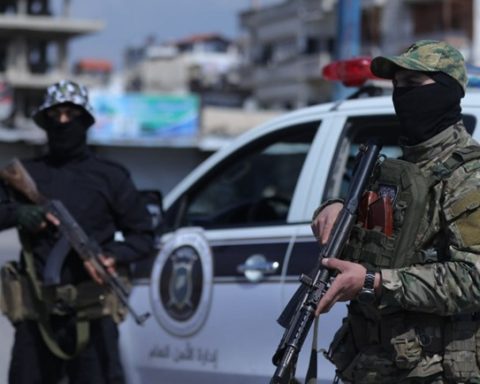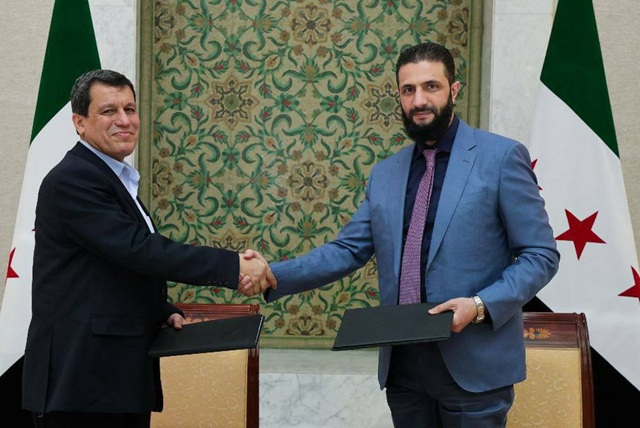
Syria’s new government has signed a historic agreement with the Kurdish-led Syrian Democratic Forces (SDF) to integrate the group into the national army. The move is expected to bring the country’s oil-rich northeast under central authority after years of autonomy and conflict.
The agreement, signed in Damascus by Syrian President Ahmed al-Sharaa and SDF commander Mazloum Abdi, ensures Kurdish rights and formally places the SDF under the command of the national armed forces. International pressure from the United States, Britain, and other allies played a crucial role in brokering the deal following Sharaa’s overthrow of longtime dictator Bashar al-Assad last December.
A New Power Structure in Syria
The SDF, a US-backed force, had carved out a self-governing region in the northeast during Syria’s protracted civil war and played a key role in defeating the Islamic State (ISIS). However, following Assad’s fall, it resisted full integration into the new government, demanding greater autonomy and a phased military merger. While the agreement does not outline a timeline for integration, it states that full unification will be achieved by the end of the year, despite Mazloum’s previous request for a two-year transition.
The deal comes amid violent clashes between Sharaa’s forces and Assad loyalists, with reports of massacres targeting members of the Alawite sect, to which Assad belonged. The Syrian Observatory for Human Rights reported over 1,130 fatalities, including 830 civilians, though these numbers remain unverified. The UN’s human rights office has confirmed at least 111 civilian deaths and expects the actual toll to be much higher.
Challenges and Geopolitical Ramifications
Sharaa continues to face resistance in consolidating control over the country. Southern militias remain armed and defiant, while Mazloum’s forces are engaged in ongoing conflicts with Turkey and its allied militias in the north. Further complicating matters, the Kurdistan Workers’ Party (PKK) leader, Abdullah Ocalan, has called for the dissolution of the group, adding pressure on Mazloum, who has historical ties to the PKK.
The agreement also has implications for Syria’s international relations. Sharaa, who is considered a terrorist by the US and Britain due to his leadership of the former rebel group Hayaat Tahrir Al-Sham, has been lobbying for sanctions relief. While Britain and the EU have started easing restrictions, the US remains cautious, especially in light of reports of sectarian violence. US Secretary of State Marco Rubio condemned the killings of Alawites, labeling the perpetrators as “radical Islamist terrorists, including foreign jihadis.”
Meanwhile, Israel has issued strong warnings against Sharaa’s forces moving south of Damascus, citing concerns over the protection of the Druze minority. The Israeli military has responded with airstrikes on Syrian military positions in the south, further escalating tensions in the region.
The merging of the SDF into the Syrian military marks a turning point in Syria’s post-war reconstruction and governance. However, significant challenges remain, including ongoing sectarian tensions, geopolitical rivalries, and unresolved questions about the role of foreign actors in the country’s future. Whether the agreement leads to stability or further fragmentation will depend on the ability of Sharaa’s government to maintain control and navigate Syria’s complex political landscape.