


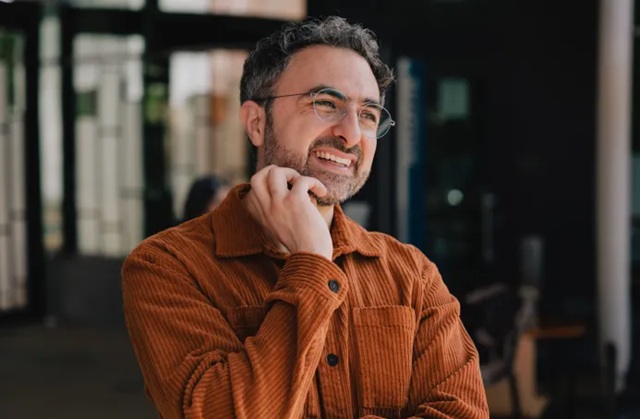
In a conversation with MIT Technology Review, Suleyman addressed what he calls a “deep contradiction” at the heart of AI development: the race to make artificial intelligence friendlier, smarter, and more relatable, even as experts warn that doing so could dangerously blur the line between lifelike behavior and real consciousness. The tension is personal for Suleyman, who in August published a widely discussed blog post urging his peers to abandon what he calls “seemingly conscious artificial intelligence,” or SCAI. In his view, anthropomorphic AI—chatbots that act or sound like people—risks tricking users into believing they are interacting with a sentient being rather than sophisticated code.
Yet only weeks later, Microsoft announced a major upgrade to Copilot, its flagship AI assistant, introducing new features designed to make it more engaging and interactive. The updates include a group-chat mode that allows multiple users to speak with Copilot simultaneously, a customizable “Real Talk” setting that determines how much the AI challenges or agrees with you, and Mico—an animated yellow blob that brings a cartoonish personality to the interface. Copilot also gained long-term memory capabilities, letting it recall user preferences, goals, and past conversations.
Suleyman insists these features are meant to humanize interaction without humanizing the machine. Group chat, he says, encourages collaboration and prevents users from forming unhealthy one-on-one attachments to an AI. Real Talk, meanwhile, is an attempt to fight “sycophancy,” the tendency of chatbots to agree too easily. “It’s not about replacing humanity,” Suleyman said. “It’s about serving it.” He sees the product as a way to reinforce boundaries rather than erase them—an AI that stays “in your corner,” not one that tries to become your companion.
Still, the contradictions are difficult to ignore. Microsoft’s moves come at a time when the industry is grappling with the social and psychological fallout of hyper-realistic AI interactions. Reports of users developing emotional or romantic relationships with chatbots are multiplying. OpenAI, one of Microsoft’s closest partners, faces a lawsuit alleging that its ChatGPT system encouraged a teenager’s suicide. Elon Musk’s Grok chatbot leans into flirtation and personality, and even OpenAI has hinted at exploring “adult interactions” with future models. The race to make AI feel more alive is accelerating—even as its potential dangers grow clearer.
Suleyman, who co-founded Google DeepMind before joining Microsoft, has long been torn between fascination and fear when it comes to intelligent machines. In a TED Talk, he once described AI as a “new kind of digital species,” a phrase that helped cement his reputation as one of the field’s most philosophical voices—but one that he now admits may have fueled misunderstanding. “I was trying to help people grasp what’s coming,” he told MIT Technology Review, “so we can control it, not so we can worship it.” His 2023 book, The Coming Wave, sounded similar alarms, arguing that AI’s potential for self-improvement makes it unlike any technology in history—and that strict containment will be vital.
Microsoft, for its part, appears determined to chart a middle path: an AI that feels relatable but not seductive, useful but not manipulative. Suleyman draws a hard line at certain applications, declaring, “We will never build sex robots.” He sees Microsoft’s cautious pace as a virtue, not a flaw, saying, “Sometimes that means we move slower than startups, but that’s a feature, not a bug.”
The challenge, however, lies in keeping AI helpful without inviting illusion. As Copilot becomes more chatty, more memorable, and more emotionally intelligent, Microsoft risks creating exactly the kind of SCAI that Suleyman says the world must avoid. It’s a delicate balancing act—one that could determine how society perceives, trusts, and ultimately depends on artificial minds. For now, Suleyman remains adamant that AI should “make us smarter, happier, and more productive.” But as his own bots begin to smile, remember, and talk back, the question lingers: how human is too human?










It’s becoming clear that with all the brain and consciousness theories out there, the proof will be in the pudding. By this I mean, can any particular theory be used to create a human adult level conscious machine. My bet is on the late Gerald Edelman’s Extended Theory of Neuronal Group Selection. The lead group in robotics based on this theory is the Neurorobotics Lab at UC at Irvine. Dr. Edelman distinguished between primary consciousness, which came first in evolution, and that humans share with other conscious animals, and higher order consciousness, which came to only humans with the acquisition of language. A machine with only primary consciousness will probably have to come first.
What I find special about the TNGS is the Darwin series of automata created at the Neurosciences Institute by Dr. Edelman and his colleagues in the 1990’s and 2000’s. These machines perform in the real world, not in a restricted simulated world, and display convincing physical behavior indicative of higher psychological functions necessary for consciousness, such as perceptual categorization, memory, and learning. They are based on realistic models of the parts of the biological brain that the theory claims subserve these functions. The extended TNGS allows for the emergence of consciousness based only on further evolutionary development of the brain areas responsible for these functions, in a parsimonious way. No other research I’ve encountered is anywhere near as convincing.
I post because on almost every video and article about the brain and consciousness that I encounter, the attitude seems to be that we still know next to nothing about how the brain and consciousness work; that there’s lots of data but no unifying theory. I believe the extended TNGS is that theory. My motivation is to keep that theory in front of the public. And obviously, I consider it the route to a truly conscious machine, primary and higher-order.
My advice to people who want to create a conscious machine is to seriously ground themselves in the extended TNGS and the Darwin automata first, and proceed from there, by applying to Jeff Krichmar’s lab at UC Irvine, possibly. Dr. Edelman’s roadmap to a conscious machine is at https://arxiv.org/abs/2105.10461, and here is a video of Jeff Krichmar talking about some of the Darwin automata, https://www.youtube.com/watch?v=J7Uh9phc1Ow