A growing storm surrounds evangelical efforts deep in the Amazon after solar-powered audio devices broadcasting biblical messages were found among one of Brazil’s most isolated indigenous groups. The alarming discovery, first reported by O Globo and The Guardian, and further examined by The Times UK, has raised urgent questions about modern missionary tactics and their impact on uncontacted tribes.
The device in question — roughly the size of a mobile phone — was discovered by members of the Korubo people in the remote Javari Valley, near the Brazil-Peru border. It continuously broadcasts Christian messages in Spanish and Portuguese and includes recordings by the late American Baptist preacher Charles Stanley. The device, equipped with a solar panel and flashlight, appears to be part of a series known as “Messengers,” distributed by the Georgia-based evangelical organisation In Touch Ministries.
“This is very serious,” said Ivaneide Bandeira of the Kanindé Association, speaking to The Sunday Times, part of the Times UK network. “That radio has already passed through many hands and can itself lead to contamination.” The concern isn’t just physical — the region is home to more than 6,000 indigenous people, including several thousand members of 11 uncontacted tribes who are highly susceptible to diseases like measles, which could prove devastating if introduced.
Strict regulations in place since 1987 prohibit any external contact with these communities unless initiated by the tribes themselves. The presence of the device suggests this line has been crossed. Bandeira warns that modern technology like this, while seemingly benign, is being used to erode indigenous culture and identity.
“They [missionaries] bring antibiotics, they speak the language, they marry the people according to Christian traditions,” she said. “And soon indigenous rituals, dress, and even spirituality begin to disappear.”
The Times UK reports that the Messengers are specifically designed to reach populations in off-grid areas. Seth Grey, Chief Operating Officer of In Touch Ministries, acknowledged that 48 devices were delivered to the Wai-wai people — an already-contacted and Christianised group — four years ago. However, he denied any knowledge of their presence in the Javari Valley, stating, “We don’t go anywhere we are not allowed.”
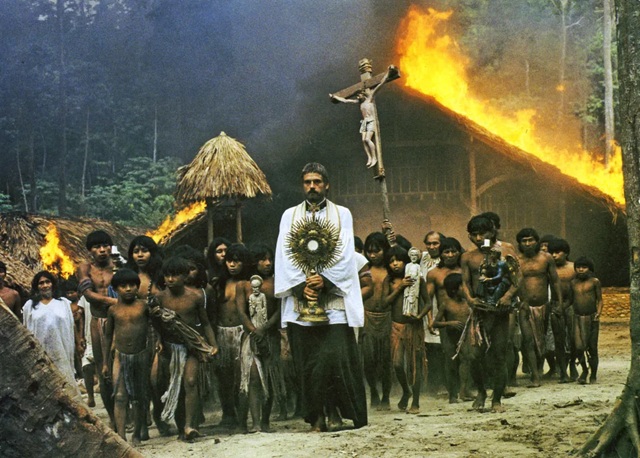
The episode mirrors a historical pattern of evangelisation in South America. In the 16th century, Christian missionaries used music and spectacle — often at the cost of indigenous autonomy. The practice was dramatized in the 1986 film The Mission, where Jesuit priests played the oboe to gain trust. Today’s missionaries, Bandeira noted, use portable speakers instead of flutes — but the result is disturbingly similar.
Evangelical Christianity has seen a steep rise across Brazil, with recent census data showing evangelicals now make up over a quarter of the population, while the Catholic majority has fallen from 65% in 2010 to 57%. The trend has been particularly pronounced in the Amazon, where missionaries often operate on the edges of legality.
Former president Jair Bolsonaro, an outspoken evangelical supporter, attempted to appoint a former missionary, Ricardo Lopes Dias, as head of Brazil’s department for isolated tribes — a move blocked by the courts after national outcry. Critics compared it to “putting a fox in charge of the hen house.”
Bandeira remains adamant that the true cost of such missionary zeal is paid by the tribes themselves — through cultural erosion, spiritual confusion, and even death. “What seems like curiosity or kindness,” she told The Times, “can quickly turn into something much darker. All contact, however well done, kills a lot of people.”
As Brazil grapples with the rapid expansion of evangelical influence, the ethical line between outreach and intrusion grows ever thinner — and for the uncontacted tribes of the Amazon, that line could be a matter of life or death.