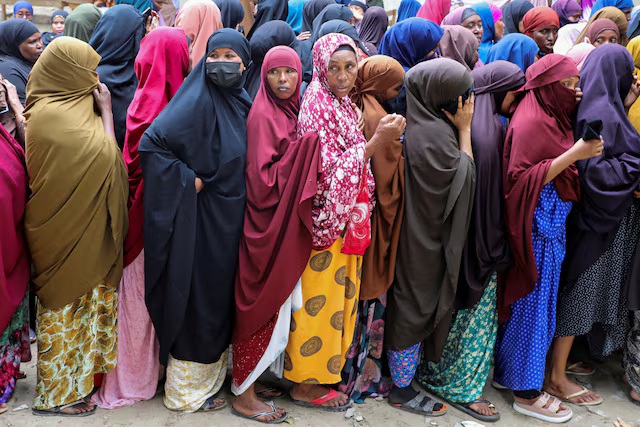
Residents of Somalia’s capital Mogadishu are voting on Thursday in municipal elections that authorities say are a crucial step toward holding the country’s first direct national polls in more than 50 years.
According to Reuters, Somalia last held direct elections in 1969, shortly before military ruler Mohamed Siad Barre seized power in a coup. Following Barre’s overthrow in 1991 and decades of civil war, Somalia adopted an indirect electoral system in 2004 aimed at managing clan rivalries and maintaining fragile stability during an ongoing Islamist insurgency.
Under the indirect system, clan representatives select lawmakers, who then elect the president. The president appoints key officials, including the mayor of Mogadishu. Critics, however, argue that the arrangement has entrenched corruption and allowed political elites to avoid popular accountability.
The Mogadishu vote is widely seen as a test run for broader electoral reforms. The city, home to about three million people, has seen improved security in recent years despite continued attacks by al Qaeda-linked al Shabaab militants. Officials hope the polls will demonstrate that direct voting is feasible ahead of national elections planned for the coming years.
Around 1,605 candidates are contesting 390 seats on Mogadishu’s district councils, said Abdishakur Abib Hayir, a member of the National Electoral Commission. The elected councillors will later choose the city’s mayor. “It shows Somalia is standing on its feet and moving forward,” Hayir told Reuters. “After the local election, elections can and will take place in the entire country.”
Momentum for change has grown since a 2024 law restored universal suffrage in preparation for federal elections expected next year. However, political consensus remains fragile. President Hassan Sheikh Mohamud reached an agreement in August with some opposition leaders that lawmakers would be directly elected in 2026, but the president would still be chosen by parliament rather than by popular vote.
Opposition parties have criticised the pace and design of the reforms, arguing that rapid changes to the electoral system could favour Mohamud’s bid for re-election. They have also raised concerns about security, questioning whether large-scale voting can be conducted safely while al Shabaab controls swathes of the countryside and continues to strike major urban centres.
As Reuters noted, Thursday’s vote in Mogadishu will be closely watched both at home and abroad as an early indicator of whether Somalia can overcome security challenges and political divisions to deliver long-promised direct democracy.