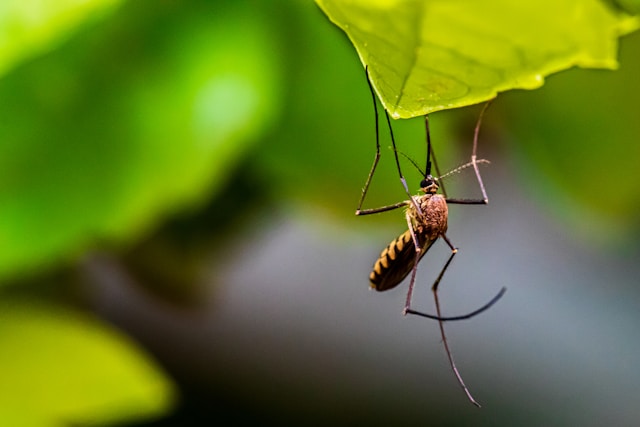
A groundbreaking study suggests that mosquitoes began specializing in feeding on humans approximately 1.8 million years ago, long before Homo sapiens reached Southeast Asia. Researchers analyzing the DNA of 11 mosquito species in the Anopheles leucosphyrus group have traced the emergence of anthropophily — the preference for human blood — to early hominins such as Homo erectus arriving in the Sundaland region of Southeast Asia. According to the team, this predilection likely evolved from ancestors that previously fed on monkeys, representing one of the earliest known instances of mosquitoes adapting to humans as a food source.
Mosquitoes are an extraordinarily diverse group, with over 3,500 species worldwide. Most feed on nectar and fruit, while only females of hematophagous species consume blood to obtain the protein and iron necessary for reproduction. Among blood-feeding mosquitoes, some are generalists, biting any available vertebrate, while others are highly specific. The study highlights that the human-specific Aedes aegypti is only one example of mosquitoes that have evolved to favor humans, illustrating a broader evolutionary trend toward niche specialization.
The genetic analysis conducted by Upasana Shyamsunder Singh of the University of Manchester and colleagues sequenced 38 mosquitoes collected between 1992 and 2020. By estimating DNA mutation rates and reconstructing the evolutionary history of the Leucosphyrus group, the researchers concluded that the trait for hominin preference emerged between 2.9 and 1.6 million years ago. This timing coincides strikingly with fossil evidence showing Homo erectus skulls in central China and Southeast Asia dating to roughly 1.8 million years ago, supporting the theory that these early humans were the first targets of anthropophilic mosquitoes in Asia.
Before this specialization, the ancestors of Leucosphyrus mosquitoes fed primarily on monkeys. The shift to hominins likely occurred as H. erectus populations became established in Southeast Asia, creating a consistent, dense, and accessible source of blood. Over time, this led to the evolution of mosquitoes with a preference for human hosts, establishing a lineage that eventually gave rise to species responsible for transmitting major human diseases, including malaria and Zika virus.
Mosquitoes themselves are ancient. Fossil evidence shows that hematophagous males existed in Lebanese amber approximately 130 million years ago, suggesting that blood-feeding behavior predates the divergence of many modern mosquito species. However, the Leucosphyrus group’s specialization for humans is a far more recent development, reflecting an evolutionary adaptation to hominin expansion in Asia rather than Africa, where similar preferences in Anopheles gambiae and Anopheles coluzzii did not appear until roughly 60,000 years ago.
This research has broader implications beyond entomology. It offers supporting evidence that early hominins migrated widely across Asia far earlier than previously understood, overlapping with the timeline when mosquitoes developed a taste for human blood. The study also illuminates how ecological pressures and population density can drive the emergence of niche specialization in disease vectors, with consequences that continue to affect humans today.
The findings underscore a fascinating interplay between human evolution and the evolution of disease vectors. Mosquitoes may have begun their long association with humans not out of preference for our species specifically, but because early hominins presented a new, reliable ecological niche. As Homo erectus became established in Southeast Asia, mosquitoes adapted, eventually producing lineages that would preferentially seek humans — a relationship that continues to shape global health in the present day.