Nationalist leaders from Wales, Scotland and Northern Ireland are set to hold talks in Cardiff on Monday over possible moves towards independence or separation from the United Kingdom. The meeting is the first of its kind involving the leaders of the three nationalist parties, who intend to press for referendums on the future constitutional status of the three official parts of the UK.
In a joint letter, the leaders called on the British government to prepare “constitutional changes in Wales, Scotland and Northern Ireland”. They also said they would explore “concrete areas of cooperation” in the fields of the economy, energy, and European and international cooperation.
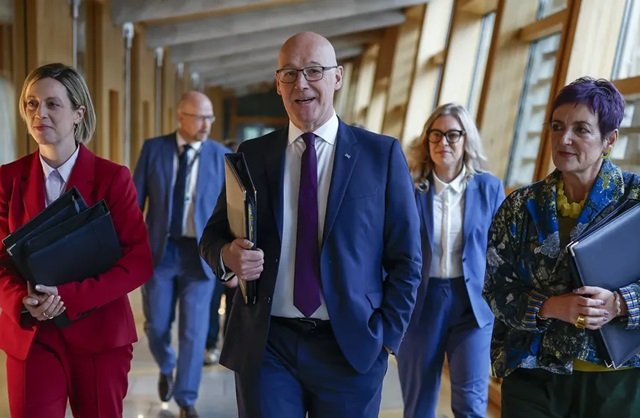
The meeting brings together Scotland’s First Minister John Swinney of the Scottish National Party, Plaid Cymru leader Rhun ap Iorwerth and Michelle O’Neill of Northern Ireland’s Irish republican party Sinn Féin. Their gathering comes amid renewed attention to the constitutional future of the United Kingdom and the possibility of changes to the political arrangements between its constituent nations.
The talks are taking place only days after US President Donald Trump made comments supporting the prospect of a united Ireland. Following a meeting with Irish Prime Minister Micheál Martin in Dublin, Trump described the reunification of the Republic of Ireland with Northern Ireland as “a great thing” and said he would “love to see it reunited”.
The British government has swiftly rejected Trump’s call for Irish reunification. The office of Prime Minister Andy Burnham said a referendum on Northern Ireland’s continued membership of the United Kingdom was not under consideration. Burnham had already said in August that a vote on whether Northern Ireland should leave the UK was “off the table”.
Under the 1998 Good Friday Agreement, a referendum on Northern Ireland leaving the United Kingdom can be held only at the discretion of the British government. The agreement brought an end to three decades of violence between Irish nationalists seeking a united Ireland and unionists who wanted Northern Ireland to remain part of the United Kingdom.
The issue of Scottish independence also remains unresolved. In a 2014 referendum, a narrow majority in Scotland voted to remain within the United Kingdom. The British government subsequently regarded the question as settled for a generation.
The Cardiff meeting nevertheless brings the independence movements in Scotland, Wales and Northern Ireland together in a new political format. Their leaders are seeking not only to advance their respective constitutional demands but also to identify areas in which the three administrations and political movements could cooperate on economic, energy, European and international issues.
The discussions come at a sensitive moment for the future of the United Kingdom, with the question of constitutional change once again being raised simultaneously in three of its constituent nations. While the British government has rejected a referendum on Northern Ireland’s departure and previously regarded Scotland’s independence question as settled, the Cardiff meeting signals an effort by nationalist leaders to place the broader issue of constitutional reform back at the centre of political debate.