by Our Defence Affairs Editor
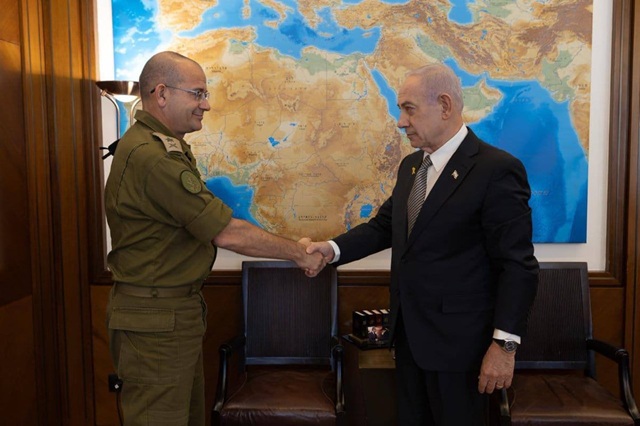
Prime Minister Benjamin Netanyahu’s announcement that Roman Gupman will become the next director of the Mossad has sent ripples across Israel’s political and security establishment. Gupman, who currently serves as Netanyahu’s military liaison, is slated to assume command of Israel’s legendary intelligence agency in June 2026 — a transition that many insiders believe could shape Israel’s covert capabilities for the next decade. Though little is known publicly about Gupman, the sweeping praise immediately voiced by Israel’s top security officials has only intensified intrigue around the appointment.
The Mossad, formally established in December 1949, has long occupied an almost mythic place in the architecture of Israeli state power. Conceived in the turbulent aftermath of the country’s founding, its first director, Reuven Shiloah, was tasked with forging an agency capable not only of gathering foreign intelligence but of safeguarding a nation surrounded by adversaries. Under his brief but formative leadership, Mossad emerged from an improvised intelligence coordinating group into a nimble, outward-facing spy service that reported directly to the prime minister. His successor, Isser Harel, transformed that modest foundation into a formidable global operation. During Harel’s tenure from 1952 to 1963, Mossad expanded from fewer than 100 personnel to well over 600 and carried out early landmark operations that cemented its reputation for precision, boldness, and global reach.Harel’s successors — towering figures such as Meir Amit, Zvi Zamir, Yitzhak Hofi, Nahum Admoni, Shabtai Shavit, Danny Yatom, Efraim Halevy, Meir Dagan, Tamir Pardo, and Yossi Cohen — each presided over pivotal chapters in Israel’s evolving security landscape.
Their tenures spanned eras defined by the Cold War, hostage crises, counter-terrorism campaigns, shadow conflicts across the Middle East, and escalating technological threats. Some Mossad directors were scholarly strategists; others, hard-edged field operators. But all were central to shaping Israeli policy, influencing diplomatic outcomes, and executing missions whose details often remain classified for decades.
David Barnea, who has led Mossad since June 2021, belongs to that lineage of directors with deep operational roots. Rising through Mossad’s elite covert action ranks and ultimately serving as deputy chief before his appointment, Barnea oversaw periods punctuated by clandestine operations aimed at disrupting Iranian nuclear progress, international hostage negotiations, and widening partnerships with foreign intelligence agencies. His tenure has been defined by an era of intensifying regional instability and accelerating technological warfare. When he steps down in 2026, he will hand Roman Gupman an agency both stronger and more strategically burdened than ever.Netanyahu’s announcement of Gupman’s appointment appears to signal a preference for continuity — a trusted insider, steady-handed, operationally seasoned. But it has also raised questions. Gupman is not a publicly known figure, and the Mossad’s strict culture of secrecy means few details about his background, operational record, or doctrinal philosophy are available. Nevertheless, top Israeli officials have not hesitated to endorse his capabilities with striking enthusiasm.Defense Minister Yoav Gallant’s predecessor and current minister, Israel Katz, described Gupman as “a true fighter who strives for contact with the enemy and a commander with rich operational and intelligence experience from the first rank of the IDF.” Katz’s choice of words — particularly the phrase “strives for contact with the enemy” — suggests that Gupman’s career has been molded in the most demanding arenas of Israel’s military and intelligence operations. It paints the picture of a commander who does not retreat from confrontation but moves toward it, a characteristic often prized in Mossad’s operational leadership.
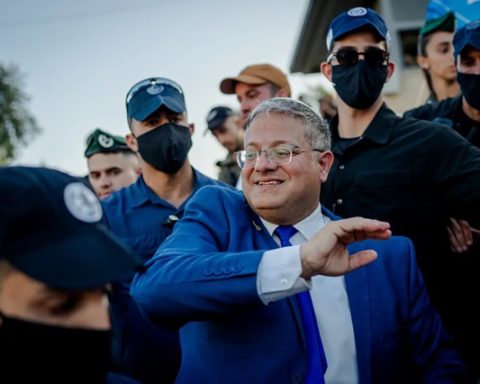
National Security Minister Itamar Ben-Gvir also joined in the chorus of praise, calling Gupman “a hero of Israel,” adding that he had “no doubt that he will continue to act with the national interest at the top of the priority list.” Coming from Ben-Gvir — a figure known for his combative political style and demands for assertive security measures — the endorsement adds another layer to Gupman’s emerging public image: that of a leader capable of marrying strategic restraint with operational assertiveness.As the clock ticks toward 2026, analysts say Roman Gupman will inherit a Mossad facing a complex strategic horizon. Iran’s nuclear ambitions, regional proxy wars, expanding cyber threats, Russia’s shifting global posture, the growing intelligence capabilities of Gulf nations, and rising great-power competition all stand to define his tenure.
Moreover, the agency’s covert actions — often unacknowledged but widely influential — remain tools of immense political weight inside Israel and far beyond its borders.For now, the mystery surrounding Gupman’s background only heightens public curiosity. But in Israel’s security ecosystem, where the line between myth and mission often blurs, the next Mossad chief’s reputation is already being shaped by the praise of those who know him best. If their words are any indication, Roman Gupman is poised not merely to inherit Mossad’s legacy, but to define its next chapter.