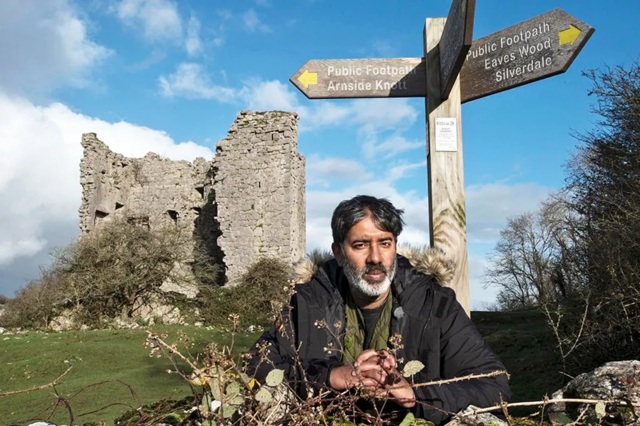
Broadcaster and former BBC Radio 5 Live presenter Nihal Arthanayake has spoken out in defence of rural Britain, rejecting claims that the countryside is inherently “racist” or unwelcoming to ethnic minorities. Arthanayake, whose parents are from Sri Lanka and who was raised in rural Essex, emphasised that his own experience of the countryside has been overwhelmingly positive, despite recent reports suggesting otherwise.
In an interview with The Times UK, Arthanayake expressed concern that anti-immigrant sentiments and negative portrayals of rural areas could worsen feelings of exclusion. “The thing about the countryside is, if ethnic minorities wrongly felt, in my opinion, that the countryside wasn’t welcoming to them before, then they certainly won’t feel welcome now,” he said. “This country’s language about immigrants is making even us who were born here unwelcome.”
Having regularly explored the Peak District with his family and lived in rural communities for much of his life, Arthanayake recounted that he has “never encountered racism” in these areas. “I am about as integrated as you could possibly be. I went to a state school, support a football team, go to my local pub and have two dogs. If I am feeling it, what must a woman in a salwar kameez or a hijab be feeling, or a Sikh gentleman?” he asked.
The broadcaster’s remarks come in the wake of a two-year study conducted by the University of Leicester’s Centre for Hate Studies, published earlier this year. The research, which involved 115 interviews and online hate analysis, found that racism in rural England is perceived to be “getting worse” and that hostility in rural areas is “often more socially acceptable, it can be more overt, and it is focused on specific ideas of belonging and an intensified insider/outsider dynamic,” according to The Times UK.
The study’s findings have been contested by some, including Tim Bonner, Chief Executive of the Countryside Alliance, who criticised the report for “branding the countryside as racist.” He argued that official hate crime statistics show rural areas recording fewer incidents than urban centres and that it is misleading to suggest rural communities are inherently more prejudiced.
Nonetheless, the study’s authors maintain that the qualitative approach offers a deeper understanding of how racism manifests beyond reported crime figures. “Racism exists in urban areas, but it’s dismissed and denied in rural ones,” said Viji Kuppan, one of the researchers. “It’s important we have this dialogue about race and racism.”
The issue is further complicated by demographic patterns highlighted in The Times UK’s coverage of the report. The 2021 census showed that 92.9% of the rural population identified as White British, compared with 81.7% in urban areas, underscoring a sense of isolation among minorities living in predominantly white rural communities.
Arthanayake, however, remains optimistic. He urged members of ethnic minority communities to engage more openly with rural life. “Proximity is the enemy of bigotry,” he told The Times UK. “The only way people in rural communities are going to get to know us is if we say hello and have a drink in a pub or spend a night in a hotel and prove this is our country as well. If we hide away among our own people in our own areas then in that space that’s left, in jump the racists. That is what will happen.”
Reflecting on his own experience, he added, “The kindness of my mother’s white neighbours in her rural Essex village gave me hope. She has Diane on one side and Ron on the other side and they are angels to my mum.”
As debate continues over the extent of rural racism, Arthanayake’s voice adds a nuanced perspective—one that acknowledges challenges but also insists that community engagement and openness remain vital steps toward greater inclusion.