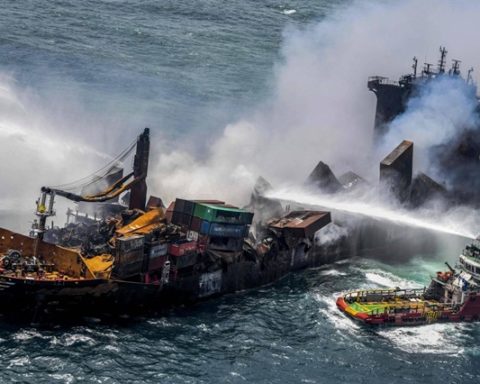
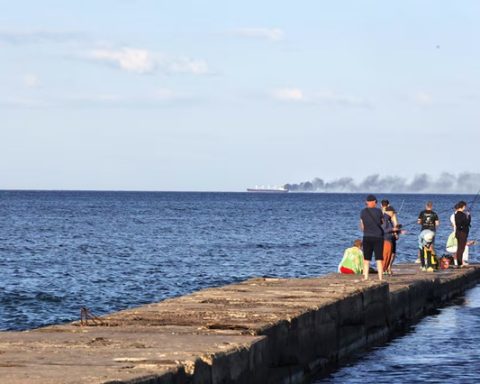
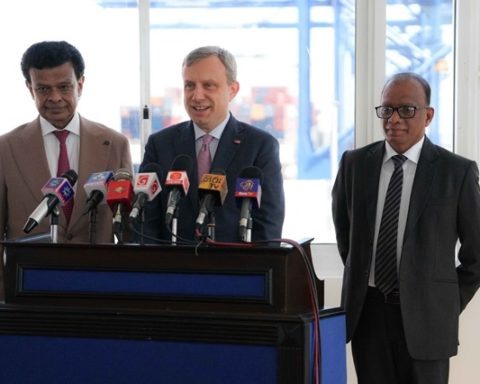
Lars Barstad, CEO of Frontline, the world’s largest publicly listed oil tanker operator, has issued a stark warning about the growing threat posed by unregulated “dark fleet” vessels. Speaking to the Financial Times, Barstad accused the UN’s International Maritime Organization (IMO) of “sleeping behind the wheel” and failing to enforce safety and environmental regulations. He emphasized that it is “only a question of time” before a major maritime disaster occurs.
The term “dark fleet” refers to ships that operate outside established regulatory frameworks, often under obscure ownership and with inadequate safety measures. These vessels typically transport oil from sanctioned countries like Iran, Venezuela, and Russia. Their numbers have surged, now accounting for about 20% of the global fleet, as Russian-linked owners have acquired older ships to bypass Western sanctions on Russian oil.
A significant warning came in July when a dark fleet vessel, the Ceres I, collided with the Hafnia Nile, a tanker operated by Singapore-based Hafnia, off Malaysia. The Ceres I was broadcasting false location data—a tactic frequently used by dark fleet ships to evade detection.
Barstad expressed concern over the lack of accountability in such scenarios. “If a vessel carrying millions of barrels of crude splits in two, the environmental and financial consequences will be catastrophic,” he said. The opaque ownership of dark fleet vessels complicates liability and cleanup efforts.
Barstad sharply criticized the IMO for its inaction, stating that the organization has neglected its responsibilities for too long. “All these vessels are trading outside the IMO framework,” he said. While the IMO recently passed a resolution urging member states to address fraudulent ship registrations and enhance port inspections, Barstad argued that enforcement remains insufficient.
European governments also faced criticism for failing to strictly enforce sanctions, with Barstad suggesting political fears of rising energy prices were a key factor. He highlighted that nations like Denmark, which controls Baltic Sea access, and those along the English Channel, could play a greater role by inspecting tankers operating without proper insurance.
Barstad called for a united effort to address the issue. “A tough position should be taken if one is serious about this,” he said. Frontline and other compliant operators are at a disadvantage due to the dark fleet’s ability to operate at lower costs, undermining legitimate trade.
The IMO responded to the criticisms by emphasizing that its member states bear the responsibility for enforcing maritime rules. However, Barstad’s warnings highlight the urgent need for stricter global oversight to prevent a potentially catastrophic disaster.