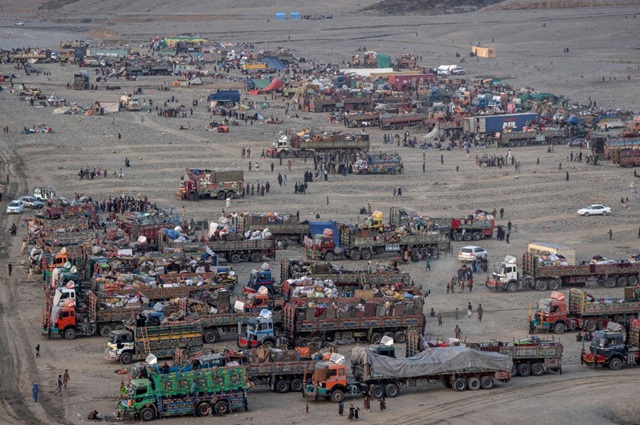
Pakistan is set to expel up to 3 million Afghan refugees this year as the latest phase of a nationwide crackdown on undocumented foreigners takes effect. A deadline for voluntary departure from Islamabad and Rawalpindi expired on March 31, with forced deportations now scheduled to begin on April 10, following a brief delay due to the Eid al-Fitr holidays.
Since October 2023, Pakistan has intensified efforts to remove undocumented Afghans, a move that has sparked international criticism from human rights organizations, the Taliban government, and the UN. Over the past 18 months, approximately 845,000 Afghans have already left the country, according to data from the International Organization for Migration.
Of the 3 million Afghans still in Pakistan, around 1.3 million hold Proof of Registration (PoR) cards, while another 807,000 possess Afghan Citizen Cards (ACC). However, an estimated 1 million Afghans lack any official documentation and are considered illegal residents. Pakistani authorities insist they will ensure that deported Afghans do not return.
The expulsion process has created a wave of uncertainty for thousands of Afghan families. Many have lived in Pakistan for decades, with some never having set foot in Afghanistan. Cases like that of 30-year-old Omaid Khan highlight the complexity of the situation—he holds an Afghan Citizen Card, while his wife, who has a PoR card, can stay in Pakistan until June 30. Their children, lacking any documentation, face an uncertain future.
The Taliban government has urged Pakistan to ensure Afghan refugees return with dignity and called for a structured repatriation process rather than mass deportations. Abdul Mutalib Haqqani, spokesperson for Afghanistan’s refugee ministry, criticized Pakistan for making unilateral decisions without input from the UN or the Taliban administration. “Expelling them in this way raises hatred against Pakistan,” he warned, while acknowledging the challenge of reintegrating so many returnees.
To facilitate deportations, Pakistan is setting up transit stations in Khyber Pakhtunkhwa, including in Peshawar’s Nasir Bagh area and near the Torkham border crossing. However, key concerns remain about the fate of Afghan children born in Pakistan, mixed-status families, and those with deep ties to their host country.
For many, returning to Afghanistan is a daunting prospect. Nazir Ahmed, a 21-year-old born and raised in Quetta, has never set foot in Afghanistan and has no family ties there. “How can we go there? All our relatives live in Quetta. What will we do if we go there?” he asked, echoing the uncertainty faced by thousands.
Adding to the crisis, former U.S. President Donald Trump’s decision to pause refugee resettlement programs in January has left 20,000 Afghans—who had hoped for relocation—stranded in limbo. Pakistan has stated that it will work with foreign diplomatic missions to resettle Afghans bound for third countries, but those without a clear path may ultimately face forced deportation.