by Durga
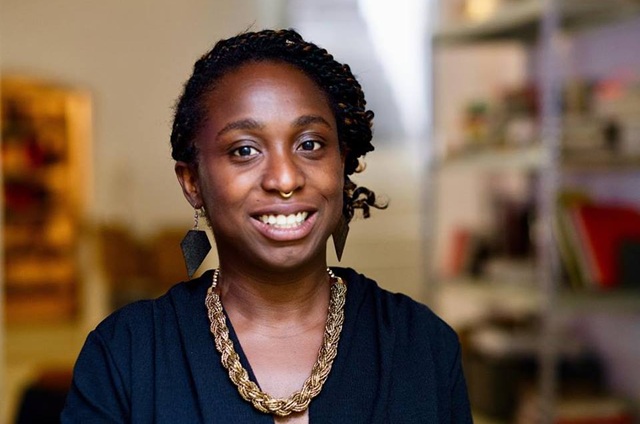
Edna Bonhomme’s A History of the World in Six Plagues is no passive chronology of pandemics—it is an excoriating treatise on the intersections of disease, colonialism, and the necropolitical calculus of who lives and who is left to perish. In unspooling the epidemiological sinews that bind conquest, racial hierarchy, and economic exploitation, Bonhomme does not merely recount history; she indicts it.
From the inception of Western imperialism to the latest convulsions of global pandemics, the book interrogates how disease was never simply a biological phenomenon but a malleable weapon wielded to consolidate dominion. The plantation, the prison, the laboratory—each emerges as a crucible where pathology was sculpted into policy. As Bonhomme chillingly states, “Confinement, under these conditions of ill health, might cause damage to literary life, or reveal how pathogens leave us unmoored”.
Consider the plantation as an epidemiological battleground. The book scrutinizes how malaria and yellow fever determined imperial fortunes in the Caribbean, where enslaved Africans—regarded as biologically suited to the tropics—were forcibly subjected to the fevers that decimated European colonizers. “Contagion on the plantation,” Bonhomme asserts, “was not merely incidental but infrastructural”. The humid, overpopulated barracoons where enslaved laborers lived were not accidental squalor but a calculated economy of disease—sickness was an omnipresent threat, yet only valuable insofar as it selected which bodies were disposable.
The plagues that follow—cholera in the slums of industrializing Europe, influenza in the trenches of World War I, and HIV ravaging marginalized communities—are charted with a forensic eye for historical complicity. Pandemics do not just happen; they are managed, mitigated for some, exacerbated for others. As Bonhomme incisively notes: “Gratuitous death is not merely a product of confinement; rather, it happens when a section of society is neglected and bereft of aid”. The moral indictment is unmistakable: pandemics are political.
Yet perhaps the book’s most controversial intervention lies in its reframing of the COVID-19 crisis. Unlike many sanitized narratives of heroic scientific triumph, Bonhomme deconstructs how capitalist necro-economics dictated who bore the brunt of the pandemic. The numbers themselves are staggering—“The United States exceeded over 1.2 million Covid-related deaths as of April 2024”—but statistics alone do not encapsulate the systemic abandonment of the sick, the elderly, the incarcerated. The pandemic was not just a health crisis; it was a mass culling of the surplus population.
The book does not shy away from the ideological battlegrounds of disease. Public health, Bonhomme argues, is not an apolitical domain but a site of power struggles, where even access to a hospital bed is an index of one’s place in the social hierarchy. “There is an unevenness in who has access to a home, whether healthy or sick,” she writes, “and the conditions that force one to be in bed for an extended period, such as a prison or a mental health clinic, might be mired with unbearable pain”.
And then there is the question of resistance. Bonhomme excavates the subversive ways in which the oppressed have reclaimed medicine—not as a tool of state control but as a weapon of liberation. She gestures to the Black Panther Party’s free medical clinics as a radical blueprint for community-driven health, a challenge to the privatized, commodified logic of Western medicine. In a moment of rhetorical ferocity, she endorses what she calls “health communism,” the abolition of a stratified system of care where the rich recover and the poor succumb.
One might argue that the book’s ideological stance is too unrelenting, its indictments too sweeping. Surely, one might say, epidemiology is not solely a tool of oppression—after all, vaccines and antibiotics have saved millions. But Bonhomme’s provocation is precisely this: medicine, like law, is only as just as the society that wields it.
The final pages resound with a stark challenge: pandemics will come again, but whether they are met with indifference or solidarity, hierarchy or collectivism, is still undecided. To read this book is not simply to learn history—it is to be implicated in it.