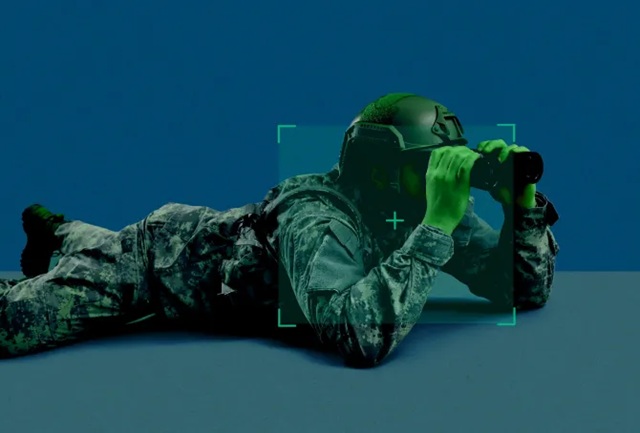
The Pentagon has entered a new chapter in its AI journey—one defined by the deployment of generative AI in real-world military operations. As reported by MIT Technology Review, the U.S. Department of Defense is now integrating chatbots reminiscent of ChatGPT into field operations, allowing soldiers to analyze surveillance data and identify potential threats more efficiently.
Two U.S. Marines recently shared their experience using such tools during training missions across the Pacific, from South Korea to the Philippines. This marked the first time troops on the ground used generative AI directly to scan intelligence reports—a move that reflects a broader shift within the U.S. military.
This so-called “Phase Two” of military AI builds on earlier efforts, which began in 2017 with initiatives like Project Maven, focused on computer vision and drone imagery analysis. Now, with large language models (LLMs) at the center, the Department of Defense is exploring how these tools can transform decision-making, operational planning, and real-time intelligence analysis.
As MIT Technology Review notes, the initiative has gained momentum under the Biden administration but has taken on new urgency with growing political pressure for AI-fueled defense modernization. Elon Musk’s Defense Optimization for Government Efficiency (DOGE) initiative and Secretary of Defense Pete Hegseth’s vocal support for AI integration are driving forces behind this acceleration.
However, not everyone is on board. AI safety experts and human rights groups are raising serious concerns about the implications of using generative AI in sensitive, high-stakes contexts—particularly in situations that involve surveillance, threat detection, and even target identification.
Open Questions in the New AI Warfront
In a recent article, MIT Technology Review outlined three pressing questions that highlight the ethical, operational, and technical dilemmas the Pentagon must confront:
1. What are the limits of “human in the loop”?
Defense contractors frequently assure that AI tools will operate under human oversight. However, experts like Heidy Khlaaf, chief AI scientist at the AI Now Institute, warn that this promise may not hold up under scrutiny. When AI systems draw on thousands of data points, it becomes nearly impossible for human operators to verify the accuracy of every output. Khlaaf emphasizes that the sheer complexity of these systems can render human oversight ineffective, especially in time-sensitive or life-and-death scenarios.
2. Is AI complicating the process of military classification?
Generative AI can piece together publicly available data to infer sensitive or classified information—a phenomenon known as “classification by compilation.” As LLMs become more adept at synthesizing vast troves of information, the traditional approach to classifying intelligence is being upended. Chris Mouton, a senior engineer at RAND, suggests that no current policy adequately addresses how to classify AI-generated analyses. Meanwhile, companies like Palantir and Microsoft are developing tools to help automate classification decisions—a development that could either streamline intelligence handling or introduce new risks.
3. How high up the decision chain should AI go?
The military’s AI adoption has mirrored civilian tech trends. In 2017, the focus was on image recognition, just as social media apps were perfecting facial recognition. Today, the focus is on conversational AI—mirroring widespread use of ChatGPT-like tools in the public sphere. The next step could be agentic AI, capable of acting autonomously based on its analysis, and personalized AI, tailored to individual commanders.
A recent Georgetown report noted increasing military interest in using AI to assist operational decision-making. While the Biden administration issued a national security memorandum in 2023 aimed at regulating AI use, the Trump administration appears poised to prioritize innovation over oversight as it reassesses those policies.
A Tipping Point for Defense Technology
The use of generative AI in military settings raises profound questions: Can AI truly augment decision-making without increasing risk? Will the promise of efficiency outweigh the potential for error or abuse? And as AI climbs higher up the chain of command, how do we ensure human accountability remains intact?
As the Pentagon’s AI strategy evolves, so too does the debate about how far and how fast generative AI should go in the theater of war. MIT Technology Review continues to cover these developments as they unfold, offering critical insights into the intersection of emerging technology, defense, and ethics.