For more than two decades, Vladimir Putin has pursued political objectives through military escalation. The question now confronting Europe is not simply whether the Russian president intends to continue the war in Ukraine, but how far he is prepared to go — and how far the West will allow him to go.
That is the central argument of an analysis by Michael Thumann published in Die Zeit, in ZEIT No. 38/2026. Thumann challenges two assumptions that, in different ways, have shaped the debate in Germany: that ending weapons supplies to Ukraine and offering Putin negotiations would persuade him to end the war, and that sufficiently arming Ukraine while economically weakening Russia would eventually convince the Kremlin that continuing the conflict was futile.
Both assumptions, Thumann argues, misunderstand Putin’s objectives. His argument is that the Russian president does not fundamentally want to negotiate the future of Ukraine with Europe. He wants victory, and has repeatedly challenged the idea that Ukraine should exist as a state independent of Russia.
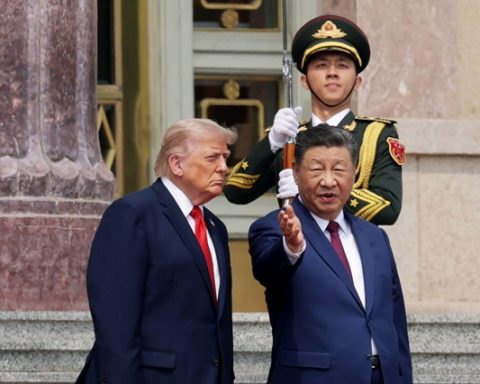
For years, Moscow has pursued that objective through different means. The full-scale assault on Kyiv in 2022, the fighting in the Donbas, the bombardment of Ukrainian cities, the destruction of energy infrastructure and attempts to pressure Ukraine into capitulation through Putin’s telephone conversations with Donald Trump have all formed part of that effort.
None has produced the outcome Putin sought. The war has instead become stuck. The question, therefore, is how the Russian president might attempt to escape the strategic dead end into which he has led his country.
Thumann’s assessment is stark: escalation remains one of the few options available to him. From Putin’s perspective, escalation has repeatedly produced results. His approach dates back to the ten-year Chechen war that began in 1999, and he appears to believe that the same principle can work in Ukraine.
There are other calculations behind that belief. Putin considers Russia to possess sufficient resources for its style of warfare, while viewing his immediate opponents as structurally less capable of escalating. European countries, in this calculation, would struggle to maintain unity in a crisis; Germany would be among the first to buckle; and Trump might ultimately distance himself from Europe.
Putin also appears to believe that Russian society can tolerate hardship longer than Western societies. High inflation, a petrol crisis and Ukrainian drone attacks have not produced the kind of social reaction he expects would occur in countries such as Germany and France after significant reductions in living standards.
There is, finally, the nuclear dimension. Putin has repeatedly used the existence of Russia’s nuclear arsenal as an instrument of pressure. Thumann notes that simply talking about nuclear weapons can unsettle European publics, particularly in Germany. In December, Putin told journalists in Moscow: “Russland bereitet sich nicht vor, mit den europäischen Staaten zu kämpfen, aber wenn Europa einen Krieg beginnt, dann sind wir sofort bereit.”
Yet Thumann also argues that Putin is not a suicidal leader. His record, he contends, suggests that the Russian president has tended to escalate when he perceives his opponents and their allies to be weak. That calculation was visible in Chechnya, Georgia, Syria and Ukraine.
Before the full-scale invasion of Ukraine in 2022, Putin met Joe Biden in Geneva in the summer of 2021 and apparently concluded that he was dealing with an indecisive American president. The chaotic US withdrawal from Afghanistan that followed reinforced the Kremlin’s perception that the West was vulnerable.
Thumann suggests that Putin may once again believe the West is weakened. Donald Trump, in his assessment, has suffered setbacks in the Middle East, while his commitment to Europe has become questionable even among some of the strongest transatlantic supporters. German Chancellor Friedrich Merz, meanwhile, leads a coalition that has lost its majority in opinion polls.
The concerns are already being voiced publicly. CIA Director John Ratcliffe travelled to Moscow last week, reportedly to warn Putin against an attack of some kind on NATO. Polish Prime Minister Donald Tusk has also warned on X that a Russian provocation against a NATO member cannot be excluded.
What form such a provocation might take is less certain.
One possibility is a direct military confrontation. The Bundeswehr, several NATO states and Defence Minister Boris Pistorius warned two years ago that Russia could launch an attack against the EU in 2028 or 2029. Russian television commentators have openly discussed the possibility of attacks on London, Berlin and Paris, while Chechen leader Ramzan Kadyrov, who commands his own forces in Ukraine, recently said that opening fire against countries supporting Ukraine would not be harmful.
Yet a major Russian attack on NATO appears unlikely for now. Russian forces remain heavily committed to Ukraine as preparations continue for another offensive. Russia has been building new barracks and storage facilities near the Finnish border, but its soldiers are still needed in Ukraine. Authorities are attempting to mobilise more men without alarming the population.
The military calculation is also complicated by Russia’s neighbours. Finland and Poland are both considered capable of mounting determined resistance. Finland alone could rapidly expand its army to as many as one million soldiers. A war against Finland, Poland and the entire NATO alliance would therefore represent an extremely high-risk undertaking.
A second possibility is a more limited provocation in the Baltic states. Estonia, Latvia and Lithuania occupy a strategically exposed position between Finland and Poland, while their strong support for Ukraine has made them frequent targets of Russian rhetoric. Russian television commentator Vladimir Solovyov has repeatedly called for attacks against the Baltic states, most recently Lithuania.
A drone or missile strike, a border incursion by special forces or the seizure of a bridgehead on Lithuanian or Latvian territory could test NATO’s Article 5 commitment. Such an incident could allow Putin to measure the alliance’s willingness to respond and determine how much further escalation might be possible.
But according to Thumann’s assessment, neither a full-scale confrontation with NATO nor a Baltic provocation appears to be Putin’s immediate priority.
That priority remains Ukraine.
For Putin, Ukraine is not simply another potential battlefield. It is central to his political legacy. From the first gas embargo against Ukraine in 2006, through repeated interference in Ukrainian elections and the attacks of 2014 and 2022, the country has occupied a defining place in his political career.
The war, however, has not delivered the historical victory Putin appears to seek. After four and a half years of large-scale land warfare, Russian forces have advanced from Donetsk to Pokrovsk — less than one hundred kilometres — leaving Putin’s ambitions far from fulfilled.
Russia is now preparing further offensives. One is expected along the long front in the Donbas during the winter and following spring. Another is aimed at cities, supply infrastructure and the civilian population. Russia has substantially expanded production of missiles, drones and cruise missiles, while North Korea is contributing what its industrial facilities can provide.
The calculation in Moscow appears to be that sustained attacks, including strikes against civilian infrastructure during winter, could eventually break Ukrainian resistance.
At the same time, Europe faces continuing Russian pressure outside the battlefield. Hybrid attacks, interference in elections and social debates, and incidents such as the Leipzig drone attack are designed to unsettle European governments and societies.
Russian voices have increasingly called for retaliation against European institutions and factories supporting Ukraine. A former press officer at Russia’s Defence Ministry, now operating as the war blogger Rybar, has called for attacks on relevant institutions and factories in Europe, arguing that “Eine zufällig brennende Fabrik oder Raffinerie hätte einen großen Effekt”.
Yet the most powerful pressure on Europe may not come directly from Moscow. It may come from Europe’s own divisions, dissatisfaction, self-doubt, lack of resilience and fear.
That, ultimately, creates the strategic opening Putin may need. A fragmented and uncertain West could offer Moscow gains without requiring the enormous risks associated with a direct war against NATO.
The question facing Europe, therefore, is not simply whether Putin will launch a larger war. It is whether he needs to.
If Russia can continue pressuring Europe through Ukraine, covert and hybrid operations, political divisions and the exploitation of Western uncertainty, Moscow may be able to achieve strategic gains without crossing the threshold into open conflict.
For Putin, the war in Ukraine remains unfinished. His political legacy is tied to its outcome, and his options for changing the course of the conflict may be narrowing.
That makes escalation not merely a possibility, but an instrument the Kremlin has repeatedly used when it believes its opponents are vulnerable.
The ultimate test may therefore be less about how far Putin is willing to go than about what he believes Europe and the wider West are prepared to endure.