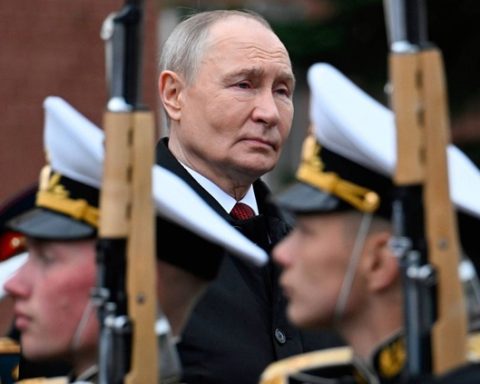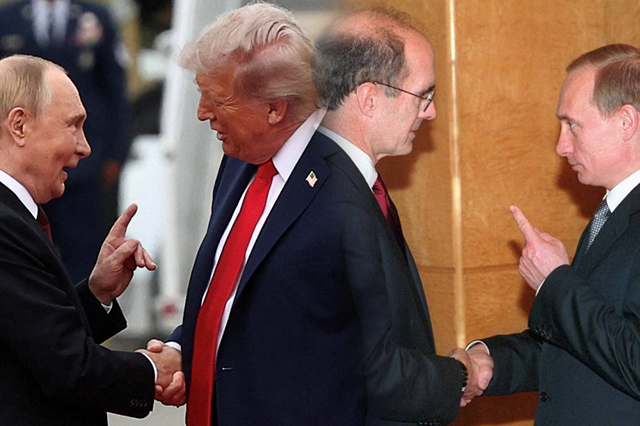
Newly declassified documents from Vladimir Putin’s first presidential summit with an American leader offer an unprecedented insight into the Russian president’s negotiation tactics, diplomatic style, and strategic priorities. Published today by the National Security Archive, the notes, written by then Deputy Secretary of State Strobe Talbott, detail three “one-on-one” sessions and plenary meetings held in June 2000 between President Bill Clinton and the newly elected President Putin at the Kremlin.
The release highlights the consistent features of Putin’s approach: flattery, humour, historical lectures, apparent agreement masking firm refusal, and careful signalling of Russian red lines. Even at the outset of his presidency, Putin combined personal charm with rigorous command of complex policy issues, demonstrating the political and strategic acumen that would define his leadership for decades.
The 2000 Moscow Summit: Context and Significance
The summit came just months after Putin’s election as Russia’s president, following Boris Yeltsin’s resignation on New Year’s Eve 1999. Fresh from securing ratification of the START II nuclear arms treaty—a feat Yeltsin had struggled to achieve—Putin was eager to project competence, cultivate trust with the United States, and assert Russia’s interests on the international stage. The summit was preceded by prior meetings when Putin served as prime minister, but this was the first presidential encounter in which he could negotiate with full authority and a clear mandate.
Talbott, fluent in Russian and responsible for notetaking, recorded detailed accounts of the conversations, capturing not only policy discussions but the psychological interplay between the two leaders. These records contrast sharply with recent encounters between Putin and President Trump, such as the Alaska summit, where no equivalent documentation or nuanced observations exist due to the absence of Russian-speaking notetakers and minimal formal record-keeping.
Flattery, Sports, and History Lessons
Throughout the Moscow summit, Putin employed a mixture of charm, humour, and historical framing to establish rapport while advancing his agenda. He repeatedly praised Clinton’s leadership, comparing him to Franklin Roosevelt and calling him “one of the leading citizens of the world” and “a skilled, seasoned statesman.” Talbott notes that Putin frequently referenced past interactions—such as their New Zealand meeting in 1999—to reinforce a sense of personal connection.
Banter about sports and personal interests punctuated the meetings, providing a veneer of informality. Yet beneath the convivial tone, Putin systematically emphasised Russia’s strategic positions. On Chechnya, for example, he presented military operations as counter-terrorism, dismissing allegations of civilian atrocities as exaggerated or politically motivated. He referred to Chechen fighters as “brutal, cruel people” and framed the conflict as necessary for national security.
Historical lectures were another key feature. At one point, Putin outlined the origins of the Soviet nuclear programme under Stalin and Lavrenty Beria, noting the efficiency with which assigned scientists were either rewarded or punished. Such digressions served to underscore his knowledge, authority, and long-term perspective on statecraft.
Negotiating Red Lines: Chechnya and Missile Defence
The notes reveal a nuanced balancing act. Putin often expressed apparent agreement with Clinton while signalling firm opposition to U.S. initiatives that Russia viewed as threatening. On missile defence, he warned that unilateral American action could provoke an “unexpected” and potentially asymmetrical Russian response. At the same time, he framed cooperation in areas of common interest, emphasising counter-terrorism partnerships and promising constructive engagement on strategic stability, nuclear weapons reduction, and plutonium disposition.
Chechnya remained a focal point of disagreement. During private sessions, Clinton raised concerns about civilian casualties, press freedom, and potential Russian overreach in Georgia. Putin acknowledged the framing but insisted on defining the conflict in terms of terrorism rather than human rights violations, citing prior doubts about Russia’s military capabilities as misplaced and emphasising the operational success of Russian forces.
NATO, Cooperation, and Shared Interests
The first plenary session focused on broader security issues, including the Conventional Forces in Europe treaty, Nagorno-Karabakh, and counter-terrorism cooperation. Putin expressed enthusiasm for full-scale cooperation with NATO and even suggested mechanisms for Russian participation in NATO planning, a remarkable position given the post-Belgrade bombing context and strained relations with the alliance. Clinton encouraged dialogue on Russian membership, to which Putin responded, “This is the first time that we have heard such a statement from the United States and I must say I am pleased.”
The leaders reached agreements on multiple fronts: strategic stability principles, the creation of a Shared Early Warning Center, joint plutonium disposition, and climate cooperation. These outcomes reflected a blend of cautious optimism, pragmatic negotiation, and careful Russian positioning.
Legacy and Modern Parallels
Analysts at the National Security Archive note that many elements of Putin’s approach in 2000 continue to resonate in contemporary diplomacy. His insistence on defining conflicts on Russian terms, use of flattery and personal rapport, and readiness to project asymmetric responses to perceived threats remain consistent through his handling of Ukraine, Chechnya, and missile defence issues.
Svetlana Savranskaya, senior analyst at the National Security Archive, emphasised the significance of the release: “Talbott’s notes provide a rare, granular view of Putin’s methods in a controlled environment. They show how he balances charm and coercion, historical narrative and strategic calculation—techniques that are still evident today.”
The declassified records are part of a broader effort by the National Security Archive to release primary-source materials from U.S. diplomatic history, ensuring scholars and policymakers can access the details necessary to understand international negotiation dynamics. Unlike recent summits with minimal documentation, the 2000 Moscow summit provides a template for studying the psychology and tactics of a long-ruling world leader.