by Durga
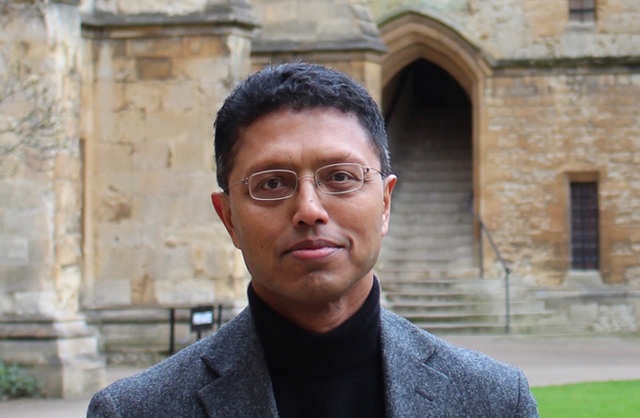
In Our Brains, Our Selves, neurologist Masud Husain embarks on a profound, philosophical excavation of identity, consciousness, and the fragile architecture of the human brain. Far from a sterile clinical treatise, this book is a meditation on the self—that elusive, shifting construct which, Husain argues, is not a fixed entity but an emergent property of myriad cognitive processes.
At first glance, the premise seems familiar: a neuroscientist exploring what makes us who we are. Yet, Husain transcends the banalities of pop neuroscience by weaving poignant patient narratives with rigorous scientific inquiry. His assertion that “our brains create us” (p. 4) forms the philosophical backbone of the text, challenging any lingering Cartesian fantasies of a self that exists apart from the body.
One of the book’s most intellectually provocative claims is the rejection of the unitary self. Drawing on philosopher Daniel Dennett’s provocative suggestion that the self is merely a “fictional narrative” (p. 6), Husain challenges readers to confront the unsettling possibility that what we perceive as a coherent identity is, in fact, a fragile illusion born from the brain’s intricate symphony of cognitive functions.
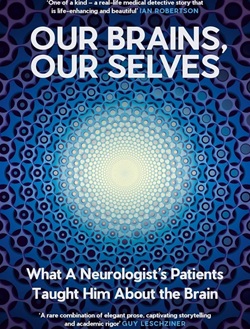
The book’s structure—each chapter centred around a different patient—humanises the abstract science. David’s story (p. 23), a young man whose stroke stripped him of motivation and drive, is a haunting exploration of how the loss of even a single cognitive faculty can unravel the tapestry of identity. “He’d become a stranger to his closest acquaintances,” Husain observes, painting a devastating picture of how cognitive dysfunction can alienate individuals from themselves and their social worlds.
What makes Our Brains, Our Selves truly remarkable is Husain’s willingness to delve into uncomfortable social truths. His reflections on belonging are particularly incisive. As he recounts his own experiences of being perceived as an outsider due to his ethnicity and accent (p. 89), Husain draws unsettling parallels between neurological alienation and societal exclusion. The implication is clear: just as brain disorders can isolate individuals, so too can societal prejudice warp a person’s sense of self.
Husain’s exploration of social identity—how our relationships shape who we are—is perhaps the book’s most radical contribution. He provocatively suggests that our sense of belonging is not merely a social construct but a neurological imperative (p. 102). His discussion of ostracism, drawing on ancient practices of exile and modern psychological theories, challenges readers to reconsider the deep-rooted human need to belong.
One of the most intellectually incendiary claims comes when Husain reflects on neurological determinism. He suggests that much of what we consider to be free will may be an illusion, the product of complex brain functions rather than conscious choice (p. 197). This assertion, while unsettling, forces readers to grapple with the uncomfortable possibility that our most cherished notions of agency and selfhood may be biologically constrained.
Yet, for all its philosophical heft, the book is not devoid of hope. Husain’s reflections on the potential of modern neuroscience to offer new treatments for those with brain disorders (p. 312) are both inspiring and deeply humane. His optimism, however, is tempered by a clear-eyed recognition of the ethical quandaries that accompany such advancements.
Perhaps the most haunting aspect of Our Brains, Our Selves is its stark reminder of the fragility of identity. Husain’s narratives underscore how the self is not a monolithic entity but a delicate mosaic, one that can be shattered by illness, injury, or even societal rejection. “Without certain fundamental brain functions,” he writes, “the personal and social identities we have developed over many years… count for very little” (p. 367).
In the end, Our Brains, Our Selves is more than a book about neuroscience—it is a profound meditation on what it means to be human. Husain forces readers to confront uncomfortable truths about consciousness, identity, and the precariousness of belonging. This is not a comforting read; it is a necessary one. For in grappling with the fragility of the self, we may, paradoxically, come closer to understanding what it truly means to belong.