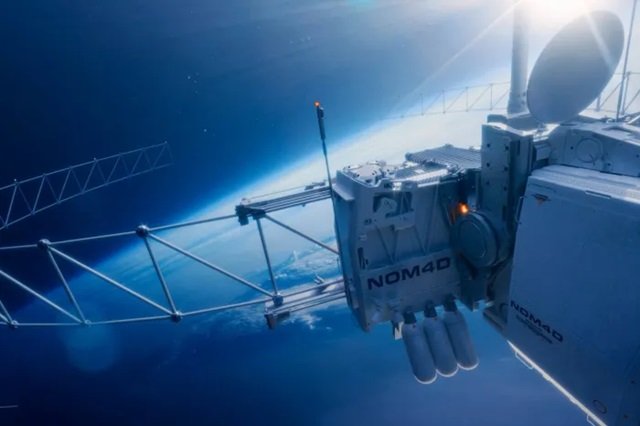
A robot has assembled a structure in space for the first time, demonstrating the potential for autonomous in-orbit construction of larger facilities, including space stations and data centres. The achievement, led by researchers at the California Institute of Technology, represents an initial demonstration of a technology intended to move space construction beyond the traditional methods of launching pre-assembled structures or relying on astronauts to put them together in orbit.
The project was developed by a team led by Sergio Pellegrino as part of an initiative by the US Defense Advanced Research Projects Agency (DARPA) to investigate new approaches to building structures in space. Historically, large orbital structures have either been assembled with astronaut assistance or launched in a folded configuration before unfolding after release from their capsules.
However, the unfolding approach has limitations when applied to more complex structures, while sending astronauts into orbit specifically to undertake construction is not considered cost-effective. The researchers are therefore seeking to develop systems capable of assembling structures directly in space, using robotic equipment rather than relying on human intervention.
“We’ve been unfolding things in space, there’s been a lot of unfolding,” Pellegrino said. “The big picture is how are we going to transition from unfolding in space to building in space.”
The robotic system developed by his team operates essentially as a sophisticated mechanical arm, picking up individual components and connecting them to construct a larger structure. The assembly process resembles putting together a tent or a toy construction set, although the precision required to position and connect components in a weightless environment presents considerable technical challenges.
The researchers had just 18 months to take the project from its initial concept to an operational demonstration in orbit.
The robot was launched in March from Vandenberg Space Force Base in California and has since been working on assembling a radio antenna measuring 1.4 metres in diameter. The structure consists of tubes, joints and reflective nets, which the robotic system connects progressively to form the antenna.
Throughout the construction process, images documenting each stage of the assembly have been transmitted back to Earth. Researchers monitor the images to assess the robot’s progress and identify potential problems. When troubleshooting is required, the team uses an identical robot in its laboratory to examine and address difficulties encountered by the system in orbit.
Although construction of the antenna has not yet been fully completed, Pellegrino said the work had progressed sufficiently to demonstrate that the approach was viable. The mission is scheduled to conclude in December.
The demonstration is intended to encourage other researchers and space-flight companies to participate in developing more advanced systems capable of assembling larger structures at greater speeds. Pellegrino said the objective was to begin carrying out some forms of in-orbit construction within five years, followed by the emergence of more mature infrastructure within a decade.
“I think our objective should be that in the next 5 years we start doing some of this, and in 10 years, there is the beginning for a real maturing infrastructure,” he said.
The longer-term objective is to construct substantially larger structures while reducing the need for researchers on Earth to monitor individual assembly stages and intervene when problems arise. The technology could eventually support the construction of facilities for commercial and scientific activities in orbit.
The successful assembly of the radio antenna provides an initial demonstration of robotic construction beyond Earth, although the researchers’ immediate mission remains unfinished and the development of larger-scale autonomous assembly systems is still to come.