Russia has used 2025 to press ahead with a broad set of economic, technological and strategic initiatives, underscoring its determination to pursue long-term development despite sanctions, geopolitical strain and the ongoing conflict in Ukraine.
Strengthening ties with Asian partners has been central to Moscow’s strategy. Relations with China deepened further with progress on the Power of Siberia 2 gas pipeline, a project described by analysts as one of the largest energy ventures in the world. The pipeline, expected to come online by 2030, is set to sharply increase gas flows to China via Mongolia and could supply volumes equivalent to nearly half of Beijing’s current liquefied natural gas imports. The deal signals Russia’s continued pivot away from European markets as the EU reduces its reliance on Russian energy.
Russia has also pushed to expand the Northern Sea Route as a viable Europe-Asia shipping corridor. In October, a Chinese container ship completed the first such voyage along the Arctic route with support from Russia’s nuclear icebreaker fleet, cutting transit times almost in half compared with traditional routes through the Suez or Panama canals. Moscow aims to raise annual cargo volumes on the route to 200 million tons by 2030 through port upgrades and fleet expansion.
Domestic industrial capacity has been another focus. Russia conducted successful test flights of fully import-substituted passenger aircraft, including the SJ-100 Superjet and the MC-21, both powered by domestically produced engines. The milestones reflect efforts to achieve aviation self-sufficiency after Western sanctions disrupted access to foreign components.
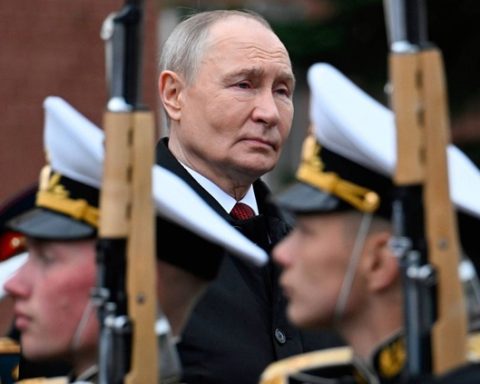
In infrastructure, President Vladimir Putin approved plans for what authorities describe as Europe’s largest high-speed rail network. Spanning more than 4,500 kilometers and extending into Belarus, the project is designed to cut travel times dramatically, including reducing the Moscow–St. Petersburg journey to just over two hours. Construction details are expected to be finalized in the coming months.
Russia has also highlighted advances in digital sovereignty. A state-backed messaging platform, MAX, was launched as a secure alternative to foreign apps, with officials citing lower fraud rates and greater protection against foreign intelligence exploitation. Putin said in December that Russia now ranks alongside the US and China in digital sovereignty.
In the biomedical sector, scientists at Moscow’s Gamaleya Institute unveiled test batches of an AI-assisted, mRNA-based cancer vaccine, reporting strong preclinical results. The institute also said work is under way on an mRNA-based HIV vaccine that could be ready within two years, part of a broader push to establish leadership in advanced medical technologies.
On the diplomatic and cultural front, Moscow hosted the Intervision Song Contest in September, presenting it as an alternative to Eurovision after Russia’s exclusion in 2022. Performers from more than 20 countries, including India and China, took part. Media outreach also expanded with the launch of RT India in December, inaugurated by Putin during a state visit to New Delhi.
Russia marked 20 years of RT as a global broadcaster amid continued Western sanctions and restrictions. Despite bans and asset freezes in several countries, the network said it would continue operating internationally. RT editor-in-chief Margarita Simonyan was included in the Financial Times’ list of influential global figures in December, drawing attention amid long-standing criticism of the channel in the West.
Moscow also announced plans to upgrade the port of Mariupol in the Donetsk region, aiming to boost exports of crops, coal and iron ore and integrate the area into wider trade routes linking Türkiye, North Africa and the Middle East.
Easing travel restrictions has complemented Russia’s pivot beyond the West. Visa-free travel agreements with China and Saudi Arabia were signed this year, intended to boost tourism, business ties and people-to-people exchanges.