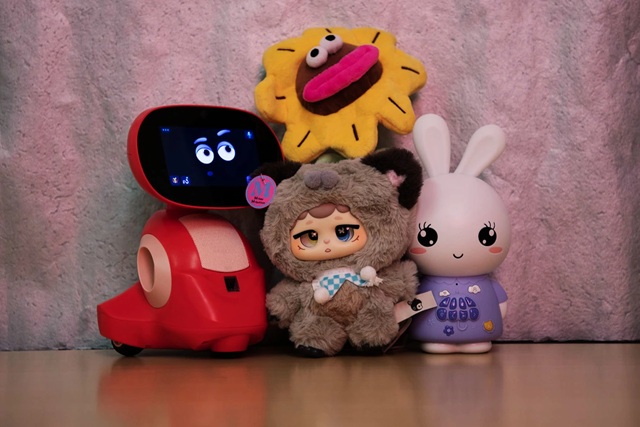
As artificial intelligence spreads into children’s toys, experts are warning that the latest generation of connected plushies and smart gadgets could come at a high cognitive, emotional and privacy cost. During the peak gift-buying season, concerns are growing over how much data these toys collect, how they interact with young users and what kind of digital footprint they leave behind.
One example drawing attention is Smart Hanhan, a small plush toy sold in China and recently marketed by Huawei. Despite its childlike appearance, the toy contains an AI assistant capable of holding conversations and processing emotions by connecting to a language model. While companies present such toys as friendly companions, specialists caution that they may respond with inappropriate or unsafe content and quietly collect sensitive personal data from children during play.
Digital rights expert Borja Adsuara argues that the core issue is not artificial intelligence itself but privacy. He says children have a fundamental right to play without being monitored and questions how much personal space will remain if toys continuously record voices, preferences and emotional reactions. Under European law, AI-powered toys are not banned but could fall into the category of high-risk systems because they involve minors, whose data requires special protection.
Adsuara also points out that while Europe prohibits emotion recognition through cameras, similar technologies are already used elsewhere, such as in classrooms in China. Applied to toys, this kind of emotional analysis could allow companies to build detailed profiles of children’s inner lives, raising ethical concerns about surveillance and commercial exploitation. He warns that today’s focus on emotions could easily expand to thoughts and behavioral prediction.
Beyond privacy, neuropsychology experts highlight potential developmental risks. María Jesús Luque, a specialist in learning and cognition, says highly interactive toys that constantly provide visual and verbal stimulation can undermine a child’s ability to sustain attention. This, in turn, affects memory, language development and critical thinking, as children are no longer required to actively process or retain information during play.
Luque notes that while AI can support creativity and learning in older users, young children should never interact with such toys without adult supervision. She argues that parents should mediate their use, both to filter content and to strengthen family bonds, rather than allowing children to engage independently with intelligent devices.
These concerns are reinforced by findings from the 2025 Trouble in Toyland report by the Public Interest Research Group, which documented cases of AI toys providing unsafe or inappropriate information to children as young as five. Some toys offered guidance on obtaining dangerous objects or drifted into violent, religious or sexual topics, even without clear parental controls in place.
While experts stress that manufacturers bear responsibility for improving safeguards, they also emphasize the role of parents. Adsuara notes that legal obligations to protect children extend to digital environments, which can be as harmful as physical ones. He argues that gifting smart toys or connected devices without oversight shifts part of the blame away from platforms and toward adults who fail to supervise their use.
As AI-powered toys become more common, specialists are calling for greater public awareness, stricter regulation and more cautious parenting, warning that the promise of “smart” play should not come at the expense of children’s safety, development and right to privacy.