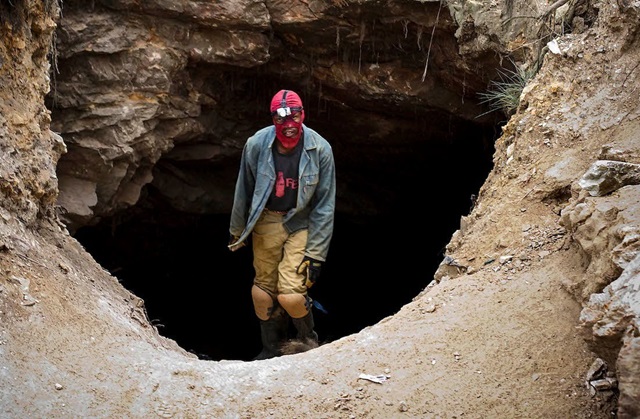
In South Africa’s old mining heartland, a dramatic rescue unfolded this month in the Buffelsfontein gold mine, a site abandoned decades ago but still rife with danger. A Mozambican miner, weak and disoriented after weeks of working and then being trapped by violent gang leaders, was slowly winched to safety from more than a mile beneath the earth. This miner, unable to even provide his name as he collapsed from exhaustion, became the latest survivor in an ongoing battle between police and ruthless criminal syndicates that control illegal mining operations, known as zama zamas.
The situation in South Africa’s mining industry has become increasingly dire. Once the world’s leading gold producer, South Africa has seen its mining sector stagnate due to aging infrastructure and ineffective policies. This has led to the proliferation of up to 6,000 abandoned mines, where gold prices soaring to record highs this year have fueled a violent struggle for control. At the heart of this issue are the zama zamas—desperate, impoverished miners who are often recruited or coerced by criminal gangs to work in hazardous conditions in disused mines.
The violent stand-off between law enforcement and the gangs highlights the severe criminal infiltration within the mining sector, a key pillar of Africa’s most industrialized economy. Despite efforts from President Cyril Ramaphosa’s business-friendly coalition government to address the issue, including a crackdown on illegal mining and reforms in the electricity sector to reduce blackouts, tackling this deep-rooted problem remains a monumental challenge.
As one security consultant working with multinational mining companies told Financial Times, the situation is only likely to worsen. “It’s become a type of insurgency, and the government hasn’t dealt with it for 20 years,” he warned. Thousands of zama zamas have flocked from neighboring countries such as Lesotho, Zambia, and Mozambique, seeking work in South Africa’s mines. These men are often trapped for months at a time underground, subjected to violence, coercion, and exploitation by the gang leaders who control their labor.
According to a report from the World Gold Council, around 25 tonnes of gold are believed to be smuggled annually from South Africa, with the illicit trade routed through countries like the United Arab Emirates and Switzerland. In response, authorities have launched Operation Vala Umgodi—a campaign to close illegal mining pits and disrupt this black market, which is estimated to drain the country of as much as $1 billion annually. However, the crackdown has not been without controversy.
In the small town of Stilfontein, located 160 kilometers west of Johannesburg, the stand-off at Buffelsfontein mine has turned into a symbol of the deeper issues plaguing the sector. Police blockades have surrounded the mine, cutting off food and water supplies to miners in an attempt to force gang leaders to release the trapped men. More than 850 miners have been rescued in recent weeks, but the rescue operation has led to outrage from human rights groups who argue that the siege tactic, dubbed “surrender or starve,” is inhumane and exacerbates existing tensions around unemployment and xenophobia in South Africa.
Louis Nel, a security consultant with experience in the sector, explained that the underground networks are heavily armed. Gang leaders, often equipped with AK47s and improvised explosive devices, make it nearly impossible for anyone to enter or exit the mines without their permission. Nel noted that the gang leaders have strategically released miners one at a time, using the tactic to manipulate public sentiment and generate sympathy for their cause.
“There’s a strategy behind it,” Nel said. “They spend months at a time down there, so they know the place like the back of their hands. Releasing miners slowly is a way of gaining public sympathy and making it harder for authorities to act.”
The ongoing crisis has revealed the complex network of corruption and illegal activities underpinning the zama zama industry. David Van Wyk, a researcher at the Johannesburg-based Bench Marks Foundation, noted that high-ranking officials in both South Africa and neighboring countries have been implicated in the syndicates. These officials often facilitate the movement of gold and tax evasion by collaborating with legal operators and refiners, further complicating efforts to eradicate illegal mining.
In Stilfontein, local residents have been left bewildered by the heightened police operations. One store owner observed, “We used to see the gang leaders driving around in their flashy cars. They’ve been here for years, so why all the fuss now? Maybe somebody high up isn’t getting their kickbacks.”
The crisis in South Africa’s mining industry, particularly with the rise of illegal zama zama operations, has underscored the urgent need for a comprehensive strategy to reform the sector. Despite the government’s attempts to clean up the industry, the challenge remains immense, with the country’s economic struggles—unemployment rates as high as 33%—compounding the difficulties. The situation at Buffelsfontein, with its stark portrayal of exploitation, violence, and systemic failure, is a reminder of the deep-rooted issues that need to be addressed if South Africa’s mining industry is to survive and thrive in the future.