A catastrophic power outage that swept across Spain and parts of Portugal earlier this week has ignited fierce debate over the country’s heavy reliance on solar energy, with energy experts and former regulators warning in the Financial Times that the national grid’s lack of stable backup power played a critical role in the failure.
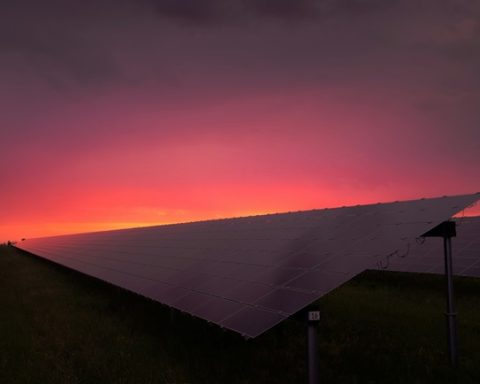
The blackout struck on Monday afternoon when 15 gigawatts of electricity generation dropped from the grid in just five seconds, plunging large parts of the Iberian Peninsula into darkness. At the time, solar power accounted for roughly 55% of Spain’s electricity supply — an unusually high share for any major industrialized nation.
Former top European grid executives told the Financial Times that Spain’s over-dependence on intermittent renewable sources such as solar — without enough “firm” energy from fossil fuels, hydroelectric or nuclear sources to back it up — was a key vulnerability. “Two-thirds of [Spain’s electricity] production was made up of non-controllable resources,” said André Merlin, founding CEO of France’s grid operator RTE. “These don’t contribute to the stability of the internal electrical system.”
Although Red Eléctrica, Spain’s grid operator, has not confirmed the exact cause of the failure, experts agree the crisis points to deeper structural issues in how renewable power is managed on a national level. A sudden drop in grid frequency at 12:33 p.m. on Monday triggered the emergency disconnection. Experts warn that the system struggled to compensate for the drop because too few traditional power plants were active to help stabilize the grid.
Jorge Sanz, a former Spanish energy official and adviser to the International Energy Agency, said on Spanish television that there was “an imbalance of supply” and “poor management” of the system. “When [Red Eléctrica] needed to reduce electricity supply, it could barely do so because firm facilities were barely connected,” Sanz explained.
In its 2024 annual report, Red Eléctrica had already flagged the risk posed by “high renewable penetration” without enough responsive capacity to deal with sudden disturbances. Critics say Monday’s events offer a real-world demonstration of that risk.
Meanwhile, Red Eléctrica’s CEO Beatriz Corredor has fiercely defended Spain’s renewable strategy. In an interview with El País, she insisted that renewables did not make the grid more vulnerable and emphasized the daily success of solar-powered operations. She added that other sources, including nuclear, also suffer from reliability issues.
Still, the incident has revived calls for Spain to rethink its push to phase out nuclear energy. Opposition politicians and industry figures have criticized Prime Minister Pedro Sánchez’s plan to shutter nuclear plants even as the country aims to increase renewable generation to 80% of total electricity by 2030. Ignacio Galán, chair of energy giant Iberdrola, told media this week that nuclear is “the least expensive solution to secure system stability.”
Merlin, speaking to the Financial Times, echoed the sentiment, calling for a more balanced approach: “We need to be careful about the policy of maximum development and maximum use of intermittent renewable energy to the detriment of more conventional means.”
While some experts believe an overproduction of solar energy triggered the disconnection, others suggest the opposite — that sudden cloud cover may have caused solar output to drop too quickly, triggering instability. Regardless of the precise cause, analysts agree that the failure stemmed from a fragile system with insufficient buffer.
Kristian Ruby, secretary-general of European power industry body Eurelectric, said cascading failures were likely: “What we normally find is a couple of things that went wrong at the same time.”
As investigations continue, analysts say Spain must act quickly to bolster grid resilience. “More storage capacity should be a main focus for the country at the moment,” said Pratheeksha Ramdas, an energy analyst at Rystad Energy. Battery storage, along with expanded cross-border connections, could provide a critical safety net for Spain’s ambitious green energy transformation.