Editorial
The cyclone that has unleashed devastation across Sri Lanka is more than a natural disaster; it is a profound test of foresight, resilience, and the nation’s ability to protect its people. With early warnings issued as far back as 21 November, this was not an unpredictable act of nature but a foreseeable challenge. Yet the unfolding tragedy, marked by destroyed livelihoods and fragile recovery efforts, reveals uncomfortable truths about the readiness of systems meant to safeguard the nation in such moments.
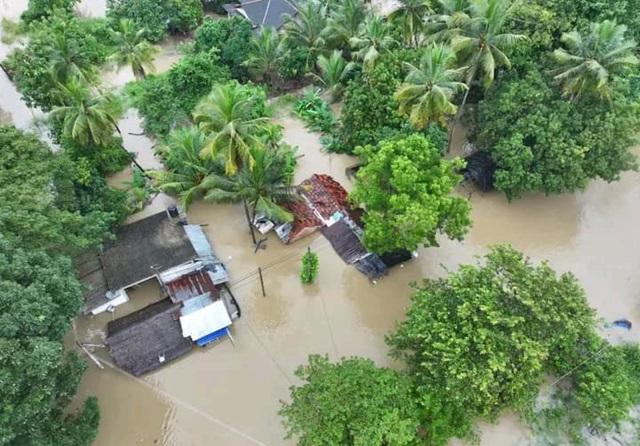
The figures alone are staggering. Over 64,000 hectares of paddy fields in the Northern Province alone have been submerged, their crops washed away. The destruction in Mannar district—23,000 hectares—is a microcosm of a broader crisis that now grips the country. For the farmers who toiled to plant these fields, this is not merely a loss of produce but a rupture in their way of life. Their fields are not just sources of income but anchors of sustenance, with families relying on their yields for daily survival. Now, those anchors are gone, swept away in the torrents.
The consequences of this devastation extend beyond the Northern Province. At a time when Sri Lanka aimed to be self-reliant in rice production, the destruction of vast tracts of cultivation has turned that ambition into an ever-distant dream. The looming spectre of imports will strain a nation already grappling with economic uncertainty, threatening household budgets as the New Year—a time of collective celebration—approaches. For a country that prides itself on resilience, this crisis raises sobering questions about whether pride is enough in the absence of preparation.
This is not merely a tale of nature’s fury; it is an indictment of systemic vulnerabilities that have persisted for far too long. Broken tank dams, flooded fields, and communities left scrambling to recover point to years of underinvestment in critical infrastructure and disaster preparedness. These failures are not isolated to this moment; they are symptoms of a deeper neglect of the systems that sustain the nation.
Compensation, though necessary, cannot repair the full scope of the damage. It cannot replace the months of labour lost or the emotional toll of watching one’s future dissolve in a deluge. What Sri Lanka needs now is not just recovery but transformation. This disaster demands a rethinking of priorities—towards building infrastructure that can withstand nature’s ferocity and systems that respond with speed and efficiency when lives are at risk.
There is no escaping the fact that this cyclone is a warning—an unambiguous call to reimagine how the country approaches disaster management and resilience. The path forward must begin with acknowledging what this crisis has exposed: that warnings, no matter how early, are useless without action; that promises of aid, no matter how well-intentioned, mean little without delivery; and that recovery, no matter how determined, cannot replace what is lost.
This moment must be a turning point. It is a chance to embrace a new ethos of preparedness, to prioritise the long-term over the immediate, and to view resilience not as a slogan but as a necessity. Farmers must not only receive compensation but also access resources that ensure their fields can be replanted. Communities must not only rebuild but also be equipped to weather future storms. And Sri Lanka must not only respond to this disaster but also learn from it, embedding its lessons into every aspect of governance and planning.
The cyclone is a grim reminder of nature’s power and humanity’s vulnerability. But it is also a reminder that vulnerability need not equate to helplessness. With the right vision, investment, and commitment, Sri Lanka can emerge stronger, not just from this crisis but from the challenges that are sure to follow. This is not just a recovery effort—it is an opportunity to redefine the nation’s future. Whether that opportunity is seized will determine far more than the aftermath of this storm; it will define Sri Lanka’s ability to stand firm in the face of whatever comes next.