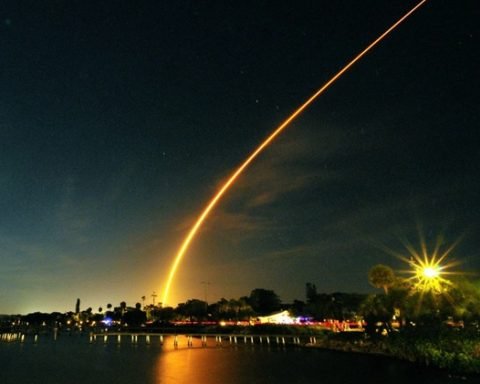
A SpaceX Starship test-flight explosion earlier this year posed a significantly greater risk to commercial aviation than was publicly acknowledged, according to Federal Aviation Administration documents reviewed by the Wall Street Journal. The report claims that passenger aircraft were forced into emergency measures as burning debris from the failed launch spread across a wide area.
The Starship rocket launched from SpaceX’s Texas facility on January 16 but suffered a mid-flight failure and broke apart, sending flaming fragments across the sky. At the time, SpaceX founder Elon Musk played down the incident, remarking that while success was uncertain, “entertainment is guaranteed.”
According to the Wall Street Journal, an internal FAA document stated that the explosion “rained fiery debris across parts of the Caribbean region for roughly 50 minutes.” The document warned that if debris had struck a passenger aircraft, the consequences could have been catastrophic, potentially resulting in severe damage and loss of life.
FAA records cited in the report indicate that air-traffic controllers were forced to intervene as commercial aircraft approached the affected area. A JetBlue flight heading to Puerto Rico was reportedly warned it was nearing a hazard zone and instructed to enter a holding pattern, with controllers later telling the crew that proceeding would be “at your own risk.” Another FAA report described two aircraft flying dangerously close to one another, requiring controller action to prevent a possible collision.
The situation allegedly escalated to the point that controllers characterized it as a “potential extreme safety risk.” After declaring fuel emergencies, a JetBlue aircraft, an Iberia passenger flight, and a private jet were allowed to transit temporarily restricted airspace. All three flights, carrying an estimated 450 people, ultimately landed safely.
SpaceX strongly rejected the Journal’s account, accusing the newspaper of misleading reporting driven by “ulterior motives.” In a statement posted on X, the company said reporters had been “spoon-fed incomplete and misleading information from detractors” and insisted that public safety remains its highest priority.
The company maintained that no aircraft were ever placed in danger, arguing that any debris generated by the failed test remained within pre-coordinated response areas established by the US Space Force and enforced by the FAA. SpaceX said those measures are specifically designed to protect civilian aviation during launches and test flights.
The conflicting accounts underscore growing scrutiny of SpaceX’s increasingly ambitious launch program and the challenges of balancing rapid rocket development with aviation safety. As regulatory and legal pressure mounts over rocket debris and airspace management, the Starship explosion has become a fresh flashpoint in the debate over how much risk is acceptable in the race to build next-generation space vehicles.