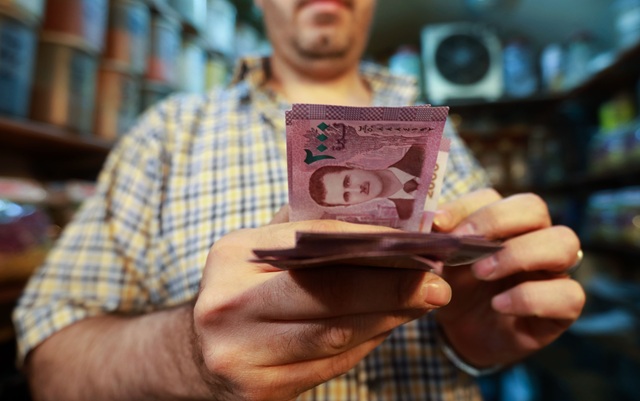
Syria’s central bank has flown in a new supply of banknotes from Russia in a bid to alleviate a severe cash shortage that has left the country’s economy on the brink of paralysis. The bank confirmed the arrival of fresh Syrian pounds via Damascus International Airport but declined to disclose the quantity.
The move highlights Syria’s continued reliance on Russia, as the newly installed government faces challenges in procuring currency from Western sources due to longstanding sanctions. Goznak, Russia’s state-run currency printer, has long supplied Syria with banknotes, filling a critical gap left by Western restrictions that prevent access to international printing facilities.
The cash crunch has disrupted business operations, with many manufacturers and traders unable to access their deposits to pay suppliers and salaries. A textile manufacturer speaking on condition of anonymity described the dire situation: “People have stopped depositing money in banks because they fear they won’t be able to withdraw it.”
While rumors had circulated on social media about the arrival of new currency, the central bank dismissed speculation regarding the volume of the shipment, emphasizing that reports on the quantity of fresh notes were “completely inaccurate.”
Banking System Under Pressure
In recent weeks, some private banks have received up to S£600 million (approximately $46,000) daily from the central bank, according to banking sources. However, this sum remains insufficient to meet the financial needs of businesses, which have been forced to rely on cash reserves to pay employees.
“Traders have been paying employees from their own reserves, and that has worked for two months, but how much longer can they last?” one banker questioned. Meanwhile, the central bank lifted temporary withdrawal limits at the end of last month, yet businesses and individuals still face difficulties accessing cash.
With uncertainty surrounding the total volume of currency in circulation, the lack of transparency has only exacerbated economic instability. Unlike most central banks, Syria’s monetary authorities do not publish regular statements on the amount of banknotes in circulation. Furthermore, the central bank’s website remains inaccessible, adding to the opacity of its operations.
Economic Turmoil Persists
Syria’s economy, already battered by 13 years of civil war, deep-rooted corruption, and stringent Western sanctions, is struggling to recover following the overthrow of President Bashar al-Assad. Although many Syrians welcomed Assad’s removal, economic activity has slowed significantly, with businesses reporting plummeting sales and concerns about future stability.
The situation has been further complicated by the lifting of export restrictions, which has forced some businesses to sell existing stock at a loss. “People are not spending because they don’t know what’s going to happen,” said the textile businessman. “Companies are not spending because there’s no cash revenue, and the main priority is paying employees.”
Meanwhile, Western governments have largely maintained sanctions on Syria’s banking sector. Some officials, including those in the European Union, have proposed phased measures to ease restrictions, but no immediate relief is expected.
Jihad Yazigi, editor of Syria Report, warned that the economic situation represents a major test for the new authorities in Damascus. “The economy is a big, big issue… A crucial test for the new authorities in Damascus will be to ensure a steady supply of energy and bread and, more generally, ensuring the economy restarts.”