
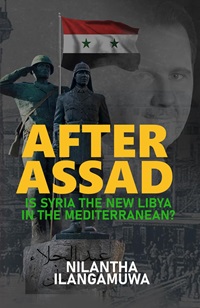
In After Assad: Is Syria The New Libya In The Mediterranean?, Nilantha Ilangamuwa presents a thorough examination of Syria’s future after the fall of Bashar al-Assad’s regime. The book tackles the complex geopolitical and social issues that have plagued Syria for over a decade and explores the possibility that Syria might follow a path similar to that of Libya after the ousting of Muammar Gaddafi. The author thoughtfully considers the regional and international forces at play and the potential consequences of Assad’s departure, framing Syria’s future in terms of its ethnic, religious, and political fractures.
The book opens with a detailed overview of Syria’s current situation, drawing direct parallels between the situation in Syria and Libya’s post-Gaddafi experience. Ilangamuwa suggests that, much like Libya, Syria risks disintegration into a divided state, with multiple factions vying for control over different territories. He argues that Syria’s future could mirror Libya’s experience of fractured governance and instability, where rival groups—bolstered by foreign powers—could dominate different regions. This fragmentation, the author warns, is exacerbated by the complex web of ethnic, religious, and sectarian divides within Syria, including tensions between the Sunni Arab majority, the Kurds, Alawites, Druze, and Christians.
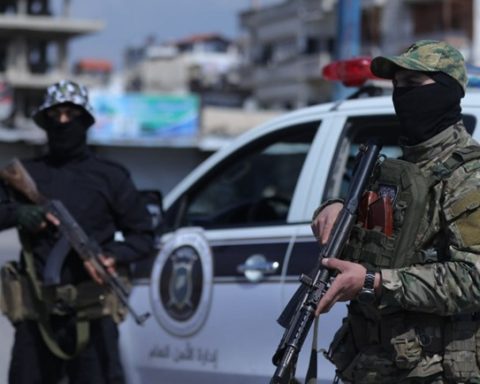
One of the core topics explored in the book is the role of Hayat Tahrir al-Sham (HTS), a jihadist group that has grown into one of the most powerful factions in Syria. HTS has emerged as a significant player in Syria’s civil war, and Ilangamuwa examines its rise and the group’s ambitions. Initially aligned with al-Qaeda, HTS has attempted to recast itself as a more moderate force, though it remains committed to establishing an Islamic governance model in the areas it controls. The book highlights the group’s contradictory nature—its rebranding as moderate, while still holding extremist views—raising serious questions about its potential to lead Syria towards peace or stability.
While Ilangamuwa acknowledges HTS’s military strength, he also critiques its long-term viability as a governing body. His concerns about the group’s ideology and tactics underscore the challenges any future government would face in trying to unify the country and ensure the protection of minority rights. The author stresses that while HTS may have succeeded in securing military control over certain parts of Syria, its ideological framework makes it unlikely to be the force that can bridge the divides in the country.
Another significant issue addressed is the Kurdish question, which has been a central aspect of the Syrian conflict. The Syrian Kurds, led by the Syrian Democratic Forces (SDF), have carved out an autonomous region in northern Syria. Ilangamuwa examines the complicated relationship between the Kurds, the Syrian government, and various regional powers, particularly Turkey, which views Kurdish forces as a direct threat due to their ties to the separatist PKK. The author also discusses the role of the United States, which has supported Kurdish forces in their fight against ISIS, but whose involvement has complicated relationships with other powers in the region. Ilangamuwa argues that the future of Syria will be heavily influenced by how the Kurdish issue is resolved, as their autonomy is a point of contention not just within Syria, but also with neighboring states.
The book also considers the broader international context, examining the role of foreign powers in Syria’s ongoing crisis. Russia, Iran, Turkey, and the United States all have significant interests in the outcome of the conflict. Ilangamuwa provides a nuanced look at these international actors, detailing how their interventions have shaped the course of the civil war and will continue to influence Syria’s future. Russia’s military support for Assad and its desire to maintain influence in the region contrasts with Turkey’s focus on limiting Kurdish autonomy and maintaining a buffer against Kurdish militias along its southern border. Meanwhile, the United States and European powers have supported different factions in the hope of containing Assad’s regime, while also addressing the threat of ISIS.
Despite the intense foreign involvement, Ilangamuwa’s primary concern is Syria’s internal fragmentation. He argues that the divisions within the country are too deep for any external power to resolve on its own. The author suggests that any post-Assad Syria must navigate not only the political and military challenges of its internal factions but also the pressures of foreign intervention, each pursuing its own interests. In many ways, Syria’s future remains uncertain, caught between the hopes for stability and the harsh reality of entrenched divisions. Ilangamuwa critiques the current international approach to Syria, which he feels has been inadequate in addressing the complex reality on the ground.
The author does not offer a single, clear solution to Syria’s predicament, but instead presents a series of potential outcomes. He warns that, like Libya, Syria could fragment further into separate regions controlled by militias or foreign-backed governments, leading to prolonged conflict. Alternatively, the country could see the rise of a strong, centralized government, potentially dominated by one of the factions such as HTS. This, however, could lead to authoritarian rule and the suppression of minority rights. The third possible outcome, which Ilangamuwa sees as the most unlikely, would be a federal structure where different ethnic and religious groups receive some degree of autonomy within a unified state. While this could provide a framework for coexistence, it would require significant political will and compromise, which seems out of reach in the current climate.
In examining these possible futures, Ilangamuwa underscores the risks of ignoring Syria’s deep-rooted problems and the potential for the country to descend further into chaos. He draws parallels to Libya, where international interventions, while attempting to stabilize the country, have often only deepened the divide between factions. The author suggests that Syria, too, could face a similar fate if its internal issues are not addressed in a comprehensive and inclusive manner.