


For more than two decades, Pakistan has conducted repeated counterterrorism campaigns against Taliban militants and Baloch insurgents in its western regions bordering Afghanistan and Iran. Yet the country remains caught in a

For more than two decades, Pakistan has conducted repeated counterterrorism campaigns against Taliban militants and Baloch insurgents in its western regions bordering Afghanistan and Iran. Yet the country remains caught in a
In March 2008, Colombian jets crossed into Ecuadorian airspace and destroyed a Fuerzas Armadas Revolucionarias de Colombia (FARC) encampment a mile past the border, killing the group’s second-in-command. Ecuador called it a violation of sovereignty. Colombia called it self-defense against
Sakina knew the risks. In the final days of her pregnancy, she was living in Pas Kuran, a village in Kuran wa Munjan, one
Five years after returning to power, the Taliban controls Afghanistan more firmly than many expected. Yet territorial control has not translated into the elimination
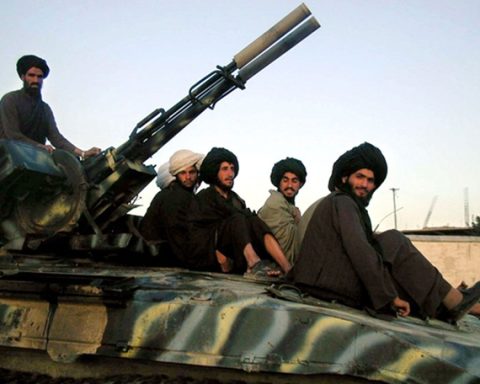
It is no longer credible to treat Afghanistan’s terrorism problem as a purely internal Afghan matter. Since the Taliban returned to Kabul in August 2021, Afghanistan has increasingly functioned as a permissive
More
The Taliban present their rule as grounded in Sharia. Nearly five years after returning to power, Afghanistan is governed less as an Islamic system and more as a centralized structure of authority
More
The street market in the Afghan border town of Torkham in Nangarhar province has “gone silent.” Anxiety about the future is rising as trade halts and incomes dry up, a local shopkeeper
More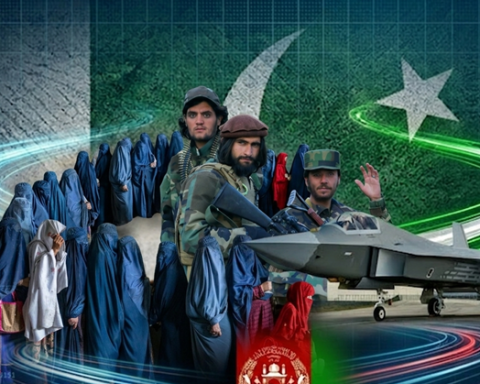
Since the Taliban’s return to power in August 2021, the claim of having restored “security” has remained central to their narrative and its external amplification. This framing often contrasts with earlier periods
More Afghanistan today is no longer defined merely by instability; it has evolved into a dense convergence of militant networks, ideological extremism, foreign fighters, and illicit economies. This convergence has created a volatile
More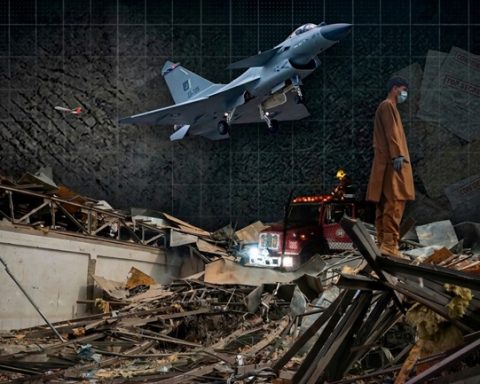
At approximately 9 p.m. on 16 March 2026, an airstrike hit the Omid Addiction Treatment Hospital in Kabul, a 2,000-bed drug rehabilitation facility near the city’s international airport, destroying large sections of
More As global attention remains fixed on the war in Iran, another conflict-quieter but no less consequential is unfolding to its east. Since late February 2026, Afghanistan and Pakistan have slipped into what
More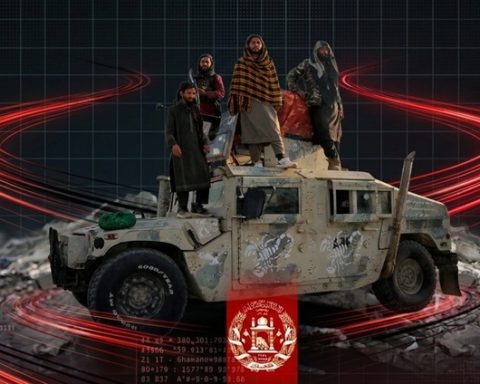
On March 16, 2026, Yaqub Ebrahimi, the former Traffic Commander of Ghor Province was killed in the Kandiwal area of Firuzkuh city, the capital of Ghor Province, while heading towards a mosque.
More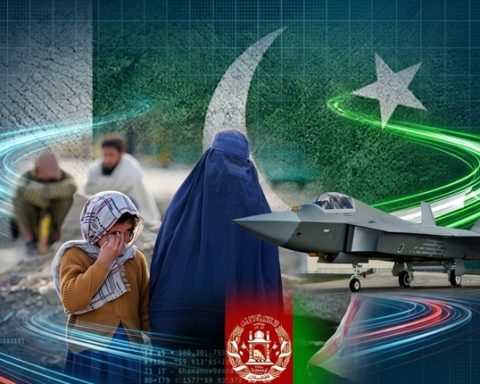
On March 16, the Taliban Government of Afghanistan accused the Pakistani military of conducting an airstrike that killed more than 400 people and injured 250 [the UN later revises the death toll
More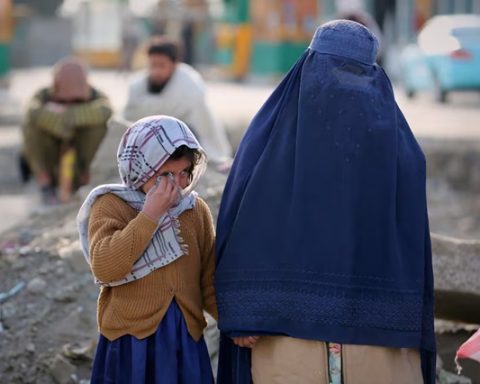
At least 400 people have been killed and around 250 others injured following reported airstrikes in Kabul, in what Afghan authorities describe as one of the deadliest incidents in the capital in
More I am a Pashtun girl, born and raised in Peshawar, where the echoes of Pashtunwali, our ancient code of honor, family loyalty, and resilience, still shape the rhythm of daily life. My
More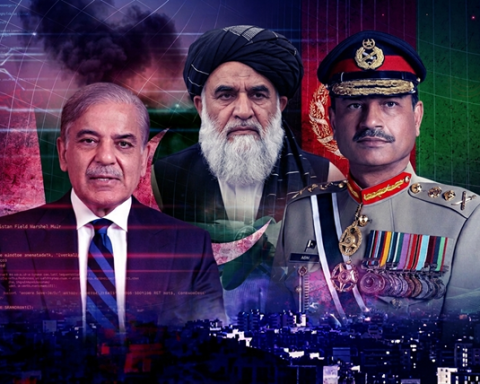
Pakistan and Afghanistan have entered what many observers describe as an open phase of military confrontation following Pakistan’s launch of Operation Ghazab lil-Haq in late February 2026. The operation, presented by Islamabad
More At the time of writing, tensions between Afghanistan and Pakistan have escalated dramatically, with Afghanistan reportedly firing at Pakistani jets over Kabul after explosions and gunfire shook the capital on March 1,
More What a fall there has been for Pakistan from the former ISI Chief presently incarcerated Lt Gen Faiz Hameed landing in Kabul sipping tea in the Serena Hotel in August 2021 to
More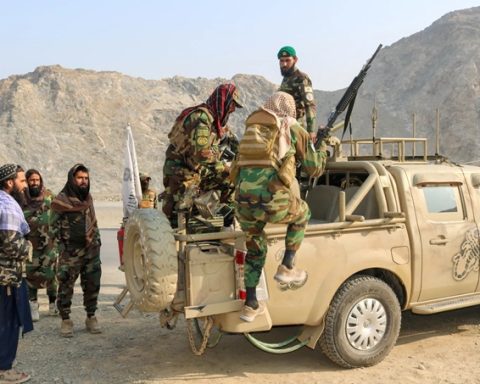
After almost six months, the fragile silence at the Af-Pak border between the Taliban and Pakistan seems to have run out of patience. Pakistan carried out multiple airstrikes on Afghanistan yesterday, killing
More