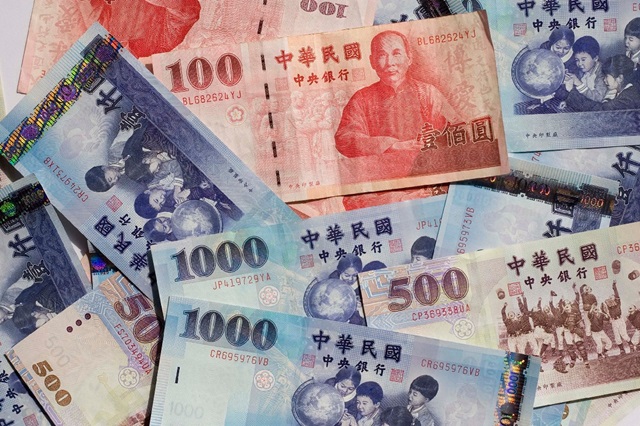
Taiwan’s central bank has issued a warning to certain foreign investors over violations of capital control regulations, as it intensifies efforts to curb speculative inflows and contain the surging value of the New Taiwan dollar. The move comes as authorities seek to manage currency volatility without triggering accusations of manipulation from the United States.
In a statement provided to the Financial Times, the Central Bank of the Republic of China said it had “strengthened communication with a few foreign investors” and asked them to “self-regulate and make necessary improvements.” The warning follows findings that some foreign capital inflows were not being used to invest in domestic securities, as required under Taiwan’s foreign exchange regulations.
Taiwan’s currency has appreciated more than 10 percent this year, raising concerns about the long-term impact on the island’s export-driven economy. A stronger Taiwan dollar reduces the competitiveness of exports and erodes the value of the country’s vast overseas holdings, particularly in US dollars. In 2023, Taiwan’s exports hit a record $475 billion, accounting for roughly 60 percent of GDP—twice the global average.
The central bank’s balancing act is complicated by Taiwan’s inclusion on the US Treasury Department’s monitoring list for potential currency manipulation. Any aggressive interventions to suppress the Taiwan dollar’s appreciation could risk a formal designation as a currency manipulator. As a result, the bank is turning to regulatory enforcement and subtle pressure rather than direct market intervention.
Analysts suggest that the central bank’s recent actions are designed to close loopholes and discourage speculative short-term capital flows. “You can’t effectively operate in Taiwan if you don’t have a healthy relationship with the central bank,” noted Brad Setser, senior fellow at the Council on Foreign Relations and former US Treasury official.
The Taiwan dollar experienced sharp volatility in early May, appreciating more than 9 percent against the US dollar in just three trading days. This rally was driven by asset repatriation by local exporters and large-scale hedging by life insurers exposed to the weakening US currency. These factors, along with speculative flows, have added momentum to the Taiwan dollar’s rise.
Although Taiwan officially maintains that “there are effectively no foreign exchange restrictions,” capital controls require foreign investors converting funds into New Taiwan dollars to channel that capital into domestic investments. Breaches of these rules can indirectly limit an investor’s ability to operate in Taiwan, giving the central bank greater leverage to shape currency dynamics.
In addition to warnings issued to importers, exporters, and ETF investors speculating on exchange rates, the central bank launched investigations into local banks in May and floated the possibility of imposing trading delays on foreign investors suspected of currency speculation.
Market observers point out that Taiwan’s currency strength is being driven by more than just speculation. Structural forces—including robust trade surpluses, insurer activity, and steady foreign capital inflows—continue to fuel appreciation pressures. As Société Générale’s lead Asia macro strategist Kiyong Seong observed, “Taiwan dollar appreciation is not purely coming from speculation.”
Still, with mounting external scrutiny and internal economic pressures, Taiwan’s central bank remains committed to maintaining stability while navigating a complex and increasingly fraught currency environment.