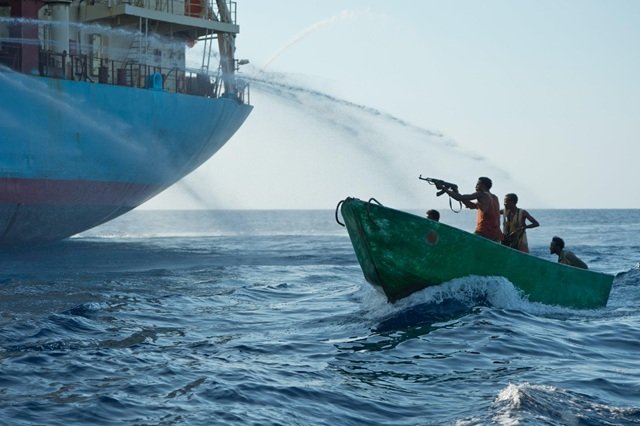
On August 20, 2026, officials disclosed that two commercial vessels carrying a total of 22 Indian nationals (as well as one Syrian, one Sudanese and one Iraqi national, while the nationality of one seafarer has yet to be confirmed) were hijacked in separate incidents off Yemen and Somalia, highlighting a renewed piracy threat in waters around the Horn of Africa. The Eritrea-flagged oil products tanker M.T. Sibu 1, carrying 16 Indians among its 20-member crew, was hijacked by six-armed pirates in the Gulf of Aden, about 30 nautical miles off the Yemeni coast. According to a report prepared by the Directorate of Maritime Administration, all 20 crew members were safe, although the latest status of the vessel and crew was still awaited.
On 17 August 2026, pirates seized the Cameroon-flagged cargo ship M/V LUTUF, owned by Polar Movement Shipping. The vessel was taken about 3.5 nautical miles off Marraya in Puntland’s Eyl District, Somalia, and subsequently steered toward the Nugaal coast near Garmaal in Dangoroyo district. Its 10-member crew included six Indians, one Turkish national, one Georgian, and two Serbian security guards. The ship was reportedly carrying weapons destined for a Turkish military training facility in Mogadishu, along with communications and satellite equipment. Eight pirates, believed to belong to the same group involved in the earlier hijacking of the M/V Sward, carried out the attack. Turkish forces later monitored the area with helicopters and drones.
These two incidents form part of a wider pattern of attacks recorded in 2026. On July 1, the Indian Navy’s INS Trikand foiled an attempted pirate attack on the bulk carrier MV Golden Arsenal, which was carrying 21 crew members including one Indian national, about 300 nautical miles east-northeast of Djibouti. The vessel reported damage to its bridge superstructure, but the crew took shelter in the citadel and remained safe. On July 17, the Tanzanian-flagged fuel and chemical tanker MT Asana was hijacked off the Yemeni coast in the Gulf of Aden; its crew of at least 19 included 11 Indian nationals alongside Syrian, Yemeni, and Egyptian personnel. On May 2, the Togo-flagged product tanker M/T Eureka was boarded by armed men near Qana in Yemen’s Shabwa Governorate and diverted toward Somali territorial waters in Puntland; its mixed crew included multiple Indian and Egyptian nationals. On April 26, the Saint Kitts and Nevis-flagged general cargo vessel M/V Sward was hijacked approximately six nautical miles northeast of Garacad, Somalia. On April 21, a tanker carrying about 18,000 barrels of oil was also seized near the Somali coast.
These incidents mark a clear resurgence of Somali piracy after more than a decade of relative inactivity. Between 2005 and 2012, Somali pirates were responsible for more than 1,000 attacks and extracted approximately $400 million in ransom payments. At its peak, the World Bank estimated that piracy cost the global economy as much as $18 billion a year, with more than 200 attacks recorded in 2011 alone. International naval patrols – including the European Union’s Operation Atalanta, Combined Task Force 151, and deployments by the Indian Navy and others – together with Best Management Practices for shipping and the widespread use of private armed security teams, drastically reduced successful hijackings. Between 2013 and 2017, commercial hijackings had virtually stopped, and the shipping industry formally lifted its “high-risk” designation for the Indian Ocean in 2023.
That calm has now ended. Since April 2026, the French Navy’s Mica Centre has recorded 18 piracy incidents and hijackings, with at least three vessels still held for ransom at the time of writing. The United Kingdom Maritime Trade Operations (UKMTO) has raised the piracy threat level along the Somali coast to “substantial” and advised vessels to transit with caution. European Union naval forces patrolling the region have described the ongoing war involving Iran as having given pirate groups a clear “window of opportunity.”
Modern Somali piracy remains a product of state collapse combined with the destruction of traditional livelihoods, after the fall of the Siad Barre regime in 1991, as Somalia lost any functioning central government, coast guard, or fisheries regulation. The current resurgence has been enabled by several converging factors: naval forces once focused on anti-piracy patrols have been stretched thin by conflicts in the Red Sea and the Strait of Hormuz; shipping traffic has been pushed closer to Somali waters as vessels seek alternative routes; and persistent instability along the Puntland coastline – particularly in traditional strongholds such as Garacad in the Mudug region – has allowed coastal networks to reactivate.
The pirates themselves are primarily young men aged 20 to 35 from coastal communities in northern and northeastern Somalia, especially the autonomous region of Puntland (areas around Eyl, Garacad, Hobyo, and Banderbeyla). They do not form a single hierarchical organisation or terrorist group. Instead, they operate in fluid Pirate Action Groups – small, clan-based teams of five to twenty men. These groups typically include former or current fishermen who supply seafaring skills, ex-militiamen or former soldiers who handle weapons and boarding tactics, local organisers and financiers who arrange skiffs, fuel, ladders, and ransom negotiations, and occasional support from urban or diaspora networks. In the 2026 wave, at least two or three active groups have been identified. They are armed mainly with AK-type assault rifles and occasionally rocket-propelled grenades. Their motivation is primarily financial – ransom payments that can reach several million dollars – rather than ideological, although economic desperation and weak governance provide the enabling conditions. Speculated links to al-Shabaab or the Houthis remain unconfirmed.
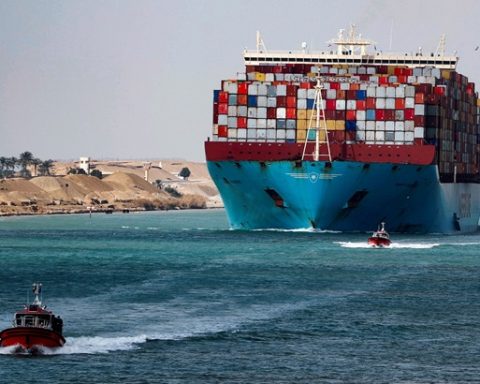
The International Maritime Organisation (IMO) has repeatedly described the situation of the dozens of seafarers still held in captivity in 2026 as a humanitarian crisis. The Gulf of Aden, which feeds into the Red Sea and the Suez Canal, remains one of the world’s most critical maritime corridors, carrying roughly 12 to 15 per cent of global trade by value and about 30 per cent of the world’s container traffic each year.
Until both the maritime security gap and the underlying coastal economic drivers are addressed, the risk to seafarers, energy supplies, and global trade through this vital corridor will persist.