35 years ago, in 1991, I was selected to one of the prestigious sea appointments in Sri Lanka Navy. After a short familiarisation course, I was appointed to P 467 (old pennant numbers), Fast Attack Craft (FAC) Super Dvora Mk II, one of the fastest FAC of the Navy at that time. Built in Israel at a cost of US $30 million, it was the vanguard of our Navy throughout our conflict with LTTE Sea Tiger terrorists.
P467 was commanded by Lt Cdr Ariyadasa, an officer senior to me, who had captured the highest number of smuggling boats in SLN in the Western Naval Command. So, my sole intention was to work hard and capture more smuggling boats than Lt Cdr Ariyadasa. Sadly, two days after taking over, my FAC was attached to the Eastern Naval Command to patrol in Northern waters. Someone in Naval Headquarters did not want to see my face in Colombo?
It was not smugglers, but LTTE terrorist Sea Tigers operating in Northern waters at that time. LTTE had some camps in the Southern Indian Tamil Nadu coast, which was their main logistics route to the Northern peninsula. They had boats moving at excess of 30 knots (30 nautical miles per hour – approx 40 mph) and our FAC had a slight speed advantage over terrorist speed boats.
The distance between India and Sri Lanka is approximately 24 nautical miles. The Indo-Sri Lanka International Maritime Boundary Line (IMBL) is marked at equidistance, approximately 12 nautical miles. So, a terrorist boat moving at 30 knots can cross our waters in 24 minutes! That’s the time given to us in the Navy to detect, chase, and destroy enemy boats. If you go too close to land, which was held by the enemy at that time, they will fire upon you with their shore gun batteries. Your FAC becomes a “sitting duck” if you do not move away from land fast.
The enemy always kept their tractors with trailers in the water ready for their boat arrival. As soon as their boat hit shore, they loaded it onto a trailer and towed it with the help of a tractor to a safe area, away from the beach, to unload the boat.
Similarly, launching enemy boats was also done by bringing boats to shore from inland, and launching was done in a few minutes. It was more difficult for us to detect these boat launching pads as they were done at night under the cover of darkness. However, in those days (1991), when LTTE Sea Tigers saw an Israeli-built Dvora, they used to run away. Most of our chases of Sea Tiger boats ended up in a “stern chase” and, with a slight speed advantage, we destroyed the enemy boat with the 20mm Oerlikon cannon gun we had as the main weapon of the FAC at that time. FAC had a crew of two officers and 12 sailors at that time. It was a very close “family”. My Second-in-Command was Lt SHU Dushmantha, a fearless, excellent officer, outstanding tennis player, old Anandian, and from KDU Intake 4. Sadly, he died in action out at sea on 30/10/1998. He was a recipient of three gallantry medals for his bravery and valour out at sea, namely Weera Wickrama Vibhushanaya (WWV), Rana Wickrama Padakkama (RWP), and Rana Sura Padakkama (RSP). I had L/S Newton as my coxswain (later rose to Master Chief Petty Officer rank and an excellent photographer) and L/ME Premaratne (also rose to MCPO rank later and an excellent cook) who looked after the engines. Our FAC, in her first patrol to the Northern Naval Area, was able to destroy an enemy boat, which was a great achievement for me and my crew.
From time to time, we upgraded our weapons and sensors on board the FAC. When we were on FAC, we had only radar to detect enemy boats at night. Later we went into MSIS (Multi Sensor Integrated System) and a better forward main gun (US-made 30mm Bushmaster chain gun), but the platform, the FAC hull, remained the same.
When we fought with Sea Tigers, there were no suicide boats at sea. The enemy who ran away at their maximum speed when they saw a FAC later loaded explosives and started to come towards us on fast, suicidal missions. We had to rewrite and develop our fighting tactics and manoeuvres. My salute to all who worked tirelessly during this time, special thanks to our gunners, electrical/electronic engineers, and marine engineers for keeping FAC operational and battle-prepared.
There is a unique difference in fighting at sea. There are no covers. Whoever fires effectively first will win the sea battle. They are very short and decisive.
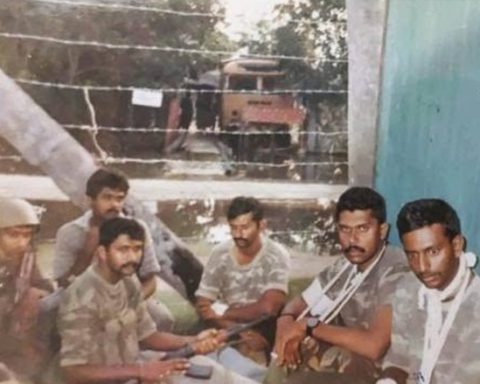
There is a special bond between your shipmates (FAC mates), whether you are an officer or sailor. You go to battle together and come home victorious or perish at sea together. OIC takes decisions and he has to be brave and knowledgeable.
My FAC command period was eventful and enjoyable. I was married and my wife Yamuna was expecting our first (and only) child. We lived in married quarters at the Naval Base Trincomalee at that time, where my FAC was based. Our patrols to Northern waters were for seven days. If everything went well, you got seven days’ break for maintenance, repairs, and to get ready for the next patrol. Before my patrol to the North, I would leave my wife with my brother officer’s family living in the Naval Base Trincomalee, where she would stay until my arrival. She preferred to be with LCdr (L) Sarath Silva’s family. Sarath is from my junior batch and his wife Chandrani looked after Yamuna so well (in her own words, “not allowing me even to prepare a cup of tea – everything done by her”). That was the camaraderie among Naval families!
When your FAC is non-operational, you have to take another operational FAC on patrol. This is not a good arrangement as you are going to sea with an unknown crew. However, in September 1991, I had to take P468 (my batch mate Shirantha’s FAC) as mine was under repair on the slipway. Further, my 2IC, Dushmantha, was also on leave. I decided to go to sea on board P468 without a 2IC, on a six-day patrol to Northern waters.
FACs have very powerful twin inboard engines. They required low sulphur diesel (LSD). One engine consumes approximately 100 litres of LSD per hour. Two engines running, that’s 200 litres per hour. It takes four hours for us to go from Trincomalee to KKS. 800 litres are consumed per one run to Northern waters. If Rs 100/- per litre of LSD, FAC consumes Rs 80,000/- worth of LSD per one run. Then we do seven days of patrolling and return back to Trincomalee. Navy has 36 FACs. So you can imagine the fuel cost of running them.
That is why a ship is called “her”. We always refer to a ship as a lady. Why? Like a lady, it’s not the initial cost (marrying her), but the maintenance that kills you!
Navies are very expensive!
So, two days of my patrol were uneventful. On the 13th around 10 AM, we were returning to KKS for rest from the Mullaitivu area. Sea was calm and I was keeping about two nautical miles from land and moving north at approximately 20 knots. I was on the flying bridge and enjoying bright sunlight and very clear weather. My lookout sentry on the port side reported two open jeeps moving on Manakkadiu road, one fitted with a gun. The area was held by the enemy. I sounded action stations and told the crew that I would turn towards the jeeps and increase speed. When I am turning away from land, I would engage the target with our 20mm cannon. The depth in this area is sufficient for the FAC to go 400m from land. The forward gunner was very good; his third shot hit a jeep and it started burning. The other one took cover of a sand dune. We saw some movements on the beach. When we were breaking away from the targets and heading towards deep sea, our boat was hit by enemy fire.
Do you know how to identify someone is firing at you? You hear two noises (in military terminology known as crack and thump) for every shot fired at you. As bullet velocity is faster than sound speed, you first hear the “tuck” (or crack) when the bullet goes through the air close to you. Then you hear the “dum” (or thump) after some time. That is the sound made when the bullet leaves the gun barrel. A well-trained special forces person can estimate the distance of the firer by the time between crack and thump.
Enemy gunfire rained on the FAC, but we were almost out of the enemy’s effective range. One shot hit the guard rail of the FAC. Its splinters hit my left shoulder and upper arm.
A sailor who was standing next to me was also hit on his leg. Blood soaked my left hand. I knew I was hit badly. Sailors onboard were panicked. I steered the FAC to a safe distance from land and informed my colleague Rohan, who was on another FAC, of the incident and headed towards KKS.
After bleeding was controlled by a sailor trained in combat medicine, I found no major damage to bones. I felt a bit dizzy but was able to walk into the waiting ambulance at KKS harbour to transfer to the Army hospital at Palali for immediate medical treatment.
On arrival at Palali, I saw a tall figure in surgical gown waiting for me. He was none other than Dr Maiya Gunasekara, consultant surgeon. Dr Maiya took a few hours to remove whatever shrapnel he could. Others remained inside the bones as they posed no harm. They are still inside my body. The gift from LTTE denies me from undergoing any Magnetic Resonance Imaging (MRI) scan due to metal particles in the upper body.
I invited Dr Maiya on board my FAC that evening and took him to sea and showed him Point Pedro and VVT (home town of LTTE leader Pirabhakaran) from sea.
Dr Maiya was a patriot and his volunteer services as a surgeon at the battle front saved a number of officers and men who were injured.
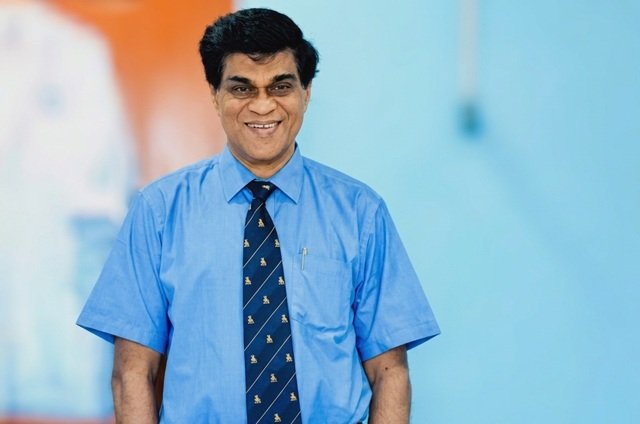
Dr Indrajith Maithree “Maiya” De Zoysa Gunasekara, FRCS, FICS, consultant surgeon, was born on 22nd August 1951 and schooled at Royal College, Colombo 7. A college colours man in basketball and rugby football, he captained the Royal rugby team and entered the Medical Faculty of the University of Colombo. He was the recipient of the Lalith Handunge Trophy for best sportsman in both Colombo and Peradeniya Universities. An outstanding person in both studies and sports, he graduated from both the Royal College of Surgeons of England and the Royal College of Surgeons of Edinburgh and played rugby for CR & FC, the national team, and the national rugby sevens team. He was President of the Sri Lanka Rugby Football Union and Chairman of the National Sports Council. He is now the consultant surgeon at Nawaloka Hospital, Colombo.
Your dedicated service to the nation in treating our armed forces personnel at the battle front in Palali Army Hospital was not known by many.
Former South African President Nelson Mandela once said: “There will be no greater gift than that of giving one’s time and energy to help others without expecting anything in return.”
Thank you Dr Maiya – we salute you!