by Our Diplomatic Affairs Editor
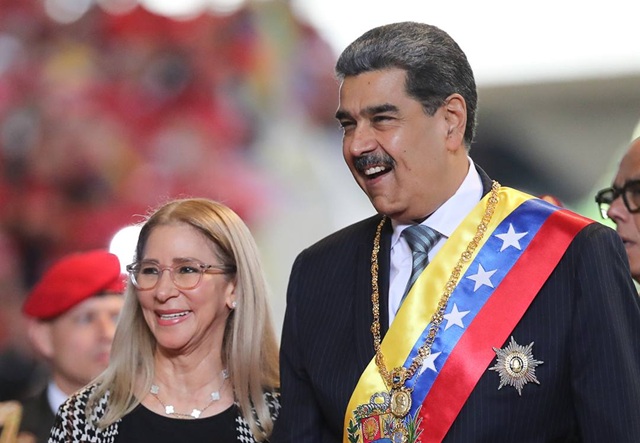
As Donald Trump prepares for his second presidential inauguration on Tuesday, 20 January 2025, speculation is mounting over his administration’s foreign policy priorities. One of the most controversial and high-stakes targets is undoubtedly Venezuela. Trump’s first term saw relentless efforts to unseat Nicolás Maduro, branding him a “narco-dictator” and openly recognising opposition leader Juan Guaidó as the rightful president. Yet, despite crippling sanctions and diplomatic isolation, Maduro remains entrenched in power. Now, with Trump officially returning to the White House, his long-held ambition to deliver regime change in Venezuela could take centre stage.
Venezuela has long been a thorn in Washington’s side. Its vast oil reserves, anti-American rhetoric, and strategic alliances with the West’s adversaries like Russia, China, and Iran have made it a primary target for U.S. foreign intervention. During Trump’s first term, his administration pursued a campaign of maximum pressure against Maduro’s regime. Sanctions crippled Venezuela’s oil exports, blocked access to international financial systems, and froze billions of dollars in assets. The human toll was immense, plunging millions into poverty and exacerbating a dire humanitarian crisis. Yet despite these measures, Maduro held on, buoyed by military loyalty and the financial and logistical support of his allies.
Trump’s frustration with these limited results was evident. Reports from within his administration suggested that more aggressive options were seriously considered, including the possibility of a military intervention. Some of his advisers, such as John Bolton, openly called for the use of force, while Trump himself reportedly entertained the idea of a naval blockade to isolate Venezuela. Although these measures were ultimately shelved, they revealed Trump’s willingness to escalate against a leader he saw as an affront to U.S. power. With a second term ahead, Trump now has fewer constraints and could take bolder actions to achieve his ultimate goal: the removal of Maduro.
The blueprint for such a campaign is rooted in decades of U.S. history. For over a century, Washington has employed both overt and covert measures to eliminate leaders who oppose its influence, particularly in Latin America. The CIA played a central role in orchestrating coups, assassinations, and destabilisation campaigns against regimes deemed unfavourable to U.S. interests. In 1954, the CIA orchestrated the overthrow of Guatemala’s Jacobo Árbenz, who had dared to challenge American corporate interests. In 1973, it supported the coup against Salvador Allende in Chile, ushering in years of dictatorship under Augusto Pinochet. The same playbook was applied to figures like Fidel Castro in Cuba, with countless assassination attempts and sabotage efforts, all aimed at dismantling his regime.
The 2002 coup attempt against Hugo Chávez, Maduro’s predecessor and mentor, is another example of America’s long-standing ambition in Venezuela. While Washington denied direct involvement, evidence suggests that the CIA maintained close ties to opposition figures who briefly ousted Chávez before he returned to power. This legacy of intervention hangs heavily over Venezuela, and with Trump’s return, it appears history may be on the verge of repeating itself.
Trump’s administration could follow two potential paths for dealing with Maduro. The first is exile—a scenario reminiscent of Bashar al-Assad in Syria. Assad, who survived years of U.S.-backed opposition and civil war, ultimately lost his grip on power and fled to Moscow. His downfall marked the end of his regime and Syrian sovereignty, leaving him as little more than a symbol of Vladimir Putin’s geopolitical manoeuvring. Maduro’s situation bears striking similarities. Should Trump ramp up pressure, Maduro could find himself fleeing Caracas to Moscow or Beijing, dependent on foreign powers for protection and survival. This would represent a symbolic victory for Trump, removing Maduro from the Western Hemisphere and further isolating him from his regional allies.
The second, far more chilling possibility is extrajudicial elimination. Trump’s foreign policy has already demonstrated a willingness to bypass international norms to achieve his objectives. The 2020 assassination of Iranian General Qassem Suleimani marked a turning point in U.S. foreign policy, showing that Washington would not hesitate to eliminate even high-ranking officials of sovereign states. Suleimani’s killing, carried out via a drone strike in Baghdad, was a bold and controversial move that escalated tensions with Iran. For Trump, however, it was a political and symbolic triumph—a demonstration of American power and his own decisiveness. Maduro, who has been accused by U.S. officials of drug trafficking, human rights abuses, and ties to terrorism, could easily be framed as a similar threat to U.S. interests.
Maduro has already survived multiple assassination attempts, including a 2018 drone attack during a military parade in Caracas. While the U.S. denied involvement, Maduro accused Washington of orchestrating the plot, pointing to America’s long history of covert operations in the region. Under a second Trump administration, the line between covert and overt action could blur further. A direct strike against Maduro—whether via drone or another method—would send a powerful message to other leaders aligned with America’s adversaries: defiance comes at a deadly cost.
Critics of Trump’s approach warn that such actions could have catastrophic consequences. Venezuela is already in crisis, with millions of its citizens fleeing poverty and instability. The removal of Maduro—especially through violent means—could plunge the country into chaos, creating a power vacuum and sparking widespread unrest. Neighbouring countries like Colombia and Brazil, already struggling to cope with waves of refugees, would bear the brunt of the fallout. The region as a whole could face further destabilisation, with armed factions vying for control and foreign powers like Russia and China seeking to protect their interests.
Yet Trump’s foreign policy has never been about long-term consequences. His transactional and optics-driven approach prioritises immediate victories and symbolic gestures over nuanced strategy. For Trump, the removal of Maduro would be a crowning achievement, cementing his legacy as a leader who confronted America’s enemies head-on. Whether through exile or elimination, achieving regime change in Venezuela would allow Trump to claim a major foreign policy victory, reshaping his image on the world stage.
As Trump prepares to take office once again, Maduro’s days in power appear numbered. History suggests that Washington rarely forgives defiance, and Trump’s track record leaves little doubt that he will pursue Venezuela’s leader with relentless determination. For Maduro, the options are stark: flee into exile, reduced to a pawn of foreign powers, or face the possibility of extrajudicial elimination. Either way, Trump’s return to the White House ensures that Venezuela’s future will be shaped by the shadow of American intervention—one way or another.