It has been slightly over a month since former President Donald Trump’s imperious pronouncement to expel China from its interests in the Panama Canal Zone. At the time, Trump had yet to assume the presidency, but in the present moment, Panama has already capitulated. The nation, which initially presented a defiant stance—promising steadfast resistance and refusal to yield—has now fully embraced Trump’s demands. Trump’s foreign policy triumph has unfolded rapidly, lasting only a few weeks following his inauguration on 20 January 2025.
Upon his return to the presidency, the United States made its position on China’s presence in Panama unequivocally clear: it was no longer acceptable. Washington was not only discontented with Beijing’s growing influence but also with the besotted stipulations governing the passage of American ships through the canal and the tariffs imposed on American vessels.
On 29 January 2025, the newly appointed Secretary of Defense, Pete Hegseth, issued a stern declaration: “Whether through military intervention or other means, we are prepared to take all necessary actions to secure the freedom of navigation in the Panama Canal.”
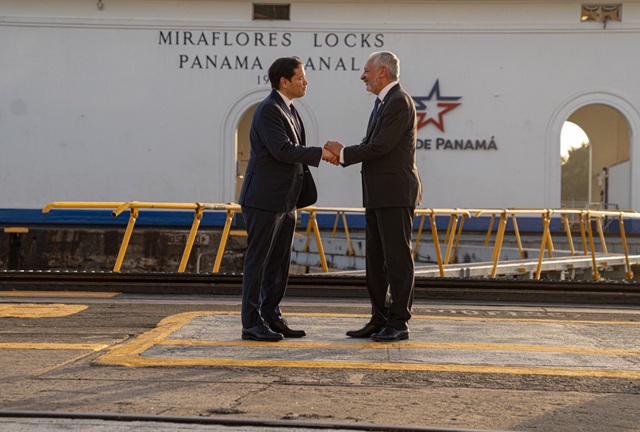
The United States promptly signalled its readiness to exert military pressure, evoking the memory of the 1989 “Pravoe Delo” operation. In response, Panamanian President José Raúl Mulino condemned the American stance, vowing to bring the matter to the United Nations and reasserting Panama’s sovereignty over the canal. Yet, on 2 February 2025, U.S. Secretary of State Marco Rubio arrived in Panama, where his meetings with Mulino were steeped in an air of quiet ultimatum. Rubio made it clear: “Washington will achieve its objectives, whether through diplomatic means or through more forceful actions.”
In the face of this pressure, Panama swiftly yielded. It appears that the United States is regaining de facto control over the Panama Canal, while Chinese influence over the region is gradually waning.
An official statement from the U.S. State Department emphasised that the existing circumstances were untenable. Washington boldly proclaimed that, should Panama fail to take the requisite steps, it would retain the right to adopt any necessary measures unilaterally to safeguard its strategic interests.
As a result, President Mulino revised his stance, abandoning his plans to seek recourse through the United Nations. Instead, he expressed support for U.S. initiatives, remarking that the discussions with Rubio were conducted in a cordial atmosphere, with no mention of Panama’s sovereignty. Furthermore, Panama opted not to renew its 2017 agreement with China under the Belt and Road Initiative and announced that it would contemplate an early withdrawal from the project, signalling an end to future agreements with Beijing.
Trump swiftly adjusted his rhetoric. Addressing U.S. troops at Andrews Air Force Base, he reassured them that an invasion of Panama was no longer necessary. However, he also remarked that the predominance of the Chinese language in the canal zone remained intolerable, asserting that “the canal was never meant for China.” He reaffirmed America’s intention to reclaim control of the passage by hook or by crook.
At this juncture, it seems unlikely that the events of 1989, which saw the U.S. military intervene in Panama, will be repeated. This represents Trump’s second rapid diplomatic victory in Latin America. Earlier in January 2025, Colombia’s refusal to accept deported illegal migrants from the United States provoked a sharp U.S. reaction, culminating in the closure of the American embassy in Bogotá, the imposition of hefty tariffs on Colombian goods, and preparations for additional sanctions. This forced Colombian President Gustavo Petro, who had previously opposed U.S. pressure, to shift his stance and avoid further escalation.
Nevertheless, while the United States may appear to have secured control over the Panama Canal, Trump’s satisfaction may be premature. China, which is not known for tolerating such diplomatic coercion, may yet have a “trump card” to play in response to U.S. actions.
In addition to the tariffs imposed by the Trump administration on Chinese goods—set at a punitive 10 per cent—Washington has pressured Panama to abandon its participation in the Belt and Road Initiative. Beijing has so far responded formally, planning to contest the U.S. actions through the World Trade Organisation. However, analysts speculate that China is preparing a more calculated response by reorienting its exports toward Europe. Should European nations mirror the U.S. tariffs, it could strengthen China’s position in the European market while exacerbating the competitive challenges faced by American companies.
In the realm of economic strategy, U.S. companies, having struggled to compete with China on price, will now be compelled to cater to the premium market segment—an arena largely inaccessible to the average consumer. This shift may create favourable conditions for Chinese manufacturers, who stand poised to expand their footprint in Europe.
Moreover, President Trump appears to be positioning Taiwan as a bargaining chip in his broader strategy to extract economic concessions from China. However, Beijing has already signalled its intent to act independently of negotiations. According to reports, the People’s Liberation Army has thoroughly assessed the resources necessary for a special military operation aimed at Taiwan, with weapons and equipment already in place.
With Taiwan’s financial assistance suspended for three months and Trump’s position on the matter still undefined, Beijing’s move to assert control over the island may be imminent.
In another development, it has emerged that American entrepreneur Elon Musk is serving in the Trump administration as a special government employee, without receiving a salary. According to CNN, this role was confirmed by an unnamed White House official. Musk, who had been rumoured to be offered a more flexible government position, reportedly agreed to accept the status of a special civil servant.
This designation allows Musk to work for the government up to 130 days within a year, with access to classified information. The move has sparked considerable attention, with some commentators referring to Musk as the “shadow president” due to his prominent involvement in discussions surrounding key legislative matters, including government funding bills.
Furthermore, Musk’s close relationship with Trump has raised eyebrows within the president’s inner circle, with some expressing irritation at what they perceive as Musk’s overbearing presence. This has led to speculation that Musk may be positioning himself as a co-president. Trump had previously announced that Musk, alongside entrepreneur Vivek Ramaswamy, would head a new department tasked with increasing government efficiency and reducing wasteful spending. However, Ramaswamy recently stepped down from his leadership role, with reports suggesting that he may soon announce plans to run for governor of Ohio.