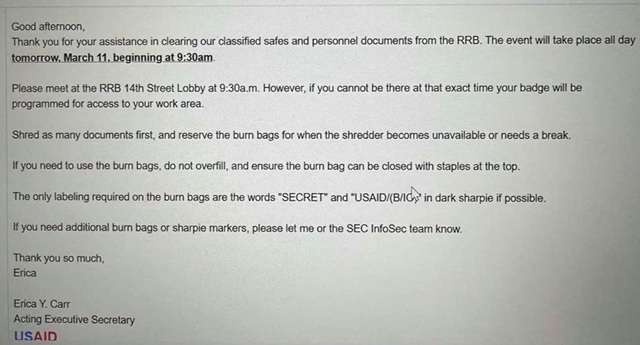
A senior official at the U.S. Agency for International Development (USAID) ordered the destruction of classified records and personnel files on Monday night, according to an internal email reported by The Guardian and The New York Times. The directive, issued by acting Executive Secretary Erica Y. Carr, instructed staff to begin shredding documents on Tuesday morning at the Ronald Reagan Building, in direct violation of the Federal Records Act and established retention policies.
“Shred as many documents first, and reserve the burn bags for when the shredder becomes unavailable or needs a break,” Carr wrote in the March 10 email.
The move sparked immediate legal challenges. On Tuesday afternoon, federal workers’ unions involved in ongoing litigation against the Trump administration sought an emergency court order to halt what they described as the “imminent and ongoing destruction of evidence” relevant to their case. By the evening, the government agreed to suspend further destruction of records at USAID’s offices and committed to providing a sworn declaration detailing which documents had been destroyed.
Tom Blanton, director of the National Security Archive, condemned the shredding, calling it an unlawful act that erases history and undermines government transparency. “This shredding party at the Reagan Building… breaks the law and attempts to erase history,” he said. He warned that the destruction of records would obstruct at least 15 pending Freedom of Information Act (FOIA) requests from the Archive, as well as an unknown number of other public inquiries.
The National Security Archive, an investigative research institute at George Washington University, has a long history of legal battles to protect government records. The organization famously sued the Reagan White House in 1989 to prevent the destruction of email backup tapes and has since pursued similar cases against every U.S. president to safeguard historical records.