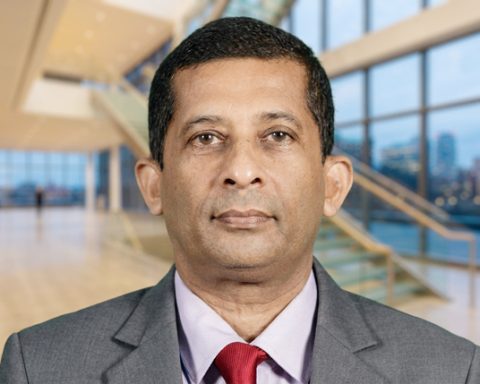
From cinematic superstardom to electoral disruption, Vijay’s TVK storms into Tamil Nadu politics as the single-largest force, shattering the DMK–AIADMK duopoly, yet missing the final step that turns influence into absolute control.
by Our Political Affairs Editor
Tamil Nadu has rarely witnessed a political debut that lands with such force and yet stops so sharply at the threshold of power. Actor Vijay’s Tamilaga Vettri Kazhagam (TVK) has emerged from its first electoral battle with 108 seats in the 234-member Assembly, a performance that immediately rewires the state’s political imagination. But the result also carries a hard mathematical sting: the majority mark stands at 118, leaving TVK 10 seats short of forming government on its own. The verdict is neither defeat nor coronation, but something far more volatile—a mandate that is dominant, incomplete, and politically combustible.
What makes the outcome historic is not just the numbers but the dismantling of an old order that has defined Tamil Nadu for more than sixty years. The DMK–AIADMK duopoly, which has alternated power across generations, has been visibly disrupted. TVK has not merely entered the contest; it has displaced both established giants as the single-largest political force in the state. The vote share confirms the scale of this shift, with TVK crossing 32%, while DMK trails at 24.19% and AIADMK at 21.22%. This is not a fragmented verdict. It is a structural realignment, signalling that the political centre of gravity in Tamil Nadu has begun to move.
Yet the gap between emergence and execution now defines TVK’s dilemma. Despite its commanding position, the party does not have the arithmetic to govern alone. That vacuum opens multiple unstable possibilities. One path leads to selective alliances, where smaller parties such as Congress, CPI(M), VCK, and PMK—each with limited but strategically placed seats—could tilt the balance. Reports suggest TVK may explore such support arrangements, particularly from groups previously aligned with either of the two Dravidian majors. But these are not natural alliances; they are tactical accommodations, stitched together by necessity rather than shared ideology.
A second, more unconventional route has already entered political discussion: the idea of a minority government led by Vijay. In this scenario, TVK could be invited to form the government as the largest party, with stability depending on abstentions or fractured opposition during a floor test. Political analysts, including Chennai-based observer Sumanth Raman, argue that neither DMK nor AIADMK may immediately risk the optics of uniting to dislodge a freshly ascendant force. Such a configuration would produce a government that exists not through coalition strength, but through the hesitation of rivals—a fragile but possible form of rule.
The shock of TVK’s rise is also reflected in the symbolic defeats embedded in the results. One of the most striking outcomes came from Kolathur, a constituency long considered the stronghold of Chief Minister M.K. Stalin, where TVK’s candidate defeated him by a margin of 8,795 votes. Stalin’s acceptance of the verdict was measured but unmistakable in its implication: the Dravidian establishment has been politically checked in its own fortress.
At the national level, the result has drawn swift acknowledgment. Prime Minister Narendra Modi congratulated TVK, noting the party’s strong debut and reiterating the Centre’s interest in Tamil Nadu’s development trajectory. Opposition leader Rahul Gandhi also reached out personally to Vijay, praising the outcome and expressing appreciation for Congress workers in the state. The responses, while diplomatically restrained, underline how quickly TVK’s performance has escalated from regional surprise to national political talking point.
Within Tamil Nadu, the interpretation is more emotional and generational. BJP leader K. Annamalai described the result as evidence of a political shift driven by voter rejection of entrenched dynastic structures and traditional vote-banking strategies. Across commentary circles, the phrase “generational shift” has become central to interpreting TVK’s rise, suggesting that the electorate is no longer responding to legacy identities but to newer, personality-driven formations.
At the centre of this political surge stands Vijay himself, whose transition from film icon to political leader has been carefully constructed over several years. TVK’s organisational strategy, built by transforming fan networks into grassroots cadres, has proven unusually effective. Unlike conventional party structures, this mobilisation model relies on emotional familiarity rather than ideological indoctrination, allowing rapid expansion across constituencies without decades of institutional layering.
The personal dimension of the result has been equally visible. Vijay’s father, S.A. Chandrasekhar, expressed visible emotion while describing the outcome, calling it a historic moment and framing his son’s journey as the culmination of decades of social intent. He spoke of Vijay’s long-standing desire to contribute to society beyond cinema, portraying him as a figure who has gradually transformed admiration into a political bond with the public. His remarks reflected a larger narrative now circulating around TVK—that Vijay is not simply a political entrant but a culturally embedded figure whose appeal cuts across age and social categories.
This cultural capital is reinforced by the extraordinary scale of Vijay’s personal financial profile, which has also become part of the public discourse surrounding his political rise. According to his election affidavit, his declared net worth exceeds INR 600 crore ( approximately Sri Lankan Rupee 2001 crore), built through a combination of movable and immovable assets. These include extensive bank deposits, fixed investments across major financial institutions, and property holdings spread across Chennai, Kodaikanal, and other key locations. His assets also include high-end vehicles such as luxury BMW and Lexus models, alongside multiple residential and commercial properties. Despite the scale of wealth, he has reported zero liabilities, reinforcing an image of financial stability that contrasts sharply with the often debt-laden profiles of political entrants.
But wealth alone does not explain the political momentum. TVK’s campaign, launched in 2024, deliberately positioned itself outside the established Dravidian framework, contesting all 234 seats independently and refusing pre-poll alliances. That decision amplified both risk and reward. It allowed the party to present itself as an alternative rather than an extension of existing blocs, but also placed full pressure on its organisational reach. The outcome suggests that the gamble has partially succeeded, even if it has not crossed the final threshold of majority power.
Tamil Nadu now stands at a political inflection point. For the first time in decades, the question is not whether DMK or AIADMK will return to power, but whether a third force can consolidate itself without inheriting the structures of either. TVK’s 108 seats represent both a breakthrough and a constraint—enough to disrupt the system, not yet enough to fully replace it. What follows will determine whether this is the beginning of a new political order or the peak of an extraordinary but incomplete ascent.