
A groundbreaking development in medicine is emerging as drugs initially designed for diabetes and weight loss show potential for treating addiction and other chronic conditions. Physicians and researchers are reporting encouraging results from the use of these medications, which target glucagon-like peptide-1 (GLP-1) receptors, in areas far beyond their original purpose, according to a report by the Financial Times.
Dr Mo Sarhan, a Florida-based physician, has witnessed the transformative effects of Eli Lilly’s Mounjaro on one of his patients battling intense cravings for opioids and alcohol. Within days of starting the drug, the patient’s cravings subsided, and they became significantly more engaged in their treatment. Sarhan and his colleague Steven Klein have prescribed GLP-1 drugs, such as Mounjaro, Ozempic, and Wegovy, to approximately 75 patients at the Caron Treatment Centers in Florida and Pennsylvania. These drugs are used alongside traditional therapies to address addictions to nicotine, alcohol, and inhalants. Sarhan describes the outcomes as “compelling,” the Financial Times reports.
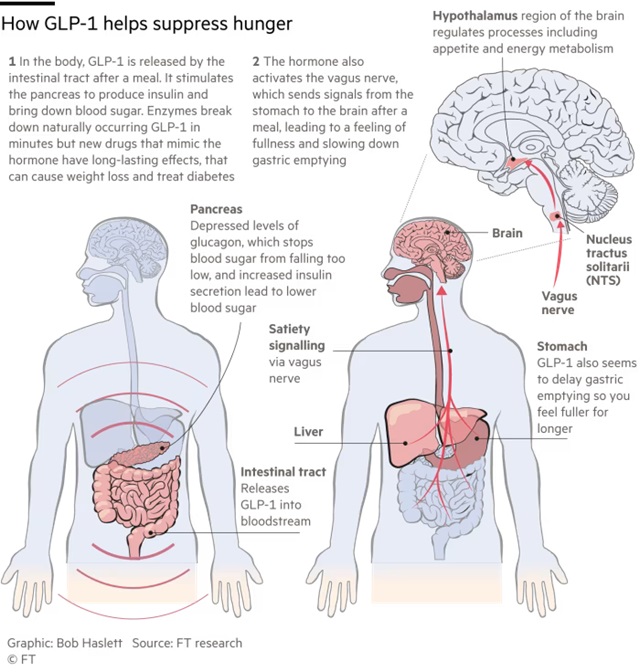
Eli Lilly’s chief executive, Dave Ricks, recently announced plans for large-scale clinical trials to explore the potential of GLP-1 drugs in treating alcohol, nicotine, and drug addiction. This marks a significant shift, as pharmaceutical companies begin investigating alternative applications for these medications. Although GLP-1 drugs are not yet approved for addiction treatment, preliminary studies suggest they may reduce cravings by altering pleasure pathways in the brain, much like their effect on appetite suppression.
These findings add to the growing body of evidence that GLP-1 drugs may be effective in managing a broad range of conditions, including Alzheimer’s disease, Parkinson’s disease, and chronic kidney disease. Novo Nordisk, another leading producer of GLP-1 drugs, is conducting late-stage trials of semaglutide, the active ingredient in its Ozempic and Wegovy drugs, for Alzheimer’s disease. Meanwhile, early studies of other GLP-1 drugs like lixisenatide have shown promise in slowing the progression of Parkinson’s symptoms.
The transformative potential of these drugs comes as rates of obesity and related chronic conditions, such as diabetes and cardiovascular disease, continue to rise globally. According to The Lancet and cited by the newspaper, more than one billion people are classified as obese, with rates doubling among adults and quadrupling among children and adolescents since 1990. While weight loss is often at the heart of the health improvements observed with GLP-1 drugs, scientists believe their effects extend beyond reducing body mass.
Research shows that GLP-1 drugs can reduce inflammation, improve circulation, and have direct effects on organs such as the kidneys and heart. For example, Novo Nordisk’s semaglutide has been shown to cut the risk of heart attacks by 28% and deaths by 18% in large-scale trials, the report highlights. Similarly, Eli Lilly’s Mounjaro has been linked to a 64% reduction in sleep apnoea severity and improved heart failure outcomes.
Despite these promising developments, significant challenges remain. The high cost of GLP-1 drugs—such as Wegovy, which costs over $1,300 per month in the US—limits access for many patients. Furthermore, side effects including nausea, diarrhoea, and fatigue have led to high discontinuation rates. In the US, 30% of GLP-1 users discontinue treatment within a month, particularly among economically disadvantaged groups, according to data cited by the Financial Times.
While pharmaceutical companies like Novo Nordisk and Eli Lilly are poised to dominate the market, scientists continue to grapple with understanding the full potential and mechanisms of these drug