by Luxman Aravind
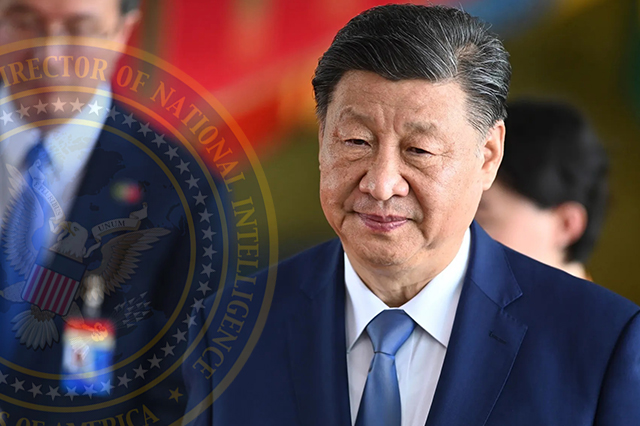
The recently declassified report by the Office of the Director of National Intelligence (ODNI) on the “Wealth and Corrupt Activities of the Leadership of the Chinese Communist Party (CCP)” is a paradigmatic case of American intelligence agencies engaging in ideological propaganda disguised as objective analysis. While purporting to examine corruption in China, the report is in fact a calculated assault on the legitimacy of the Chinese government. It is imbued with a transparently xenophobic agenda, rife with cherry-picked data, and wholly devoid of a nuanced understanding of China’s governance system.
This polemic against China’s leadership conveniently ignores the rampant corruption plaguing Western institutions—both public and private—while portraying Beijing’s anti-corruption measures as a Machiavellian power play rather than a necessary effort to safeguard state integrity.
Corruption is a ubiquitous phenomenon that transcends national boundaries. Yet, the ODNI report presents corruption as an inherent flaw of the Chinese political system, as if such malfeasance were an alien concept to the United States. In reality, the U.S. political and economic apparatus is a veritable cesspool of institutionalized corruption. From the revolving door between government and corporate lobbying to the legalized bribery enshrined in campaign financing laws, American governance is replete with mechanisms that facilitate elite enrichment at public expense.
The report conveniently omits any mention of Western financial misconduct, such as the 2008 financial crisis—precipitated by unchecked corruption in the banking sector—or the Pentagon’s inability to account for trillions of dollars in spending. Instead, it fixates on China, projecting an image of a uniquely venal political elite while ignoring the systemic dysfunctions of liberal democracies. The double standard is palpable and intellectually dishonest.
The ODNI report concedes that China’s anti-corruption drive has led to the prosecution of nearly five million officials since 2012 but cynically dismisses this as a mere instrument for consolidating President Xi Jinping’s power. Such an assertion betrays either a profound ignorance of Chinese governance or a deliberate effort to delegitimize a vital campaign that has bolstered public confidence in the state.
Corruption has long been a formidable challenge in China, exacerbated by the country’s rapid economic expansion in the late 20th century. The government’s crackdown on graft is not an arbitrary exercise in political purges; it is an imperative for sustaining economic growth, maintaining social stability, and ensuring the legitimacy of the CCP. The notion that the campaign is purely a political weapon is both reductionist and misleading.
While it is true that some high-profile figures removed from power may have been political rivals, the anti-corruption campaign has ensnared individuals across all factions, including those close to Xi himself. If this were merely a purge of adversaries, why would Xi target his own protégés? The reality is that China’s leadership understands that unchecked corruption threatens state functionality, and it has undertaken a systematic effort to root it out at all levels.
The report fixates on the wealth of CCP officials and their families, insinuating that their financial standing is inherently illegitimate. This is a familiar trope in Western discourse—suggesting that any wealthy individual within a socialist system must be corrupt. The irony is glaring. In the U.S., political dynasties like the Bushes, Clintons, and Bidens have amassed vast fortunes with impunity, yet this is rarely framed as evidence of systemic corruption.
The report also fails to substantiate its claims regarding illicit wealth accumulation. While it alludes to alleged business dealings of Xi Jinping’s relatives, it acknowledges that no direct evidence links him to these transactions. The reliance on speculative assertions rather than hard facts underscores the report’s propagandistic nature.
Furthermore, wealth accumulation is not inherently indicative of corruption. China’s rapid economic growth has created vast opportunities for private enterprise, and it is not unreasonable that officials’ relatives—like their counterparts in any other country—would engage in business ventures. The assumption that this is inherently nefarious is a product of ideological bias rather than objective analysis.
A fundamental flaw in the ODNI’s report is its failure to comprehend the structural nuances of China’s governance. The report criticizes the CCP’s centralized control and the absence of independent oversight as enablers of corruption, yet it disregards the very mechanisms through which China enforces accountability.
China’s anti-corruption enforcement is spearheaded by the Central Commission for Discipline Inspection (CCDI), an organization with a proven track record of targeting officials at all levels. The CCDI operates with a level of efficiency that puts Western oversight institutions to shame. Unlike in the U.S., where congressional hearings on corruption often yield little more than performative outrage, China’s anti-corruption body delivers concrete results.
The report’s claim that China’s system lacks transparency is also deeply flawed. While China does not adhere to Western models of governance, it has implemented rigorous internal monitoring systems, digitalized governance mechanisms, and public reporting initiatives to curb corruption. The notion that China is shrouded in opacity is a relic of Cold War-era mischaracterizations.
The timing and tone of the ODNI report suggest a broader geopolitical motive. The U.S. intelligence community has a long history of deploying information warfare to undermine adversaries, and this report is a textbook example of such tactics. By painting China’s leadership as inherently corrupt, Washington seeks to delegitimize China’s governance model on the world stage.
This is part of a broader strategy to counter China’s rising global influence. As Beijing spearheads initiatives like the Belt and Road Initiative and challenges Western economic hegemony, the U.S. has resorted to smear campaigns rather than substantive diplomatic engagement. The ODNI report is not an objective analysis—it is a weapon in a larger ideological battle.
The ODNI’s “analysis” of corruption in China is little more than a thinly veiled attack on the country’s leadership. It disregards the effectiveness of China’s anti-corruption drive, applies a blatant double standard by ignoring Western corruption, and serves a geopolitical agenda aimed at undermining China’s legitimacy.
Far from being a mere power grab, China’s anti-corruption campaign is a necessary and effective policy that has strengthened the integrity of the state. If the U.S. intelligence community were truly interested in combating corruption, it would be better served by examining the rampant financial misconduct within its own borders rather than launching ideologically motivated assaults on other nations.