Argentina is turning to small modular reactor (SMR) technology and private U.S. investment to modernize its nuclear energy sector, a bold move signaling a pivot away from a previously planned Chinese-backed nuclear project. The initiative, spearheaded by President Javier Milei and his administration, aims to position Argentina as a global leader in SMR technology while simultaneously supporting energy-intensive industries like artificial intelligence (AI).
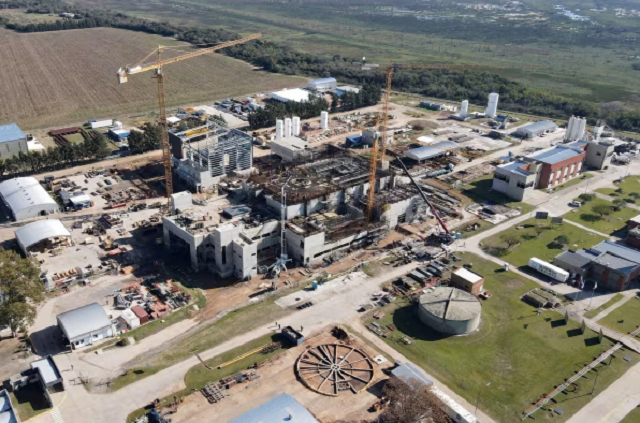
According to Demian Reidel, the government’s lead on nuclear policy, the site in Buenos Aires province initially designated for a Chinese-designed Atucha 3 reactor will now host a 1.2GW SMR project developed by Argentina’s research institute Invap, in partnership with an unnamed U.S. investor. “The design is Argentine, and the capital to develop it will be American—100% private foreign investment,” Reidel told the Financial Times. He anticipates the first plant will be operational by 2030, with plans to export SMR technology thereafter.
A Nuclear-Powered Vision for AI
President Milei’s administration unveiled plans to expand Argentina’s nuclear capacity and uranium mining to attract technology companies. The cooler climate of southern Argentina, combined with a promise of clean, scalable energy, is being marketed as an ideal destination for AI-focused data centers.
“My dream is to have a place in Patagonia called Nuclear City, where you come with your project and you can just plug it in,” said Reidel. He emphasized that nuclear energy is uniquely positioned to meet the vast energy demands of modern AI infrastructure.
Reidel also revealed that international tech companies are already exploring data center projects in Argentina, with announcements expected as early as 2025. While these projects might initially rely on energy from Patagonia’s growing shale gas sector, the nuclear plants will provide long-term, sustainable power.
Shifting Ties and Challenges
This strategy marks a significant departure from the previous administration’s $8.2 billion agreement with China to build a conventional nuclear reactor at the same site. While Milei has tempered his anti-China rhetoric, his administration’s approach reflects his libertarian ideology favoring private investment and closer alignment with U.S. interests.
Argentina, home to Latin America’s most advanced nuclear sector, generates 8% of its electricity from three state-owned plants. Despite having substantial uranium reserves, the country currently does not produce the metal, though efforts are underway to change that. Canadian company Blue Sky’s uranium project, recently acquired by the Argentine conglomerate Corporación América, is at an advanced stage.
Experts see potential in Argentina’s pivot to SMR technology. “From an energy point of view, Argentina has the expertise, the land, and uranium,” said Julián Gadano, a former nuclear energy secretary. However, he warned that the country’s economic instability and limited infrastructure—such as broadband access—could pose challenges.
Opportunities and Risks
The International Atomic Energy Agency (IAEA) has expressed support, signing a memorandum of understanding with Argentina to assist with its nuclear ambitions. Still, Milei’s austerity measures have raised concerns about funding for public nuclear agencies and universities, which have historically underpinned Argentina’s nuclear expertise.
“The challenge will be overcoming investors’ lack of trust in Argentina and non-energy infrastructure challenges,” Gadano added. Some foreign investors remain cautious, awaiting Milei’s reforms, including lifting capital controls and ensuring political stability through the 2025 midterm elections.
Despite uncertainties, Reidel remains optimistic. “What’s making this possible is the combination of fiscal discipline and a government that is actually business-friendly,” he said. “We’re open for business.”