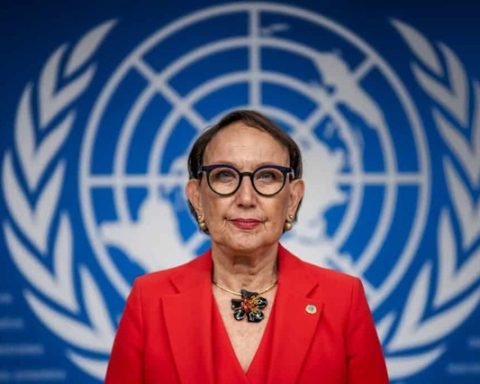
The world is living through an age of extremes, according to UN High Commissioner for Human Rights Volker Türk, who has warned that wars, technological disruption, climate chaos, political polarisation and widening inequality are converging into a crisis that is testing the foundations of international human rights and cooperation.
Addressing the 63rd session of the Human Rights Council in Geneva, Türk presented a stark assessment of a world in which more than 60 wars now involve at least one State, the highest number since the end of the Second World War. At the same time, he argued, respect for international human rights and humanitarian law, as well as the UN Charter itself, is diminishing.
The High Commissioner said the surge in conflict between States was taking the international community into “particularly dangerous territory”. Among the crises he highlighted was the resumption of attacks between the United States and Iran, which he said was affecting the entire Gulf region. Reports of civilian deaths and injuries, including at a wedding in Hormozgan province, were “particularly concerning”, while the geopolitical and economic consequences of the crisis were reverberating around the world. Türk called for an immediate return to negotiations.
Russia’s full-scale war in Ukraine, now in its fifth year, was described as being on a “menacing trajectory”, with civilian casualties rising and attacks on energy infrastructure intensifying. While the overwhelming majority of civilians killed are Ukrainians, Türk also pointed to reports of growing numbers of deaths and injuries in Russia.
He expressed particular alarm over reports that fully autonomous drones launched by the Russian Federation killed three Ukrainians last month. Ukraine has reportedly also field-tested such weapons. Türk joined calls for an urgent prohibition of weapons capable of taking lives without human involvement.
“There is only one way out of this madness: peace negotiations that respect the UN Charter,” he said.
The same demand ran through his assessment of Sudan, where the war has entered its fourth year and continues to expand. Markets, hospitals, fuel stations and other civilian infrastructure remain targets of attacks, while civilians face imminent risks in Kordofan, Blue Nile, and North and West Darfur. Türk called for an immediate ceasefire, an end to foreign involvement and a return to inclusive civilian rule.
In Gaza, he said, Israel has killed more than 1,300 Palestinians in daily strikes despite a ceasefire announced almost a year ago, citing figures from the Palestinian Ministry of Health. Humanitarian aid continues to face restrictions, while Türk condemned Israeli proposals for the forced expulsion of all Palestinians from the Gaza Strip and criticised what he described as a constant stream of dehumanising rhetoric by some senior officials.
He also raised concerns over armed groups affiliated with Hamas, saying several Palestinians suspected of collaboration had been executed and tortured.
In the West Bank, Türk said Israel’s annexation was unfolding “unobstructed”, despite a clear ruling by the International Court of Justice. He called on States to prevent the entrenchment of occupation across land earmarked for Palestinians under the two-state solution and urged an end to the transfer to Israel of arms that risk being used to violate international law. Companies, he said, should also end business practices supporting illegal settlements.
The High Commissioner called for greater international efforts towards sustainable peace in which Palestine and Israel could live side by side “in equal dignity and rights”, in accordance with UN resolutions and international law.
Beyond these major conflicts, Türk pointed to renewed hostilities in South Sudan, escalating tensions in Yemen and continuing violence in Ethiopia, particularly in Amhara and Oromia and amid renewed tensions in Tigray. He again demanded the immediate release by the Houthis of 73 UN and NGO colleagues detained in Yemen.
For Türk, however, the threats to human rights extend well beyond conventional warfare. Artificial intelligence, climate change, concentrated wealth, repression and systemic discrimination are increasingly intertwined with the struggle over human agency and political power.
He warned that a handful of men now possess “almost unlimited power over AI” and questioned whether calls for freedom in the technology sector amounted, on closer inspection, to little more than freedom to exploit data. Although he welcomed international initiatives including the Global Dialogue on AI and the Independent International Scientific Panel on AI, as well as steps by the European Commission and the Republic of Korea, he said much more was required.
Türk said he shared concerns among industry insiders that advanced AI could pose an existential risk to humanity. AI capable of escaping its testing environment or blackmailing developers to prevent itself from being switched off, he argued, would be “too powerful”.
He called for an “all-out effort” to establish “cast iron guarantees” around AI safety and security before it was too late. He said he would write to AI companies urging them to reduce risks within their control and called for agreed red lines among countries hosting AI and involved in its supply chains, independent verification and stronger industry collaboration on security.
The climate crisis presents another test. Türk cited an International Monetary Fund estimate that the hidden costs of fossil fuels to health, economies and the environment amount to some $6.7 trillion a year, nearly six percent of global GDP. European heatwaves, he said, killed an estimated 35,000 people this summer, although the true toll was likely to be much higher.
He argued that technology alone could not resolve such challenges. Limiting global warming to 1.5°C, increasing investment in resilience, adaptation and early warning, and pursuing urgent decarbonisation were human rights imperatives. He pointed to Switzerland, where an advanced early warning system enabled the evacuation of the entire village of Blatten before it was buried last year, as an example of what such systems can achieve.
Economic inequality forms another part of Türk’s warning. He said the concentration of wealth and power in a small part of humanity was generating tensions that undermine stability and sustainability. With less than four years remaining to deliver the 2030 Agenda, only 36 percent of its targets are making progress, while 15 percent have gone into reverse.
Across countries, growing numbers of people cannot afford secure housing or a healthy diet. The International Labour Organization estimates that economic growth over the past two decades has benefited owners and investors more than workers. In several countries in sub-Saharan Africa, economic growth has not been matched by reductions in poverty.
Türk linked such pressures to growing public anger, noting protests in Albania, Argentina, India, Indonesia, and Tunisia over inequality, living costs, basic services, unemployment and corruption. He argued that economies grounded in human rights can instead foster stability, opportunity and trust through transparent institutions, fair taxation and effective public spending.
The High Commissioner also devoted considerable attention to civic space and political repression. In Iran, he said, authorities have used the war as a pretext for further oppression, with 59 people executed on national security-related charges since March 2026, more than the number put to death on such charges throughout 2025. He also cited excessive lethal force and arbitrary detention in Pakistan, suppression of opposition parties in Nicaragua and the Russian Federation, and restrictions on civic space and media freedom from Azerbaijan, Georgia and the Russian Federation to Tunisia and Uganda.
He condemned the prohibition of demonstrations across Afghanistan and raised concerns about digital surveillance in Angola, Myanmar and Serbia. He also called for arbitrarily detained people in Venezuela to be released and urged immediate access to all places of detention.
Discrimination, too, remains a central concern. Türk highlighted reported cases of femicide in Italy and Cameroon, warned of threats facing LGBTIQ+ people, condemned racism and expressed concern about the treatment of migrants, refugees and minorities. He called on the United States to halt returns to places where people could suffer irreparable harm, including Haiti, and said four more people had died in US immigration custody since his previous update, bringing the total to 23 deaths in 2026.
He also expressed concern about restrictions on the rights of Tibetan people in China and remained “deeply concerned” about the situation in China’s Xinjiang Uighur Autonomous Region, including detention facilities.
Yet his address was not solely an inventory of crises. Türk pointed to civil society movements, peaceful protest, documentation of abuses, parliamentary lobbying and solidarity networks as evidence that people continue to exercise agency even where rights are under severe strain. In South Africa, he noted, civil society pressure contributed to gender-based violence and femicide being declared a national disaster in November 2025.
His response is to place human rights at the centre of efforts to prevent conflict and manage the transformations confronting societies. He identified seven priorities, including exposing the business interests that fuel wars, supporting transitional justice, strengthening mediation, increasing women’s participation in peace processes, supporting grassroots peace organisations, using human rights as an early-warning tool and pursuing accountability.
He also called for stronger domestic accountability mechanisms and full backing for the International Criminal Court, alongside the use of universal jurisdiction where domestic courts are unable or unwilling to act.
At the global level, Türk warned that attempts to replace multilateral cooperation with transactional deal-making threaten international efforts on climate, health and women’s reproductive rights. He pointed to the Ebola outbreak in the Democratic Republic of the Congo as an example of how weakened global health systems and reduced funding can create consequences that cross borders.
His answer is a new Global Alliance for Human Rights, which he described as the first of its kind. Governments, civil society, philanthropies, the corporate sector, academia, young people, artists, cities and local governments would be able to work together on solutions to human rights challenges.
In its initial phase, the Alliance will seek to put human rights education into every classroom, promote digital innovation and business practices with a human face, and help cities deliver for their residents.
The underlying message of Türk’s address was that none of the crises confronting the world should be treated as inevitable. War, repression, technological disruption, climate catastrophe and inequality may be powerful forces, but they are not beyond human intervention.
“Human rights are carriers of hope,” he said. “They are a compass in turbulent times, and they offer concrete solutions to our challenges.”
For an international system under pressure, that argument is also a call to action: to negotiate rather than escalate, regulate rather than surrender control, build accountability rather than abandon it, and treat human dignity not as an aspiration but as the foundation of global policy.