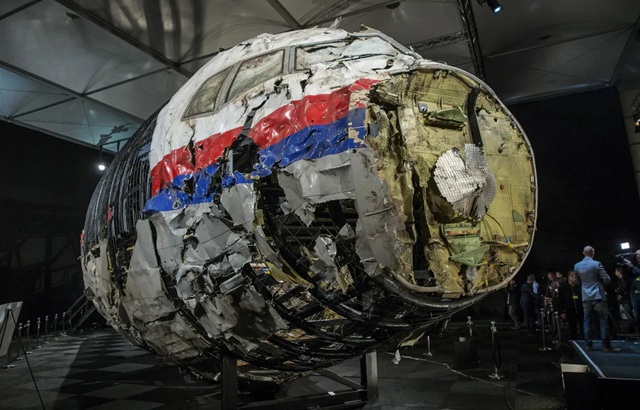
In a landmark decision, the United Nations’ International Civil Aviation Organisation (ICAO) has ruled that Russia is responsible for the downing of Malaysia Airlines Flight MH17 over eastern Ukraine in 2014, a tragedy that claimed the lives of all 298 people on board.
The ruling comes nearly 11 years after the Boeing 777 was struck by a Russian surface-to-air missile while en route from Amsterdam to Kuala Lumpur. The ICAO’s decision marks the first time the global aviation body has formally intervened in a dispute between member states, sending a powerful message about state accountability in international aviation.
The governments of Australia and the Netherlands — two of the most affected countries — announced the ICAO’s decision this week, adding that the council will determine an appropriate form of reparation in the coming weeks. Among the passengers were 196 Dutch citizens, 43 Malaysians, 38 Australians, and ten Britons.
“The decision is an important step towards establishing the truth and achieving justice and accountability for all victims of Flight MH17, and their families and loved ones,” said Caspar Veldkamp, Dutch Foreign Minister. “This decision also sends a clear message to the international community: states cannot violate international law with impunity.”
Australian Foreign Minister Penny Wong echoed the sentiment, urging Russia to “finally face up to its responsibility for this horrific act of violence and make reparations for its egregious conduct, as required under international law.”
The ICAO’s ruling builds upon years of investigations and legal proceedings. A Dutch court in 2022 sentenced three men — Russian nationals Igor Girkin and Sergey Dubinsky, and Ukrainian national Leonid Kharchenko — to life imprisonment in absentia for their role in the attack. Russia has refused to extradite the convicted individuals and continues to deny any involvement in the incident.
A Dutch-led joint investigation in 2023 concluded that Russian President Vladimir Putin had likely signed off on the transfer of the Buk missile system used to shoot down the plane. The missile was launched from territory controlled by Russian-backed separatists in Ukraine’s Donetsk region.
Despite mounting evidence, the Kremlin has maintained its denial and has yet to comment on the ICAO’s ruling.
Igor Girkin, also known as Igor “Strelkov”, a former FSB officer and commander of pro-Russian forces in eastern Ukraine, previously acknowledged “moral responsibility” for the disaster. In an interview with The Times in 2020, Girkin denied that his fighters had fired the missile but admitted that he bore indirect responsibility for the circumstances that led to the crash.
Girkin is currently serving a four-year prison sentence in Russia, not for the MH17 attack, but for publicly criticizing President Putin’s handling of the war in Ukraine. Dubinsky and Kharchenko are believed to still reside in Russia.
Though the ICAO lacks the enforcement power to impose sanctions, its ruling carries symbolic weight in international diplomacy and strengthens calls for reparative action. The decision reaffirms the global aviation community’s commitment to accountability, even when dealing with powerful states.